
Why Agribusinesses Need Solar & Battery Storage
December 29, 2025Read
A practical look at the benefits of solar for farmers. Learn how solar energy can lower costs, increase energy independence, support sustainable operations, and add long-term value to agricultural businesses.
The relationship between farmers and solar power goes beyond just solar panels. Farmers are the most direct, and most important harnessers of the sun’s energy. They have been using sunlight to grow food for humankind for thousands of years. They are also some of the pioneers of renewable energy, having used water-powered mills and sun-drying technologies before anyone else.
It is therefore no surprise that solar panels are a superb fit for farms. Owing to its proven advantages, an increasing number of farmers all over Canada are installing commercial solar panels on their farms.
Let us list down all the benefits a farm can have when going solar.
Modern farming uses a number of energy-hungry devices – from irrigation pumps to refrigeration devices. On any farm, electricity is the most consistent operational cost. And we all know the basic law of business: lower operational costs = higher profits. And in Canada, farming communities are not strangers to high electricity bills.
In modern farming, the farmer does not have a lot of control over the pricing of his products or of his resources. Solar allows farmers to take back some of this control, by significantly lowering their electricity costs, and even locking them in place.
According to the Ontario Federation of Agriculture (OFA), energy is one of the largest input costs on Ontario farms, and rural Ontario pays a disproportionately higher amount for electricity delivery charges than urban residents. In fact, Ontarian farmers pay three times the electricity cost of farmers in Manitoba, which is certainly disproportionate.
However, high power costs are an issue not just in Ontario, but pretty much everywhere in Canada. The OFA also highlights the need for clean, reliable, and cost-effective energy options. Thankfully, solar fits this description perfectly.
Another problem with electricity prices is that they are constantly on the rise. This intensifies the problem further. Brady Yauch, the executive director, and economist with the Consumer Policy Institute said that Hydro One’s prices increased by 68% over the last nine years.
By going solar, farmers can not only reduce the electricity spend but also lock it in place for the next three decades. Once your farm is powered by commercial solar in ON, you won’t have to worry about the sun demanding additional charges for “infrastructure upgrades”.
The best thing about commercial solar panels installation on a farm is the abundance of space and the autonomy of the landowner. A resident in downtown Toronto may desperately wish to go solar, but might not be able to, due to space and other constraints. A homeowner might even face obstacles from their HOA.
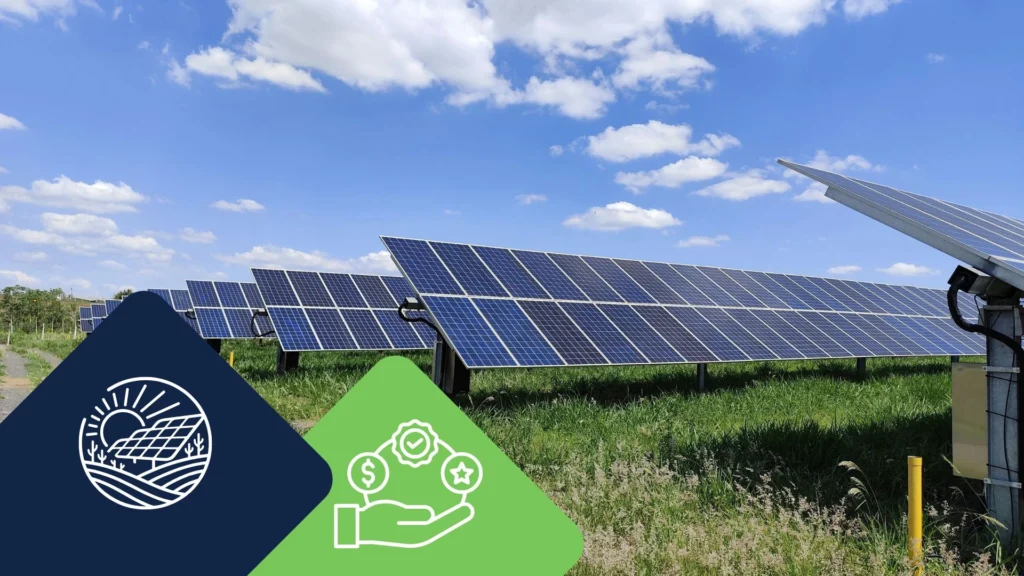
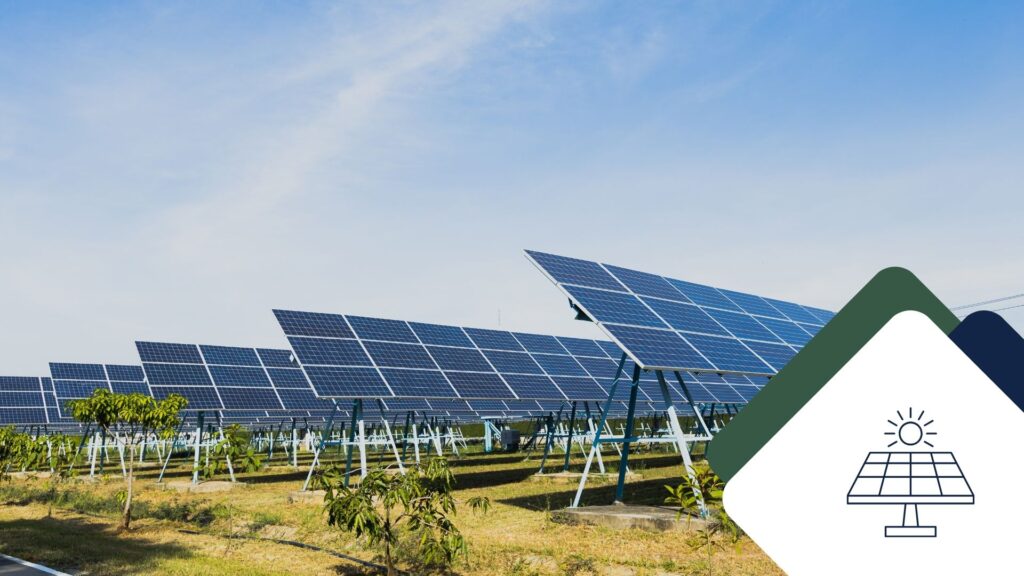
No such problems exist for farms. Most farms have more than enough space available for solar panels – enough to offset all their electricity needs. Moreover, the ample land space available means farmers don’t need to install solar on a rooftop. Panels installed on land can have the most optimum orientation for maximum power production. They are also easier to clean.
Some recent studies also showed that farm animals and solar panels get along just fine, neither of them becoming a nuisance for the other. In fact, solar panels can even provide shade for sheep on hotter days of grazing.
Last year, the global food giant Cargill conducted research with thousands of participants in 11 different countries and found that a staggering 55% of them prefer food products with a “sustainability” tag.
When farmers use solar power for their farm operations, they offset the use of fossil or other power sources which are less sustainable than solar power. This not only helps the environment but also the farmer. People are more likely to purchase sustainable food products, and most buyers are also willing to pay more for them.
The beauty of solar power lies in the fact that the list of its advantages just keeps going on – even after the most convincing items are ticked off. Solar power can increase the value of the property it is installed on, by a significant margin.
Several studies have been conducted in North America on the effect of solar on property prices, and in every single location, the property price has gone up after the installation of solar.
Last but not the least, solar panels offer enormous returns on the initial investment. Even if all its other advantages are ignored, solar panels remain a solid investment option. They provide guaranteed returns and come with almost zero risk.
A typical solar power system may take less than 10 years to pay itself back. After that, the system creates power for at least 15 more years, which is the lower-end prediction of its lifespan. In reality, systems can last 40 or more years.
Solar panels save thousands of dollars for a farm owner every year. Even if we consider the lowest, 15-20 year period of returns, this racks up to a huge amount.
In certain areas, farmers can also install solar panels and sell their energy to the grid, creating a new revenue stream as a distributed energy resource (DER).
According to Statistics Canada, Canada is home to more than 205,000 farms – a substantial number for a country with a modest population.
Each farm consumes a significant amount of energy on a daily basis. According to an Energy Efficiency Alberta report, the total electricity consumption forecast for farms in Ontario in 2019 was 2,764 GWh followed by Alberta at 2,322 GWh. Collectively, these are hundreds of millions spent on electricity nationwide – money that can be saved by a relatively small one-time investment that pays itself back multiple times over.
Moreover, this one-time investment in solar panels brings notable other benefits too. It is therefore no wonder that farmers keep preferring solar power over other energy sources.
All in all, installing solar panels on a Canadian farm is not only the most fruitful thing to do, but it is also one of the most logical decisions Canadian farmers can make.
And best of all – you can get a free consultation for your farm, with no obligation to purchase.
