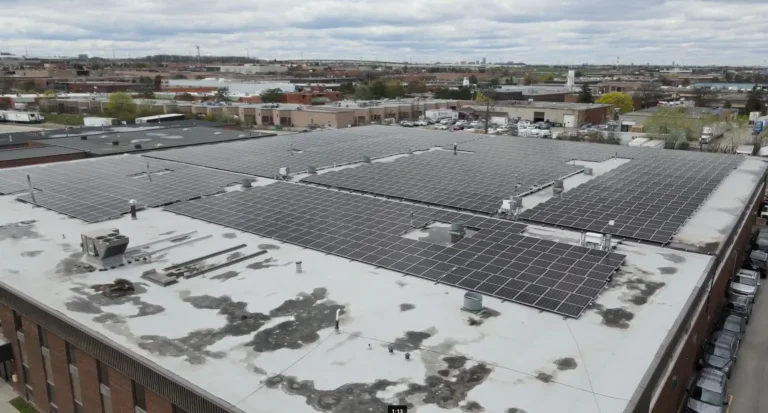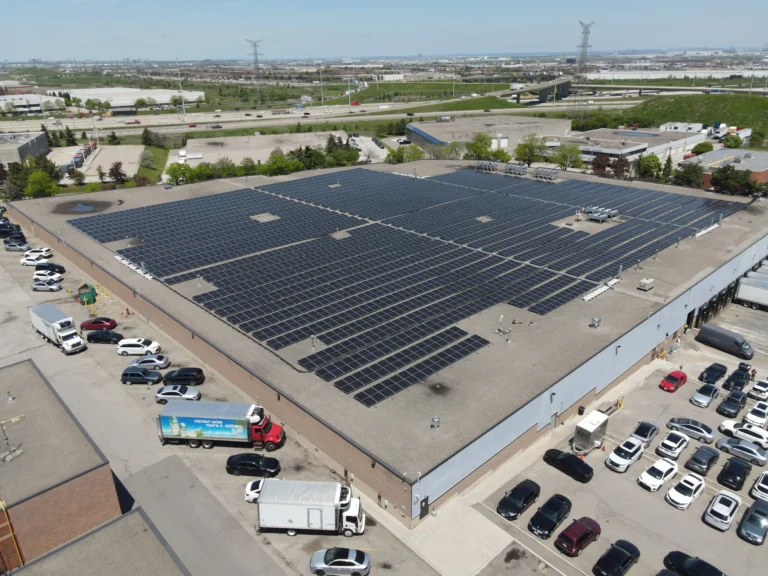

262.6 kW Precision Manufacturing Solar Installation in Brantford, Ontario
Solar integrated into a precision manufacturing environment without disruption to production.
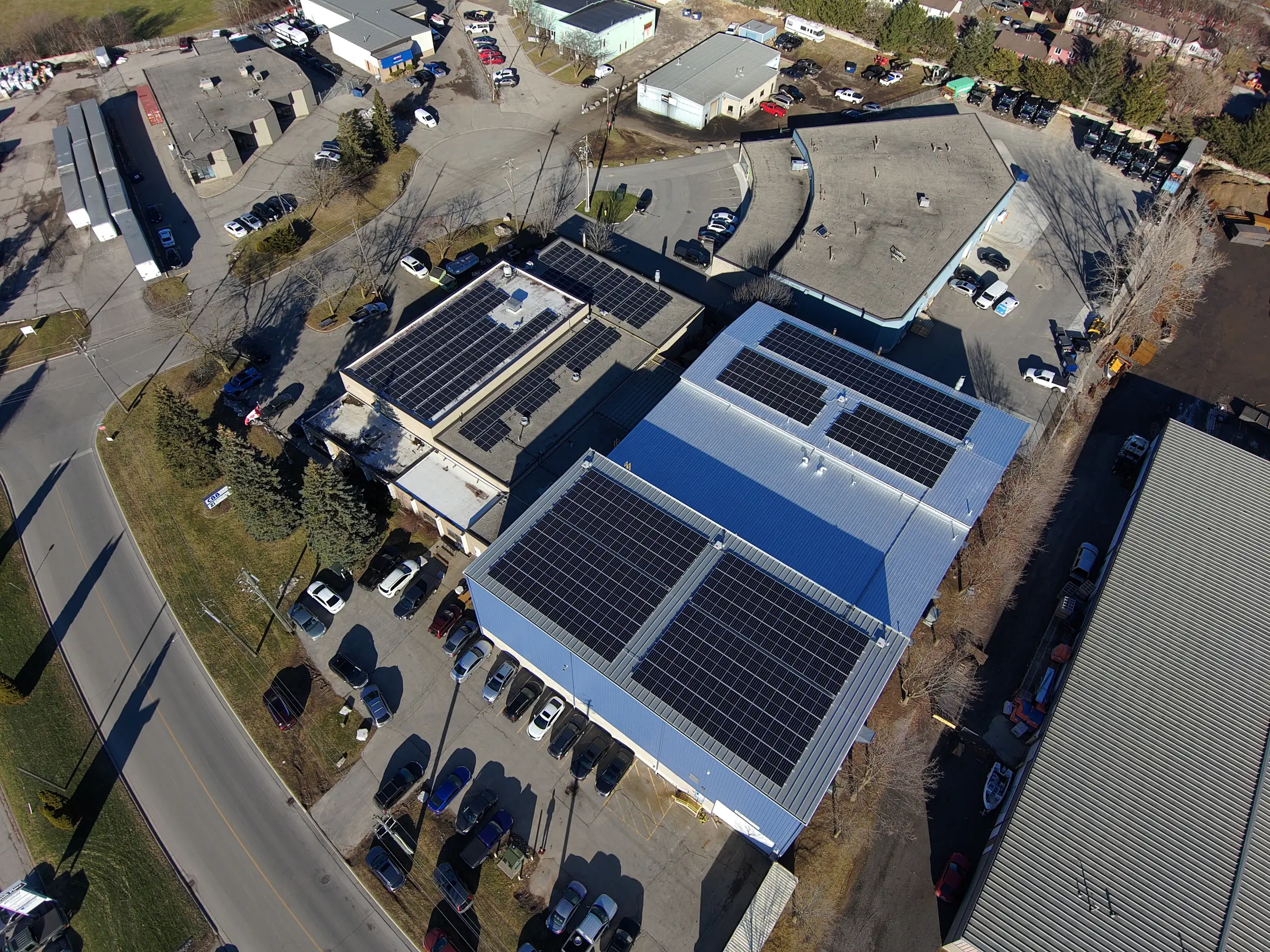
A high daytime load against a roof asset approaching the end of its replacement cycle.
Canadian Babbitt Bearings Ltd. manufactures and services high-precision babbitt bearings and assemblies — critical components for heavy industrial rotating equipment in hydro, power generation, marine, and other high-duty markets.
Such facilities have continuous baseline electricity use tied to machining, CNC processing, finishing, and overhead production services, alongside periodic heavier loads from production cycles and equipment startup. Operational priorities cannot be compromised by retrofit work.
CBB sought a solar solution that could offset a meaningful share of electricity consumption, integrate without disrupting precision manufacturing operations, and provide a measurable, predictable performance outcome.
Size to the service. Mount without penetrations.
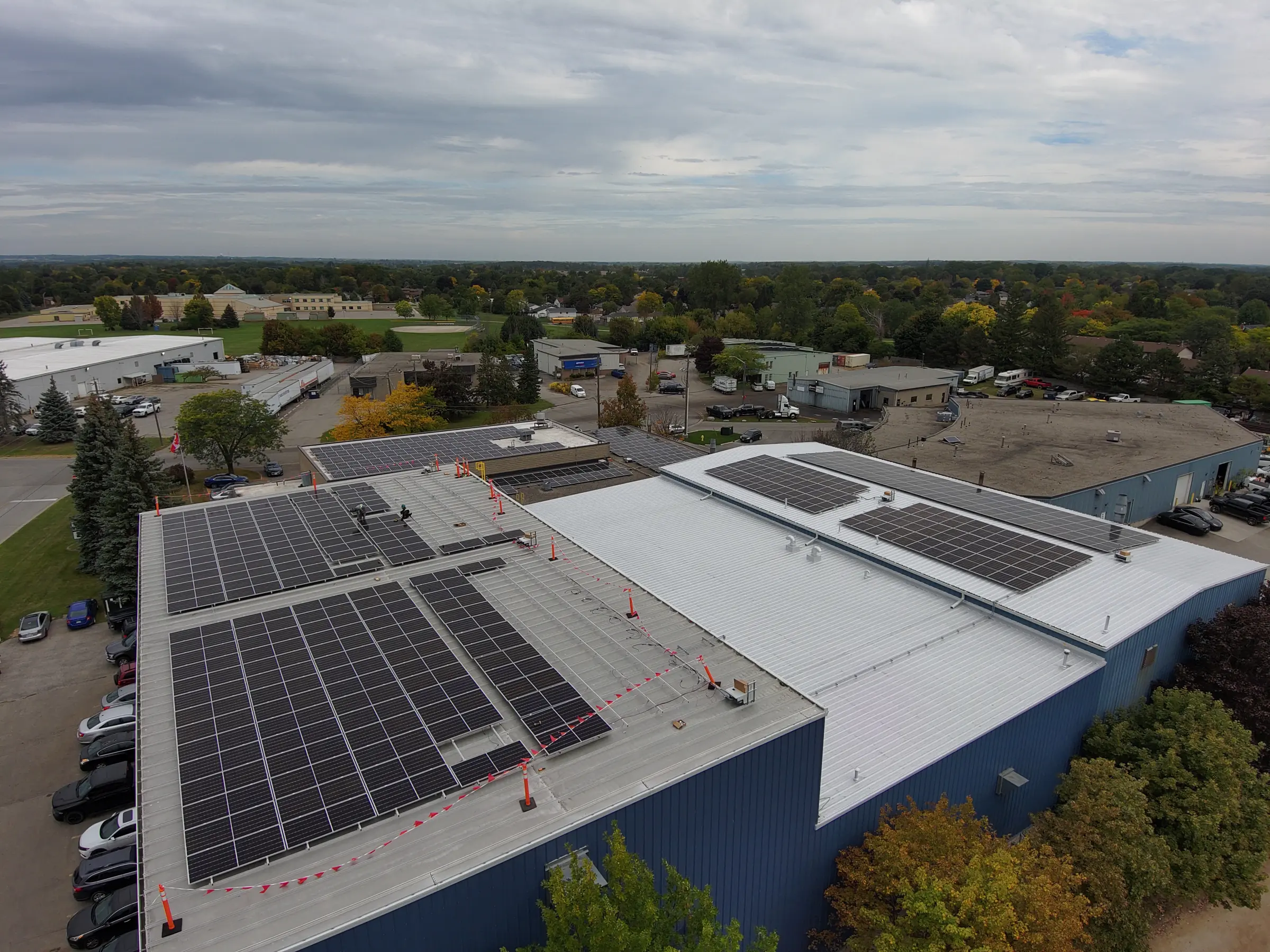
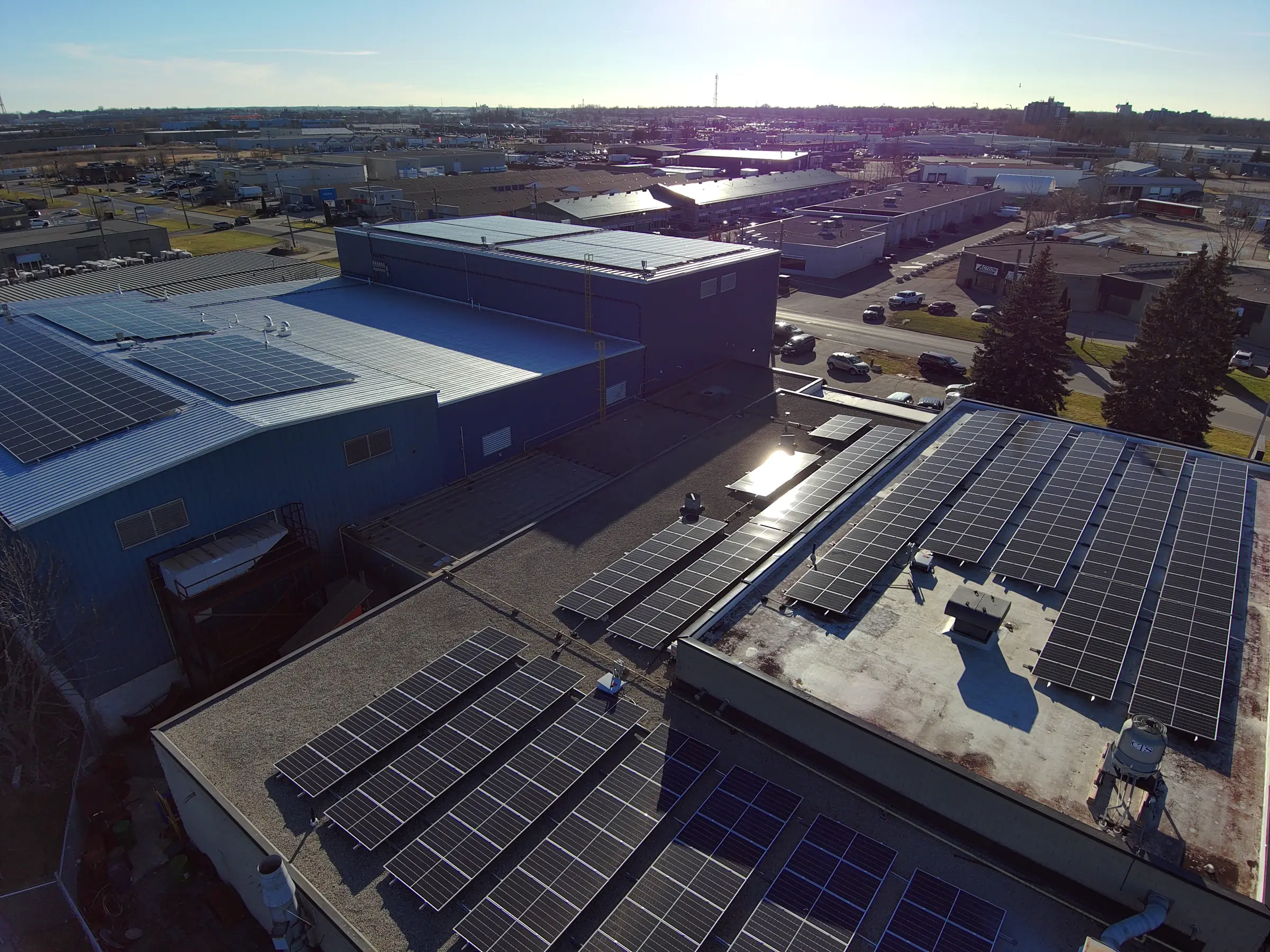
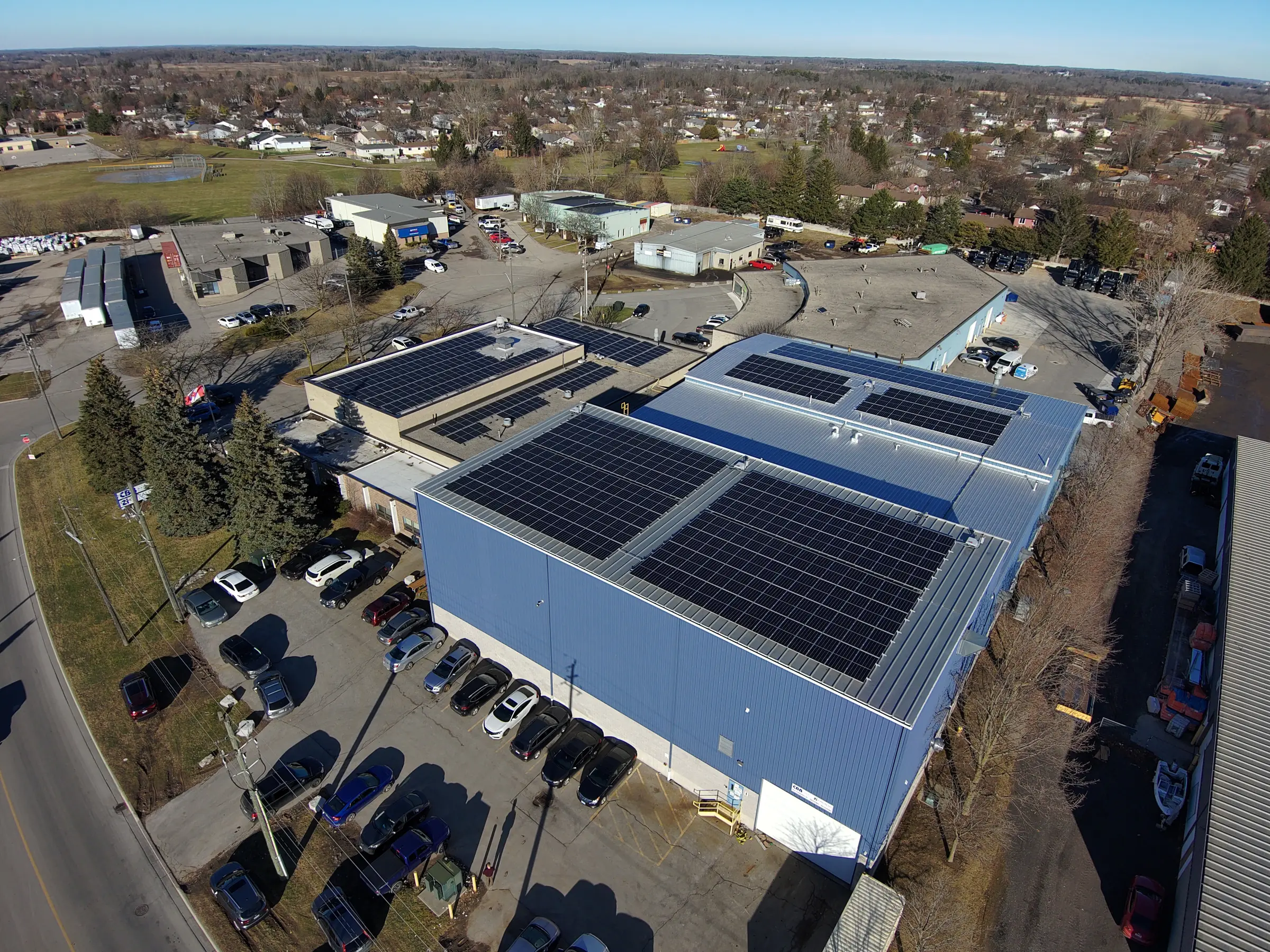
Green Integrations designed and delivered a solar PV system tailored to CBB’s industrial electricity profile. System capacity was sized to the facility’s annual electricity consumption profile, resulting in a 50.40% offset.
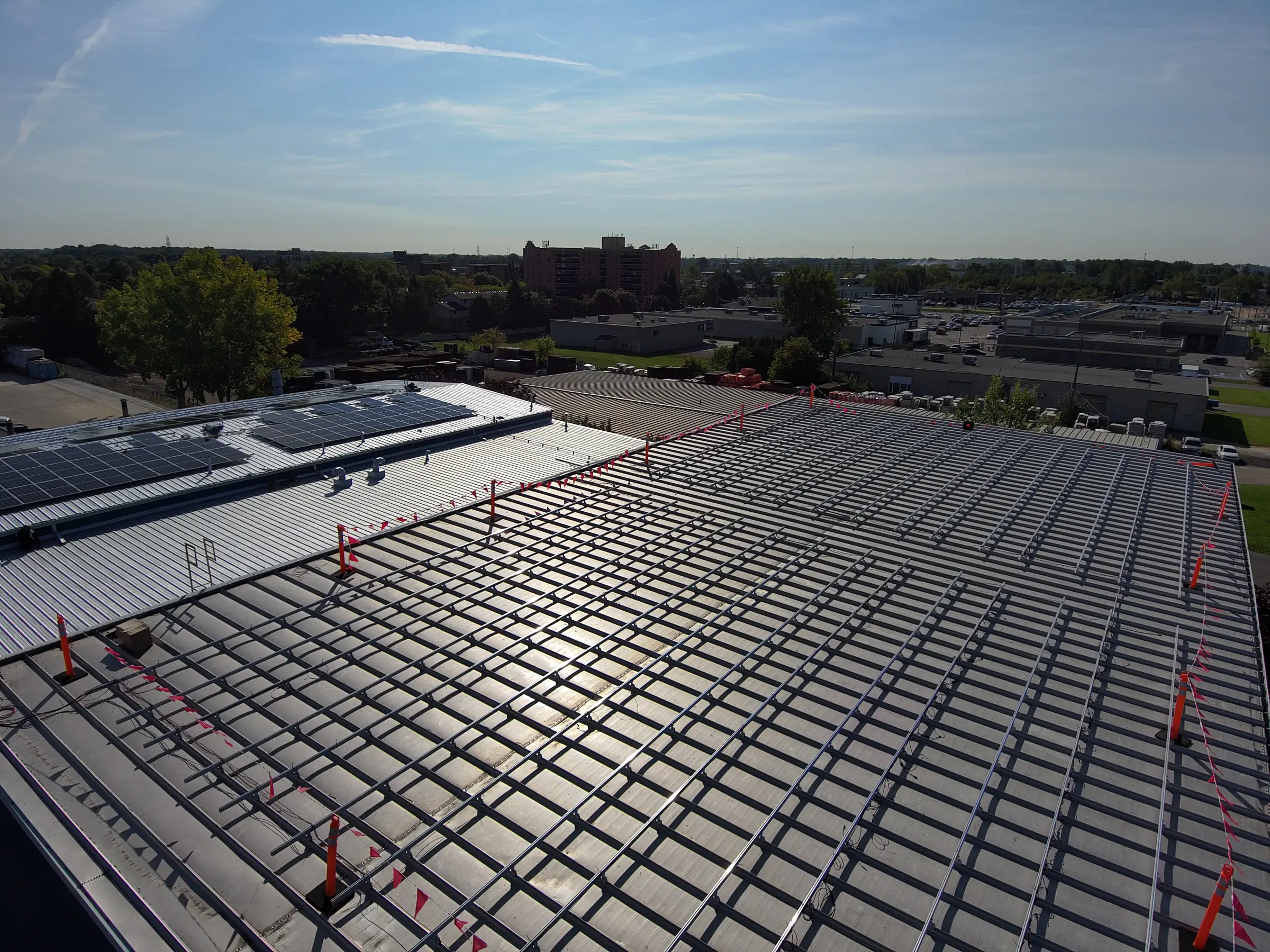
Hanwha Q Cells modules were selected for long-term performance and reliability. Fronius inverters support effective on-site performance monitoring. TerraGen racking was chosen for structural durability and roof integration. Commercial operation was achieved on December 12, 2023.
The numbers, then the consequence.
- 01278,205 kWh of solar electricity generated annually.
- 0250.4% of the facility's annual electricity consumption offset by solar.
- 03System commissioned December 12, 2023, integrated without disruption to precision manufacturing operations.
Equivalent to removing 4 passenger vehicles from Ontario roads annually.
For the facilities and engineering audience.
The system consists of 262.6 kW DC (547 Hanwha Q Cells modules) paired with 180 kW AC via Fronius inverters. TerraGen racking was used throughout the installation. Following commissioning, ongoing performance can be supported through a structured solar operations and maintenance program to maximize long-term production and system visibility.
Fronius inverters support ongoing production monitoring and operational insight, providing the data visibility appropriate for a precision manufacturing environment.
Facility characteristics that shaped the design.
- Precision component manufacturer serving hydro, power generation, marine, mining, and industrial rotating equipment markets
- Continuous baseline electricity use tied to machining, CNC processing, and finishing operations
- Periodic heavier loads from production cycles and equipment startup
- Operational continuity non-negotiable during installation and commissioning
What was installed.
Related Questions
Looking for more information? Explore related questions from our Knowledge Centre covering project planning, technology considerations, incentives, and operational best practices.
Evaluating rooftop solar for a commercial or industrial facility? Understanding how solar aligns with your consumption profile and long-term objectives is the first step.
- ·Roof structural and shading review
- ·Annual production model
- ·Net-Metering interconnection check
- ·Incentive & financing stack
- ·Two-scenario capital plan