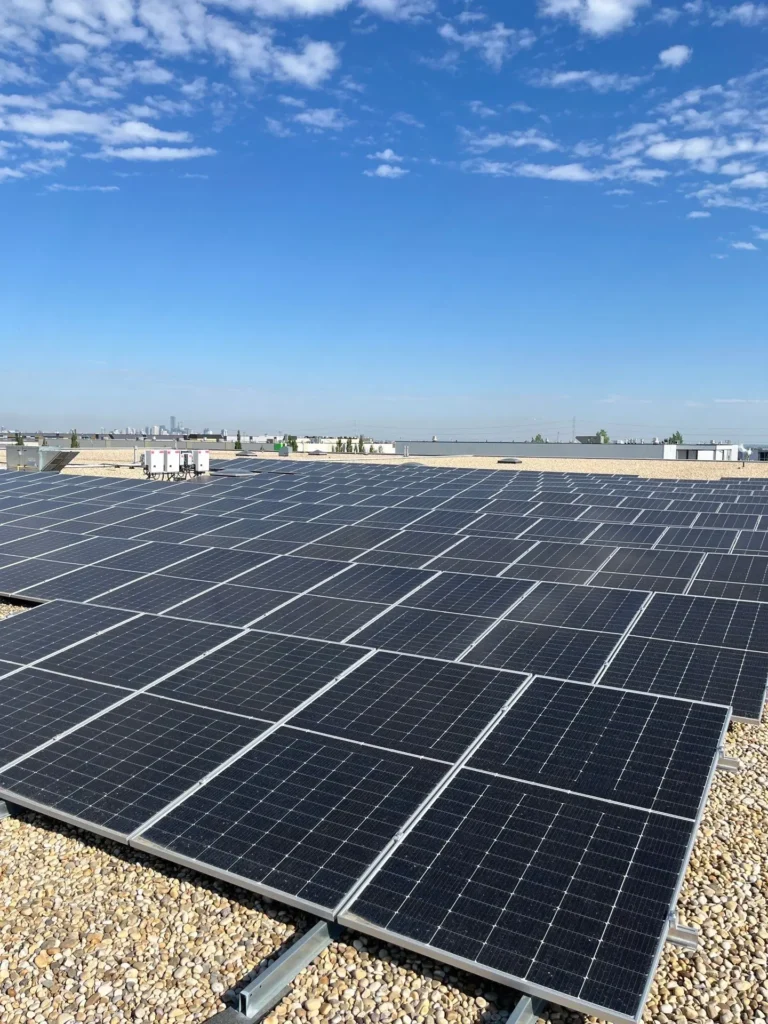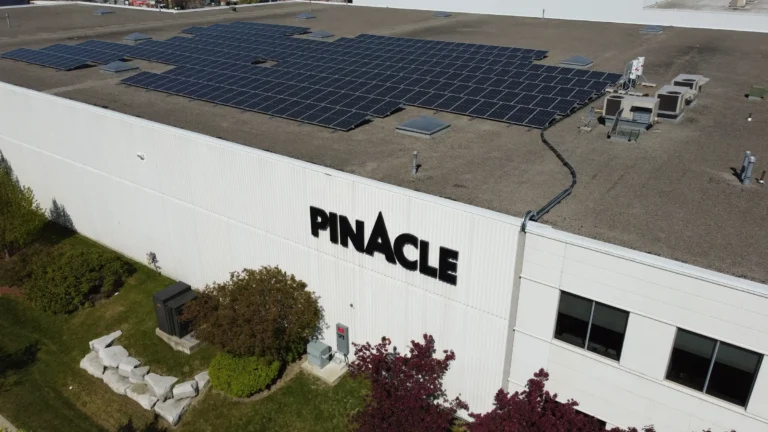

36.4 kW Commercial Solar Scarborough Project
Rooftop solar designed around limited roof space at an urban commercial property in Scarborough, Ontario.
A high daytime load against a roof asset approaching the end of its replacement cycle.
Urban commercial buildings often face significant physical limitations when it comes to rooftop solar deployment. Available roof area can be constrained by building design, mechanical equipment, access requirements, and surrounding obstructions — all of which limit how much solar capacity can realistically be installed.
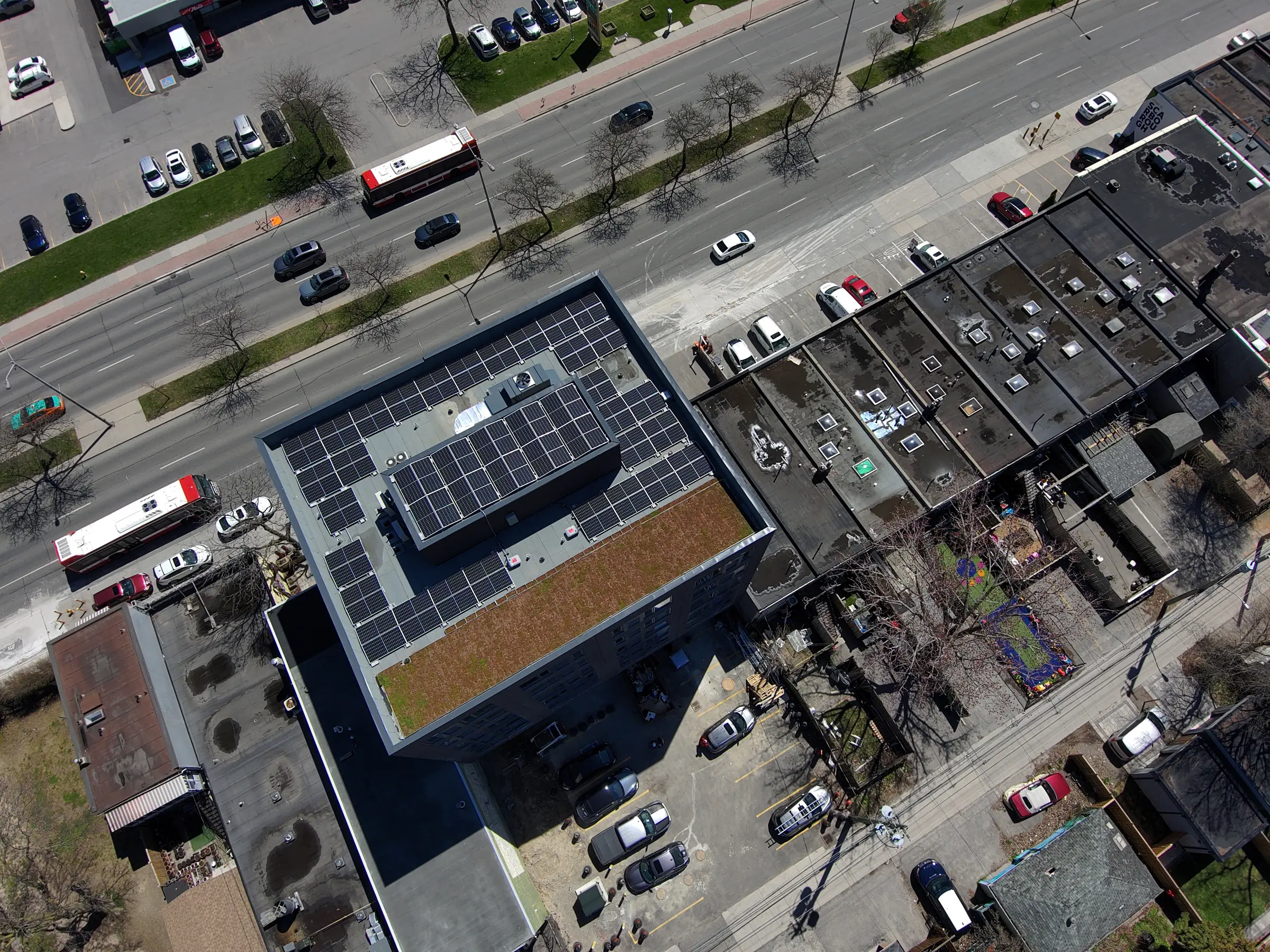
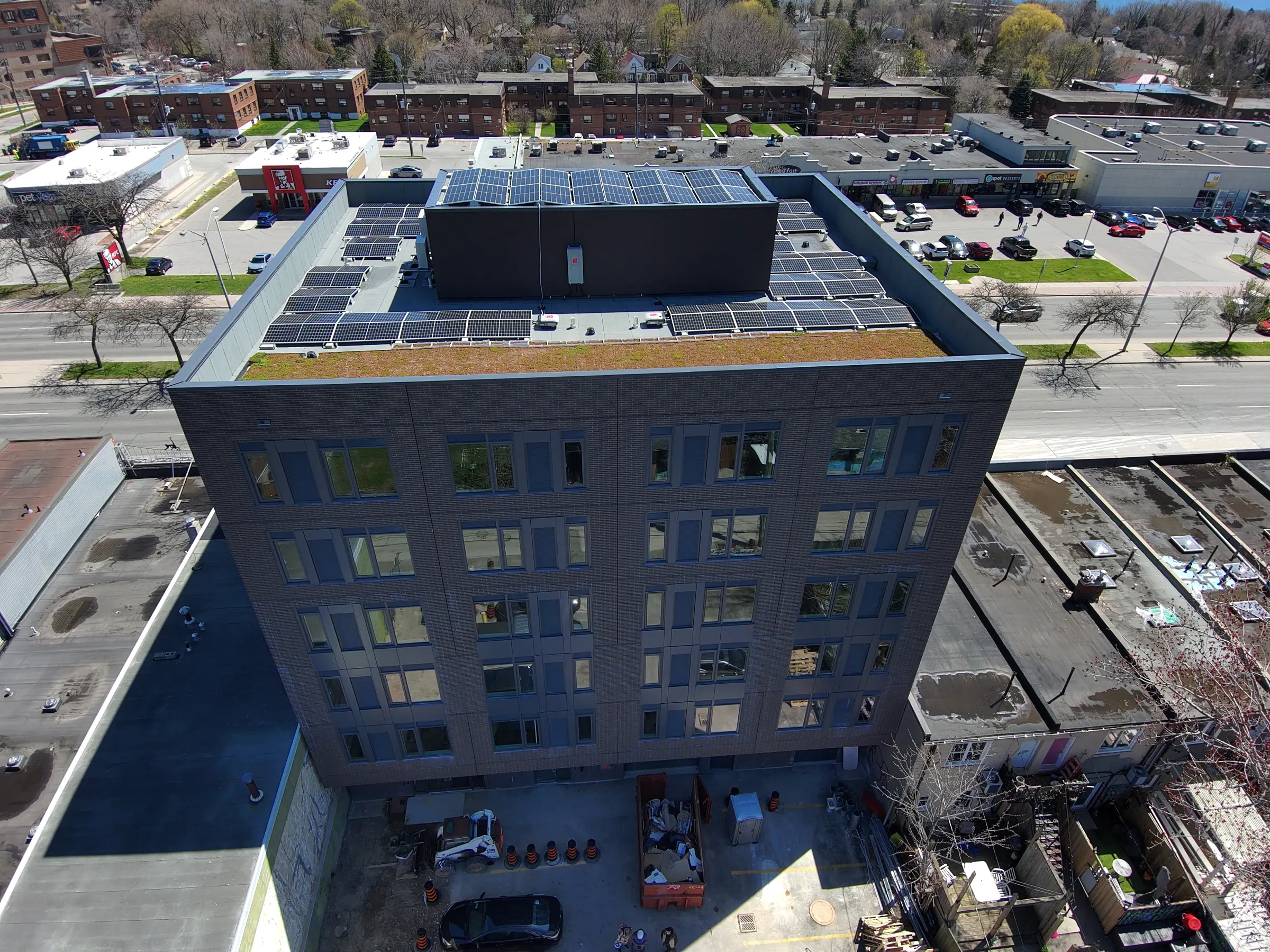
At Mutual Developments’ Scarborough property, rooftop space was limited and partially obstructed by existing building infrastructure. While the property’s electricity demand was substantial, only a portion of the roof was suitable for solar installation. The challenge was to design a solar system that could be deployed safely and effectively within these constraints.
Size to the service. Mount without penetrations.
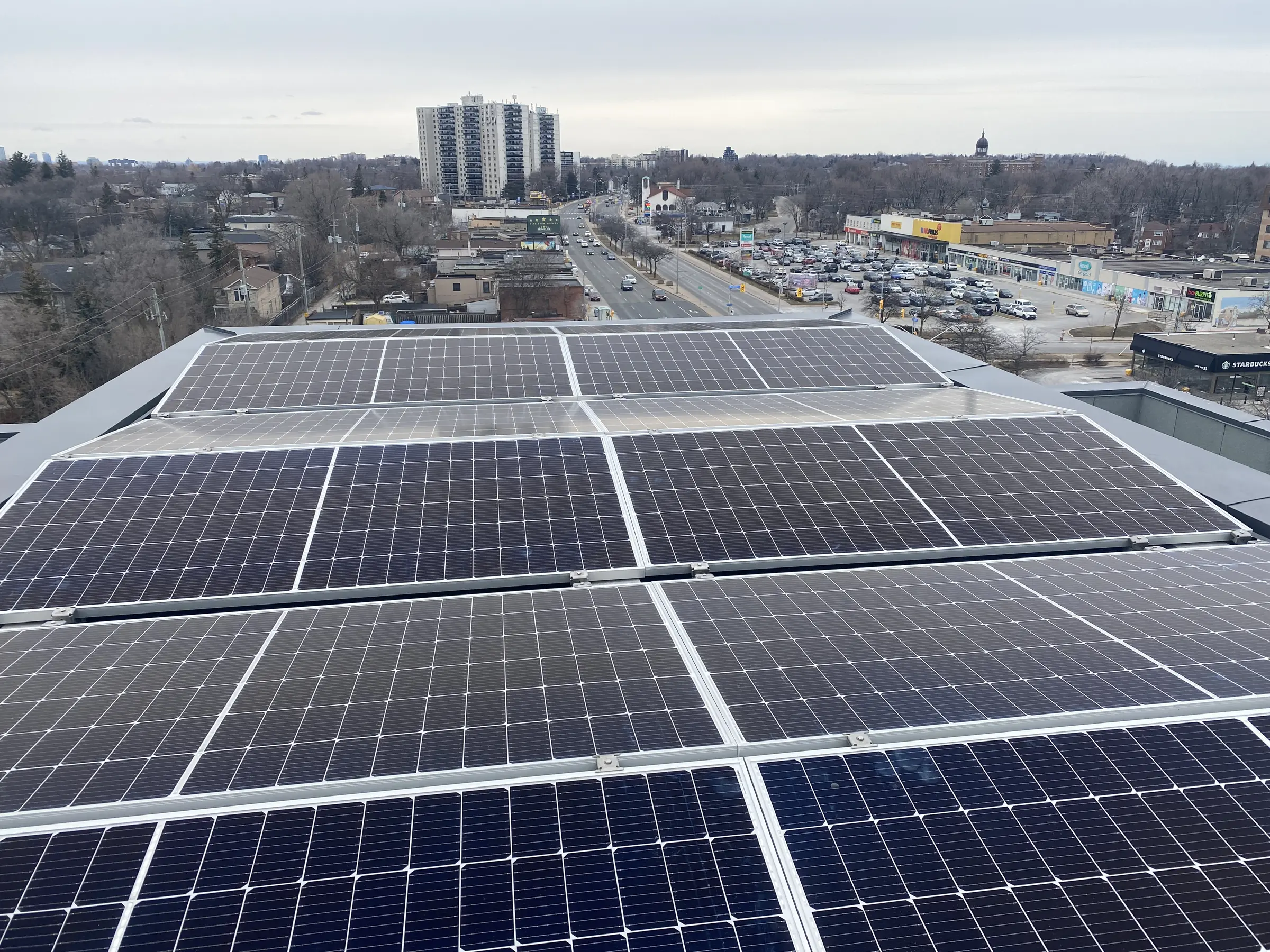
A compact rooftop solar PV system was engineered specifically around the available, unobstructed roof area. System sizing reflected the portions of the roof that could support solar while meeting access, safety, and structural requirements.
Rather than overstating potential impact, the design focused on delivering reliable on-site generation within the site’s physical limits. The system integrates cleanly with existing electrical infrastructure and reached commercial operation on May 17, 2024.
This Commercial Solar Scarborough project shows how rooftop solar can be integrated into urban commercial real estate where available roof area is limited.
The numbers, then the consequence.
- 0130,500 kWh of solar electricity generated annually.
- 024.6% of the property's annual electricity consumption offset by solar.
- 03Solar deployed successfully despite significant roof constraints and obstructions.
- 04System commissioned May 17, 2024, without disruption to building operations.
Supplemental on-site generation within the physical constraints of an urban commercial property.
For the facilities and engineering audience.
The project’s defining constraint was not electricity demand, but usable roof area. Mechanical equipment, access pathways, and urban rooftop limitations significantly reduced the portion of the roof available for solar deployment.
Rather than maximizing system size, the design focused on achieving the highest practical solar utilization within the site’s physical constraints. The resulting installation demonstrates how commercial real estate owners can incorporate on-site generation even when rooftop conditions limit available space.
Urban commercial properties frequently require balancing energy generation, building operations, and roof access requirements. This project illustrates how careful system design can successfully integrate solar into complex commercial environments without affecting tenant operations or building functionality.
Facility characteristics that shaped the design.
- Urban commercial property with constrained rooftop availability
- Roof obstructions and mechanical equipment limiting deployable solar area
- Electricity demand driven by base building systems and tenant operations
- Solar implemented as a supplemental on-site generation source within physical constraints
What was installed.
Questions This Project Helps Answer
Every facility has unique operational requirements, infrastructure constraints, and business objectives. These questions highlight some of the considerations, decisions, and lessons that emerged from this project and may help other organizations evaluating similar opportunities.
- Yes, but the system size may be limited. Commercial roofs can be constrained by mechanical equipment, access pathways, structural considerations, shading, and code requirements. These constraints do not necessarily eliminate the opportunity for solar. They require a more precise design process to identify the portion of the roof that can be used safely and practically.
- Rooftop equipment affects where panels can be placed, how maintenance access is preserved, and how much unobstructed space is available for installation. A solar design must work around mechanical units, clearances, access routes, and structural limitations so that the building can continue operating and maintenance activities remain practical.
- Commercial property owners should not assume that limited roof space means solar is impossible. A smaller system can still provide value when it is designed around the building's physical constraints and electricity profile. A feasibility assessment can clarify whether the available roof area supports a practical project.
Related Questions
Looking for more information? Explore related questions from our Knowledge Centre covering project planning, technology considerations, incentives, and operational best practices.
Evaluating rooftop solar for a commercial or industrial facility? Understanding how solar aligns with your consumption profile and long-term objectives is the first step.
- ·Roof structural and shading review
- ·Annual production model
- ·Net-Metering interconnection check
- ·Incentive & financing stack
- ·Two-scenario capital plan