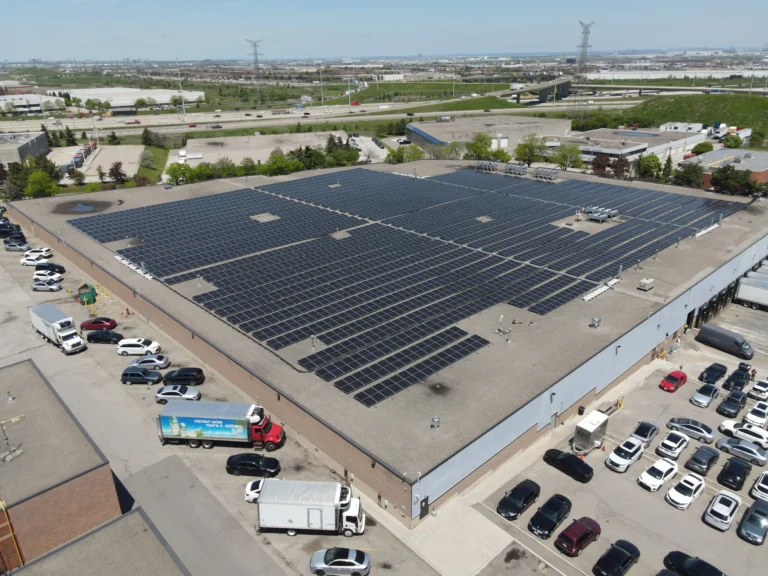

593 kW rooftop solar for a food production facility in Markham, Ontario
Solar sized to the facility's available roof area and annual consumption — not to a theoretical maximum.
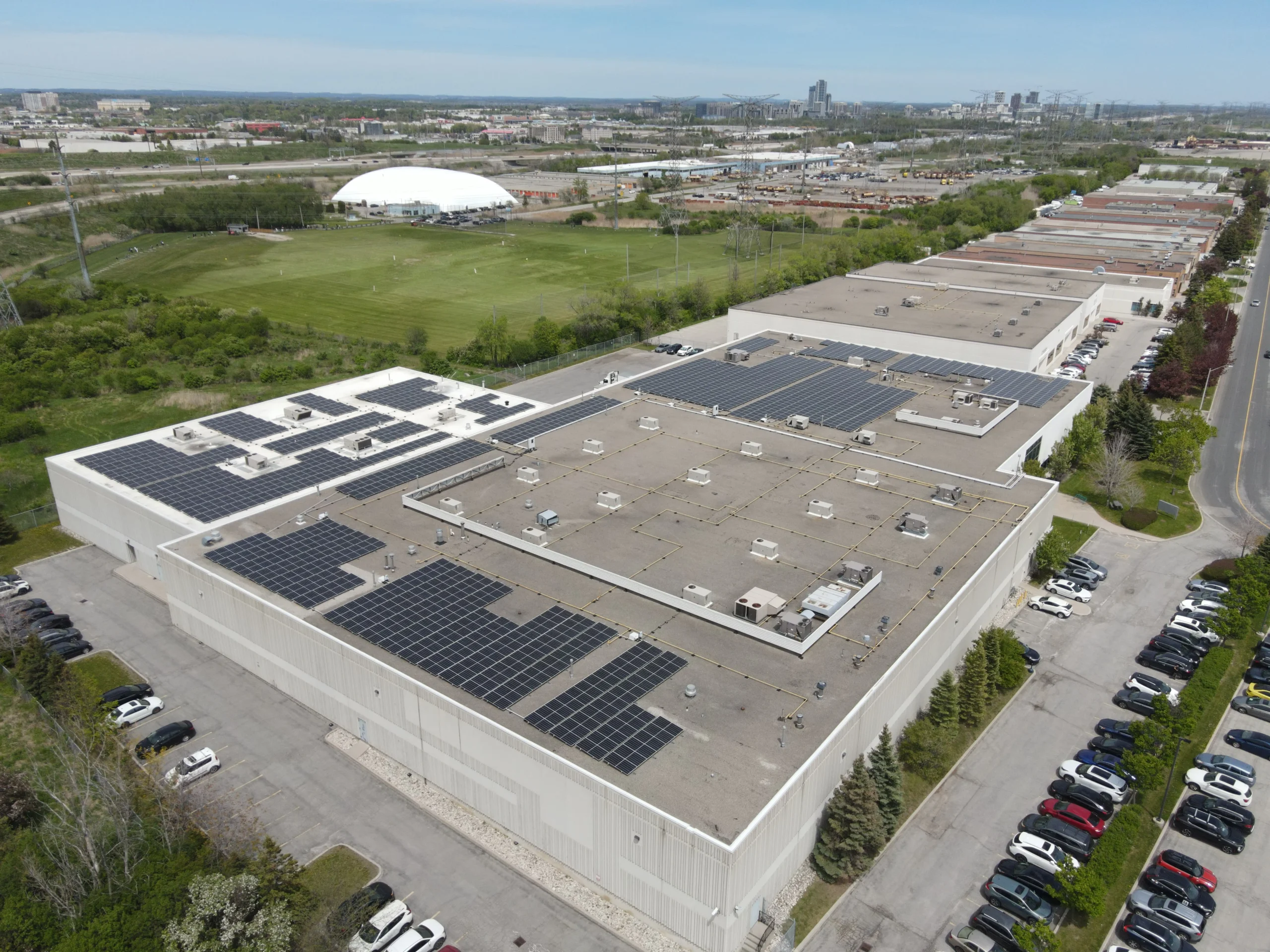
A high daytime load against a roof asset approaching the end of its replacement cycle.
Food production facilities in urban and suburban areas often face practical constraints that influence how much on-site generation can be deployed. Roof geometry, setbacks, structural considerations, and existing equipment frequently limit usable space, even when annual electricity demand remains high.
At Sunny Crunch Foods’ Markham facility, the objective was not to maximize system size at all costs, but to deploy solar where it could be installed efficiently, safely, and with predictable performance given the site’s physical constraints.
The project required a solution that fit the building as it exists, rather than forcing a design that compromised constructibility or long-term reliability.
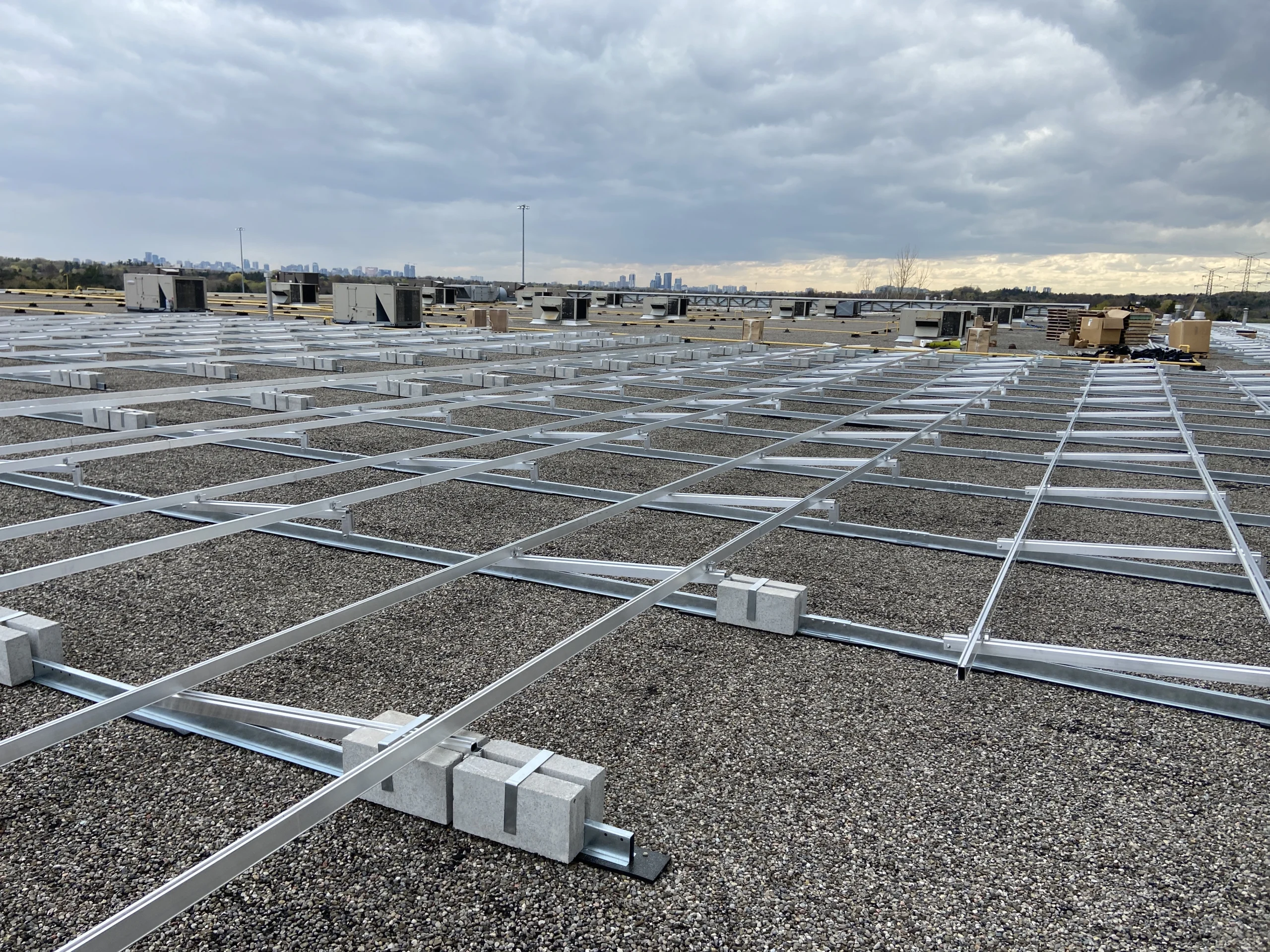
Size to the service. Mount without penetrations.
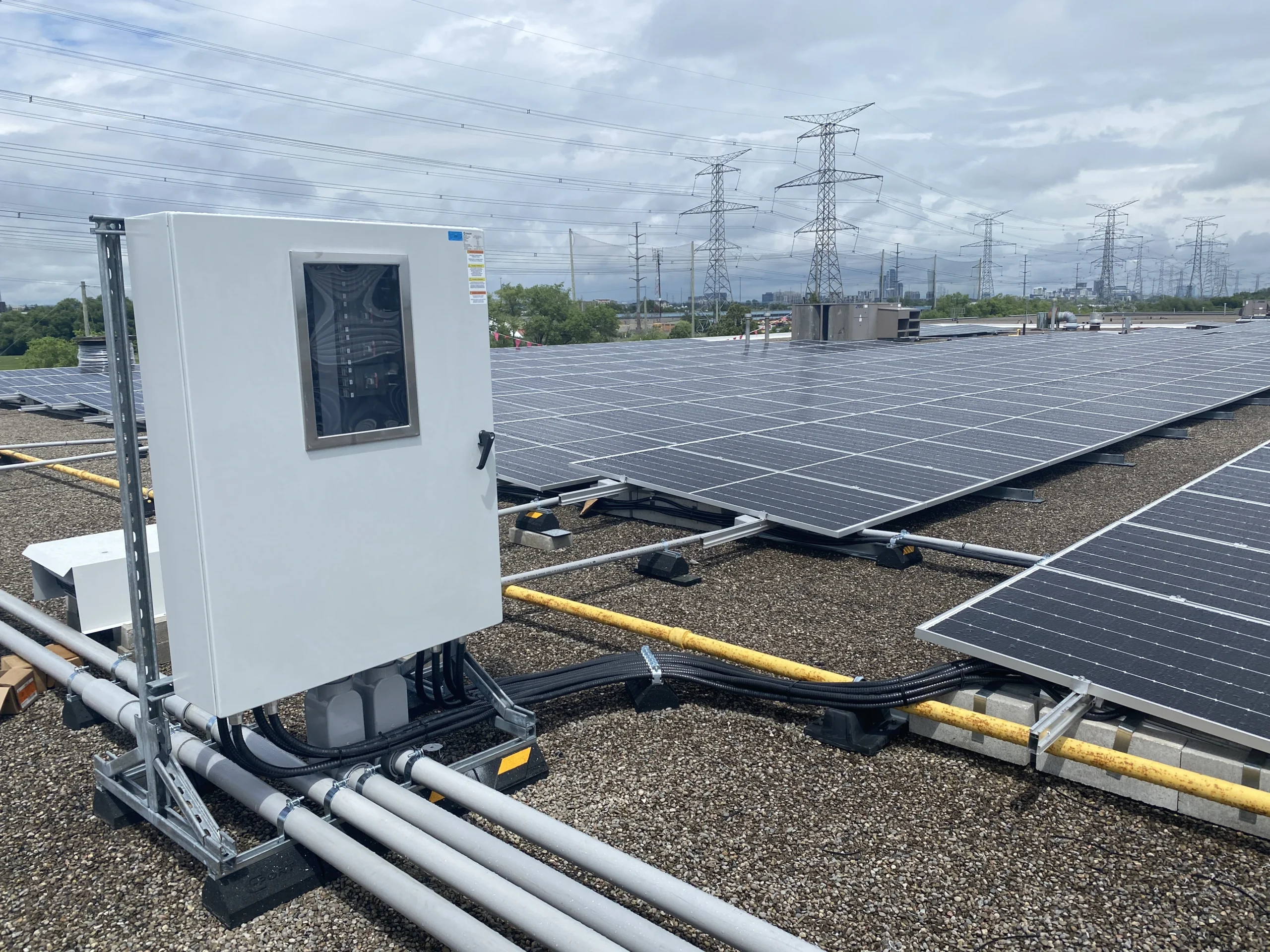
A rooftop solar system was engineered to make effective use of available roof area. System capacity and layout were determined based on structural assessments, roof utilization limits, and electrical integration requirements, ensuring the installation could be executed within an active manufacturing environment.
The system offsets a meaningful portion of the facility’s annual electricity consumption while operating as a stable, low-maintenance addition to the facility’s electrical infrastructure. Focusing on feasible deployment rather than theoretical maximums delivers consistent value without introducing unnecessary complexity.
The numbers, then the consequence.
- 01613,400 kWh of solar electricity generated annually.
- 0235.2% of the facility's annual electricity consumption offset by solar.
- 03System commissioned December 21, 2023, integrated without disruption to production.
Equivalent to removing 8 passenger vehicles from Ontario roads annually.
For the facilities and engineering audience.
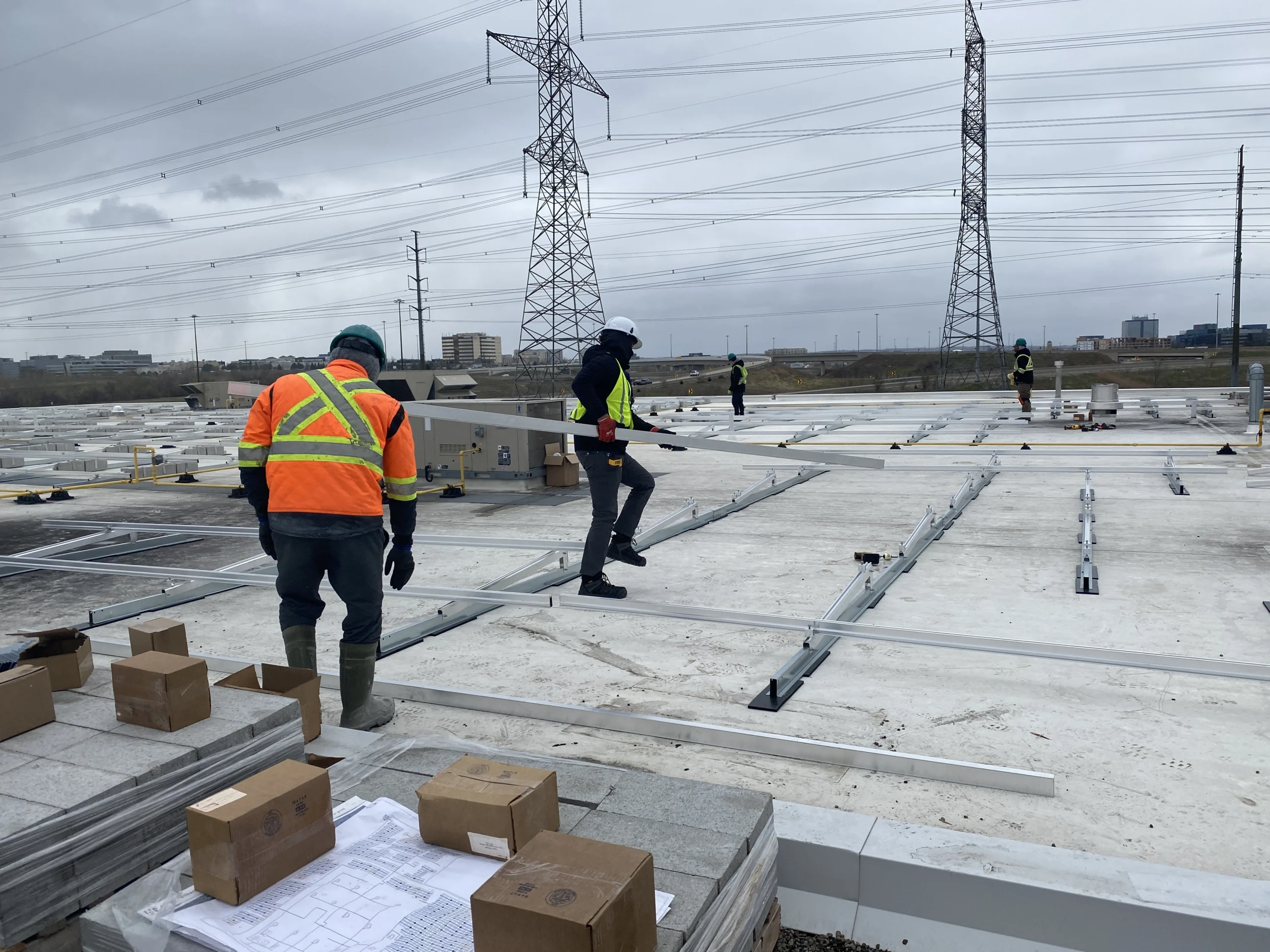
The rooftop solar system consists of 593.3 kW DC of installed capacity paired with 408 kW AC of inverter capacity via Fronius Symo Advanced inverters. TerraGen rooftop racking was engineered to integrate with the existing roof structure.
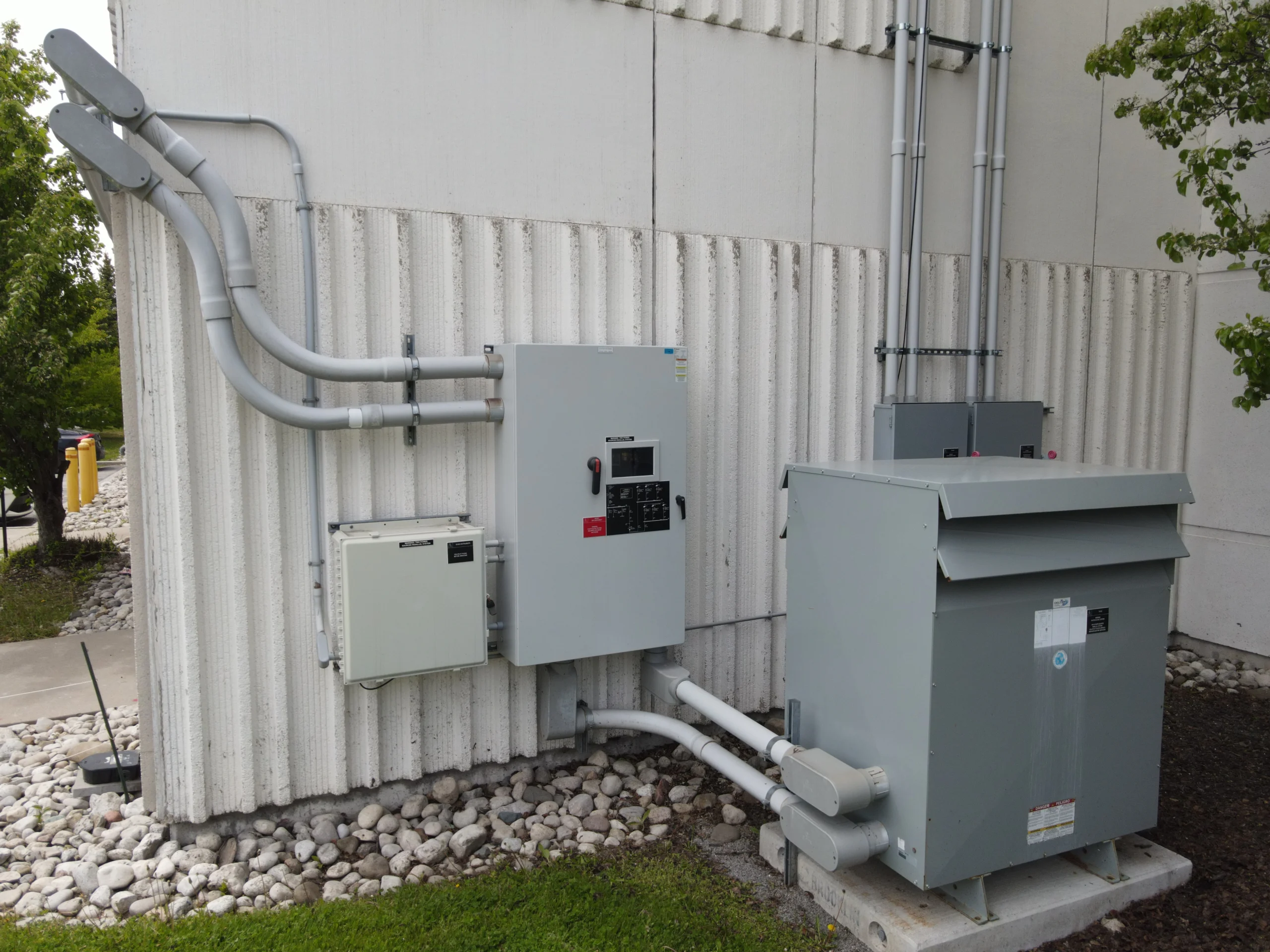
Electrical integration was coordinated with existing service infrastructure to support safe, reliable operation without disrupting production activities. System design prioritized long-term performance, serviceability, and structural compatibility.
Facility characteristics that shaped the design.
- Food production facility manufacturing private-label nutrition products
- Annual electricity demand driven by processing and production equipment
- Urban site with defined roof area and layout constraints
- Solar system sized to maximize feasible rooftop utilization
What was installed.
Related Questions
Looking for more information? Explore related questions from our Knowledge Centre covering project planning, technology considerations, incentives, and operational best practices.
Evaluating rooftop solar for a commercial or industrial facility? Understanding how solar aligns with your consumption profile and long-term objectives is the first step.
- ·Roof structural and shading review
- ·Annual production model
- ·Net-Metering interconnection check
- ·Incentive & financing stack
- ·Two-scenario capital plan