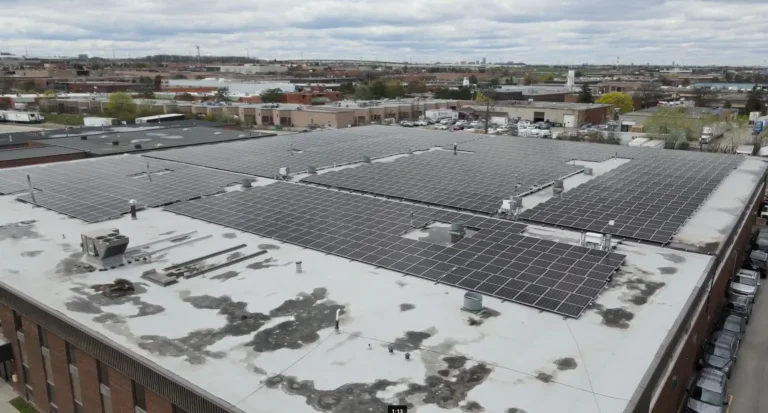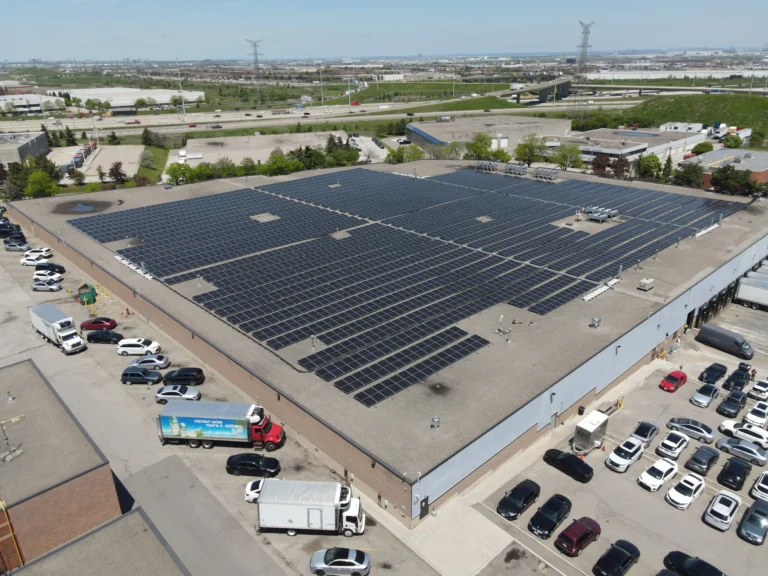

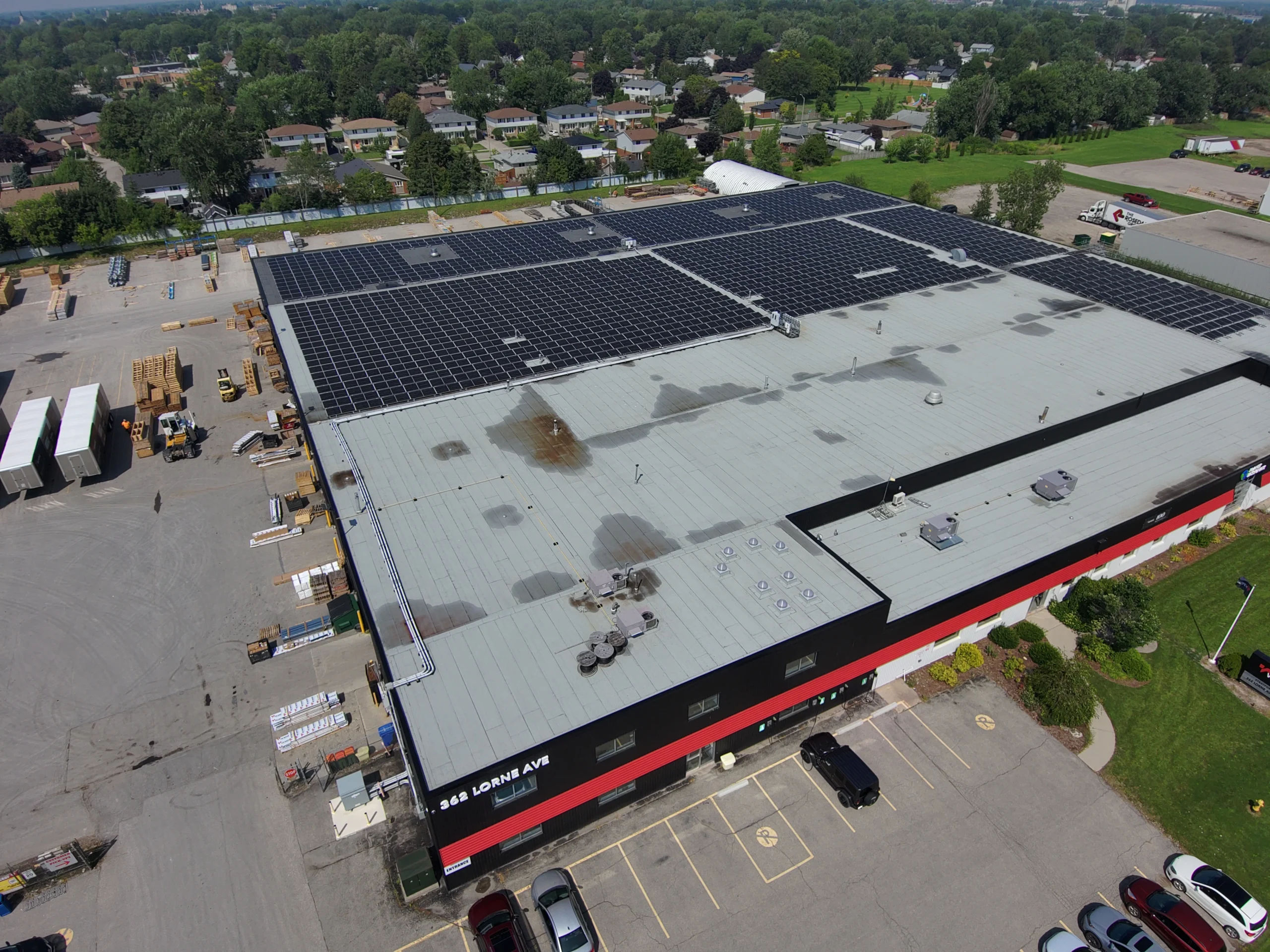
590.2 kW rooftop solar for a building products manufacturer in Stratford, Ontario
80.3% annual electricity offset at a metal roofing and building envelope manufacturing facility.
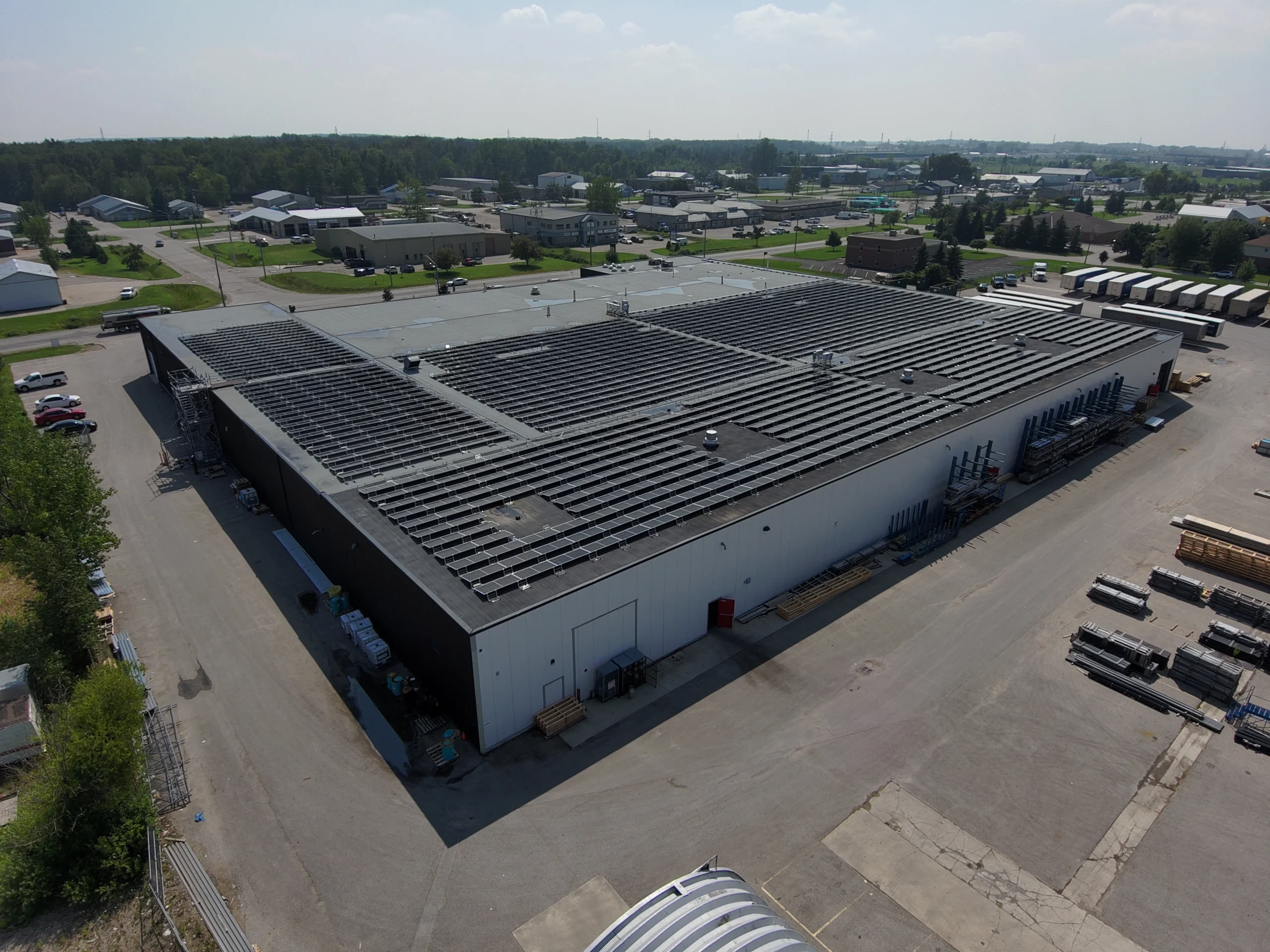
A high daytime load against a roof asset approaching the end of its replacement cycle.
Building products facilities typically operate with electricity demand tied to production schedules, material movement, and site services that must remain dependable through seasonal variations and changing throughput.
For Vicwest, the objective was to deploy a system that could offset a meaningful share of annual electricity consumption while remaining operationally straightforward. Solar generation needed to align with real facility electricity use over the course of the year, and performance needed to be visible and measurable at the system level.
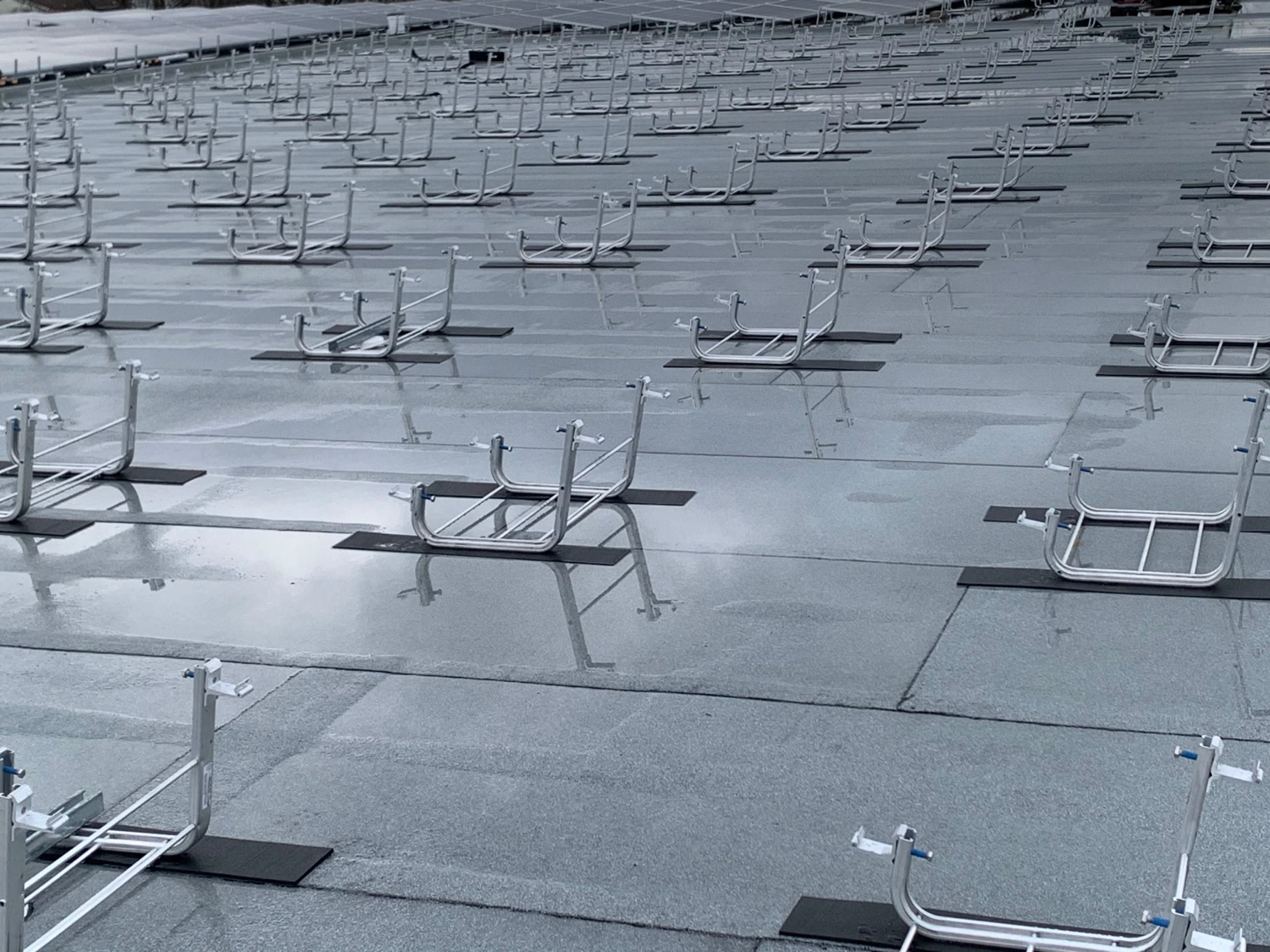
Size to the service. Mount without penetrations.
Green Integrations designed and delivered a solar PV system sized for high-impact annual electricity offset and long-term performance visibility.
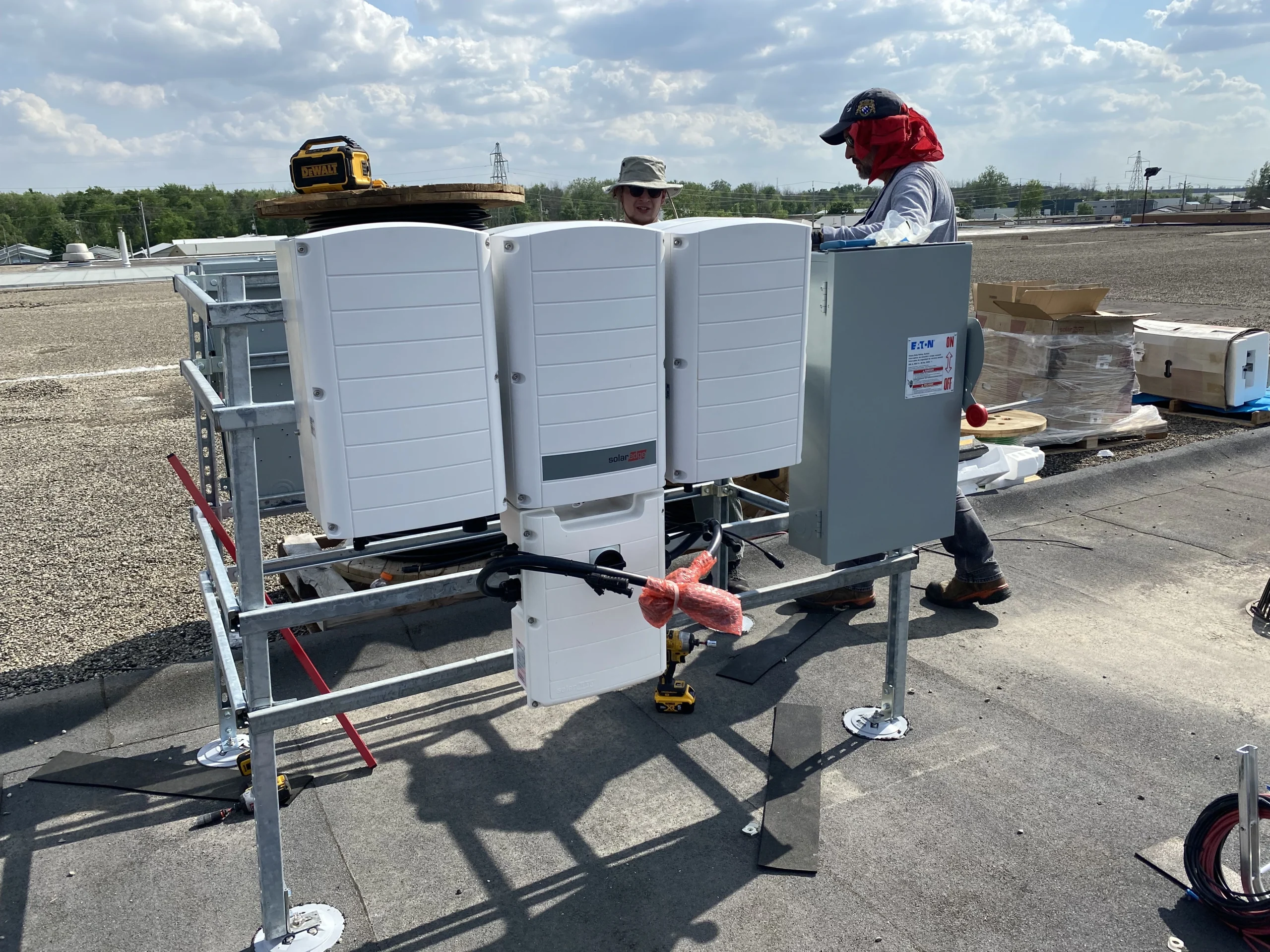
System capacity was selected to drive a high percentage of annual electricity offset. SolarEdge inverter architecture supports production visibility and ongoing troubleshooting efficiency. Unirac racking was selected for long-term structural performance. Commercial operation was achieved on June 1, 2023.
Recognized beyond the project
The Vicwest Building Products project was highlighted in The Globe and Mail as part of a feature examining how commercial property owners are using solar to reduce electricity costs, support ESG objectives, and strengthen long-term asset value. The article also includes commentary from Green Integrations President & CEO John Staneko on the growing role of commercial solar and distributed energy systems in Canada.
Read the Globe and Mail articleThe numbers, then the consequence.
- 01719,855 kWh of solar electricity generated annually.
- 0280.26% of the facility's annual electricity consumption offset by solar.
- 03System commissioned June 1, 2023.
Equivalent to removing 10 passenger vehicles from Ontario roads annually.
For the facilities and engineering audience.
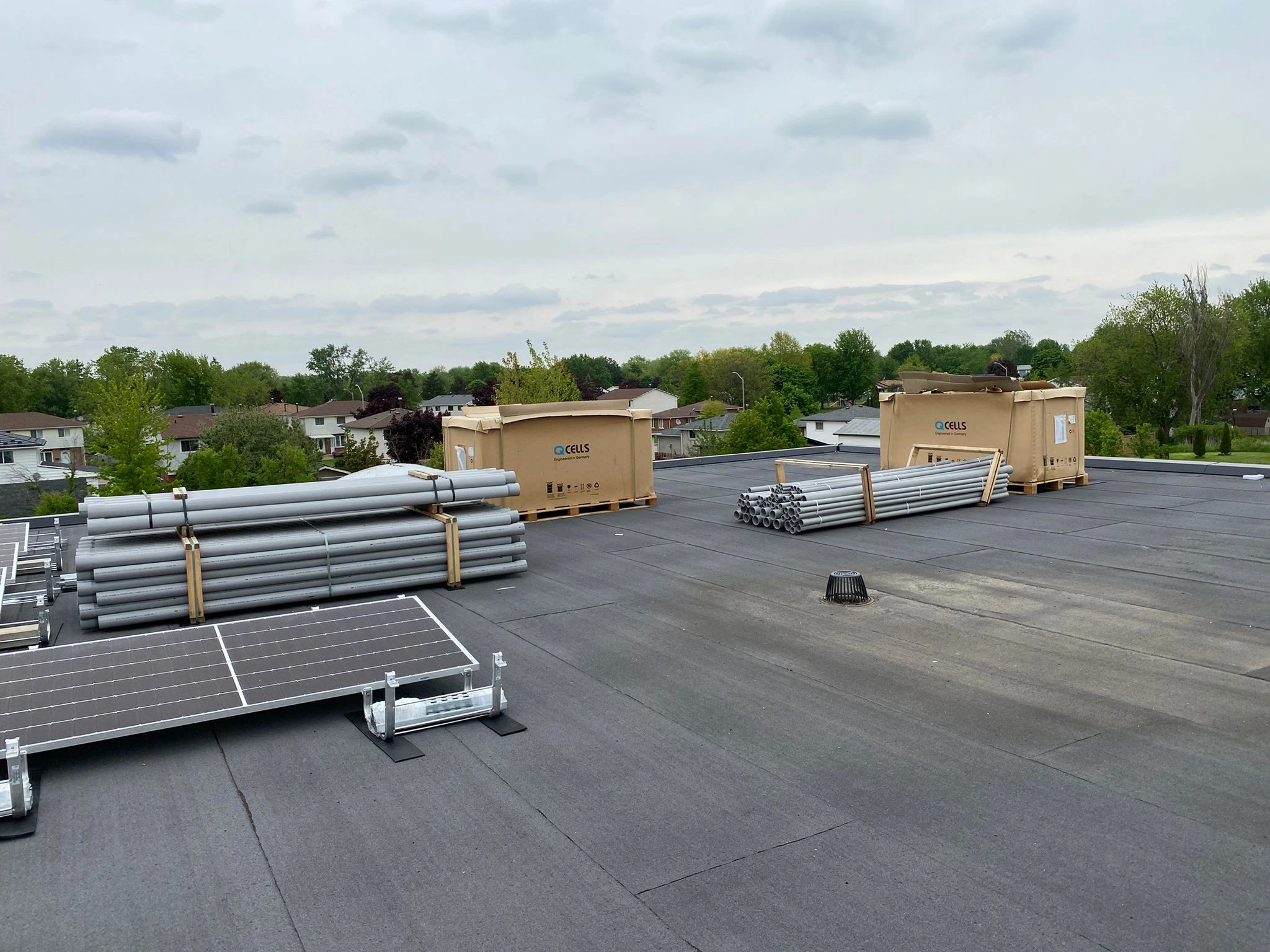
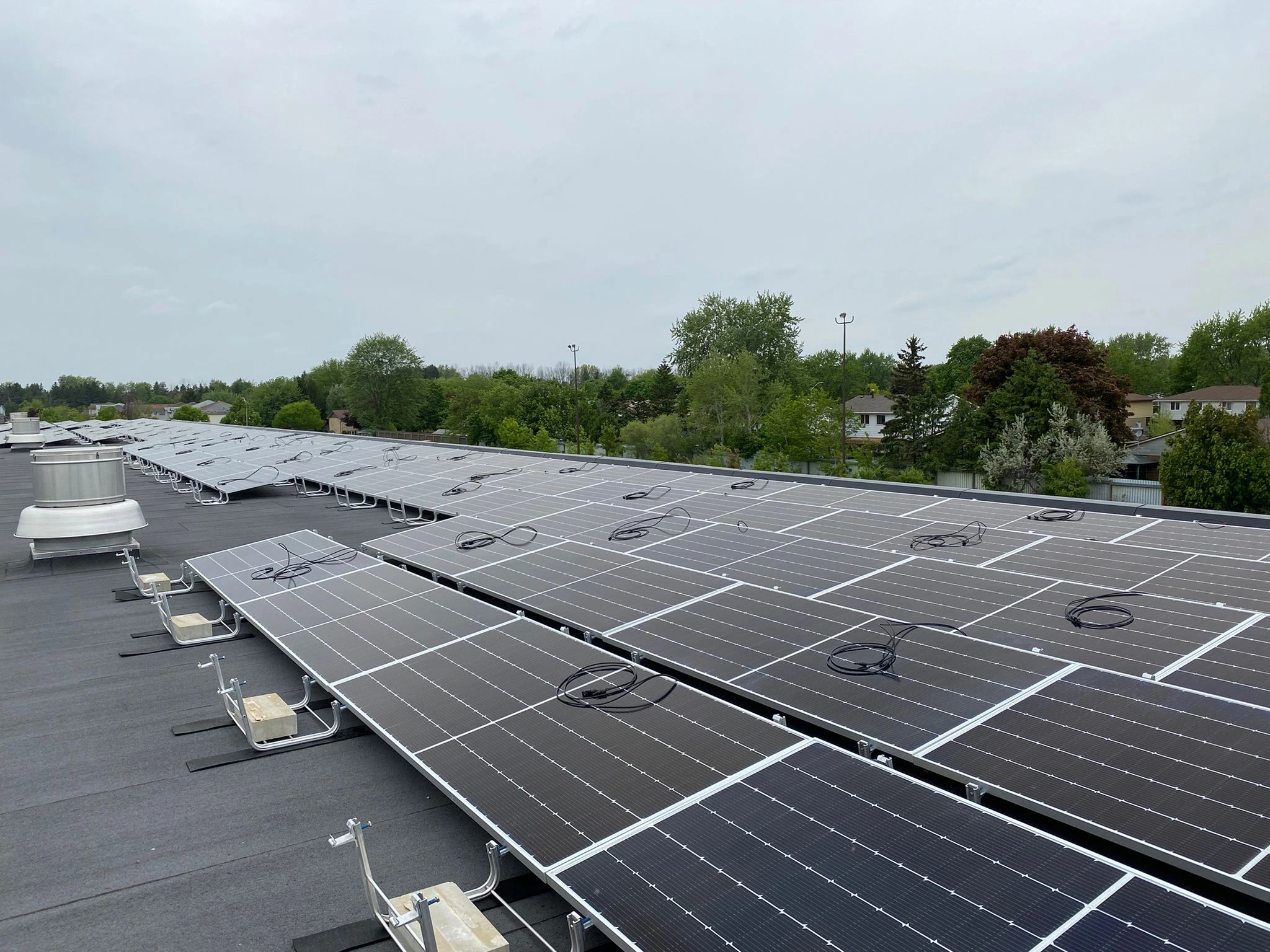
The system consists of 590.2 kW DC (1,234 Hanwha Q CELLS modules) paired with 500 kW AC via SolarEdge inverters. Unirac rooftop racking was used throughout the installation.
SolarEdge inverter architecture enables module-level monitoring, providing production visibility and the ability to identify and address performance variations efficiently.
Facility characteristics that shaped the design.
- Building products facility with electricity demand tied to production schedules and material movement
- Operations requiring reliable electricity through seasonal throughput variations
- Large rooftop area enabling substantial system deployment
- Annual load profile enabling a material electricity offset
What was installed.
Related Questions
Looking for more information? Explore related questions from our Knowledge Centre covering project planning, technology considerations, incentives, and operational best practices.
Evaluating rooftop solar for a commercial or industrial facility? Understanding how solar aligns with your consumption profile and long-term objectives is the first step.
- ·Roof structural and shading review
- ·Annual production model
- ·Net-Metering interconnection check
- ·Incentive & financing stack
- ·Two-scenario capital plan