
Community & PartnersSolar Calculator
Green Integrations
Start your assessment
InsightsMarket & TechnologyTechnology Giants Constantly Closer to Going Maximum…
Market & Technology2 min read

Technology Giants Constantly Closer to Going Maximum Solar

A look at how major tech companies are accelerating solar adoption, the innovations driving their energy strategies, and what this shift toward maximum solar use means for corporate sustainability and the broader clean energy transition.

Technology Giants Constantly Closer to Going Maximum Solar

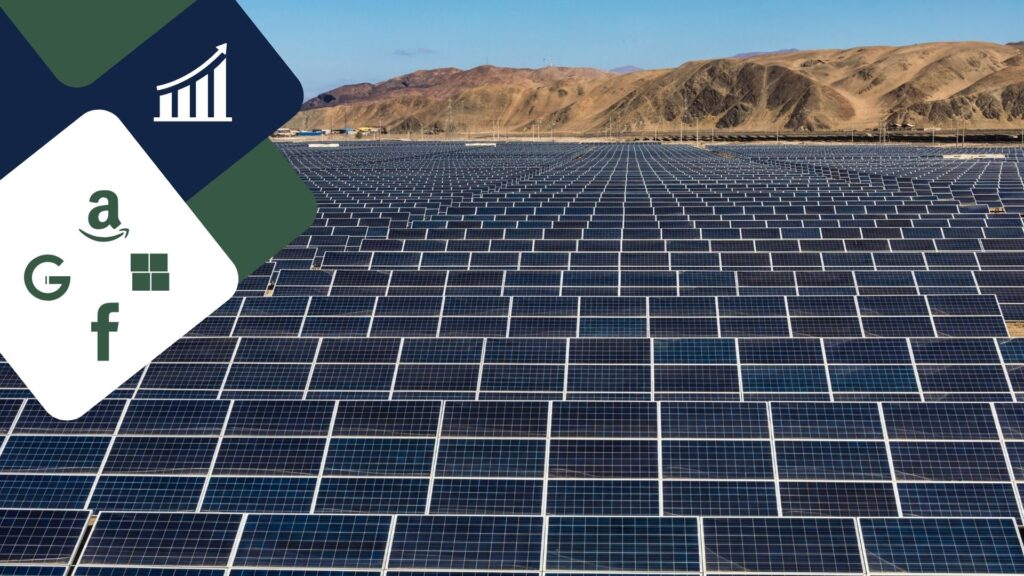
In May 2020, just over a month ago, eCommerce giant Amazon announced 5 new solar plants – in China, Australia and the US. For someone who is not fully aware of what Amazon, Facebook, Google and Microsoft are up to in recent years, this would have been surprising news. However, looking back at the recent slew of renewable projects these giants have launched, Amazon’s announcement seems another in a long list.

Amazon has pledged to generate 80% of its required energy from renewables, primarily from solar, by 2024, and 100% by 2030. It also aims to go net-zero carbon by 2040. Similarly, Microsoft aims to be carbon negative by 2030, and has already made sure that 100% of its global operations are powered by solar and wind power.

Similarly, a few months ago (Sept 2019), Google announced 18 new energy projects across US, Chile and Europe. This includes mainly solar and wind projects. This increases Google’s renewables portfolio by over 40%, to 5,500 MW. Same is the story with Facebook, who has pledged going net zero in a decade.

All the tech-giants are making commitments for solar power, for reasons that are twofold. Firstly, this announces their commitment to emission reductions and their goals toward climate conservation. But another, often not stated reason is the cost savings from it. 

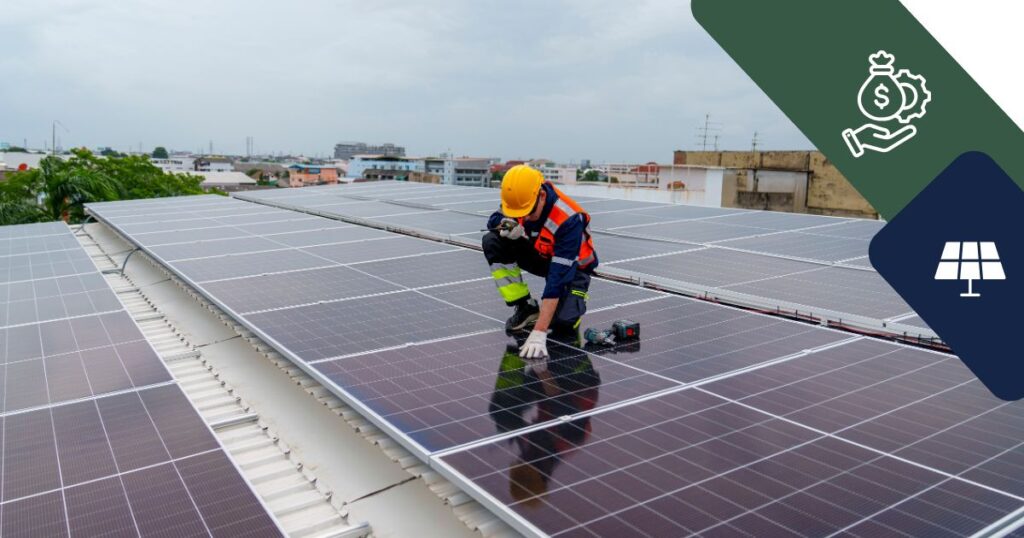
Solar is officially the cheapest source of energy for 85% of the population. Most organizations, irrespective of size, spend a large percentage of their recurring costs on energy. Going solar cuts down this major operational cost. This is the reason why not just large multinationals, but facilities and industries of all sizes are choosing to install solar panels on their roofs.

While Google, Facebook, Microsoft and Amazon are some of the industries who have made official commitments to solar, the coming years will see thousands, arguably millions of businesses going fully solar, thanks to the incredible level of financial sense it makes!


Filed underCommercial SolarTechnology

Frequently asked questions

Large corporations are committing to 100% renewable energy for a combination of financial, regulatory, and market reasons: long-term electricity cost certainty, ESG reporting requirements from investors and regulators, supply chain sustainability commitments from customers, and the improved economics of renewable energy procurement relative to a decade ago. Technology companies with large data centre electricity consumption are among the most active corporate renewable energy buyers because electricity is one of their largest and most predictable operating costs.
Large-scale corporate renewable energy procurement has contributed to the scaling of the global solar supply chain, driving down panel, inverter, and balance-of-system costs that benefit all buyers. The same cost reductions that make solar viable for a 500 MW corporate power purchase agreement also improve the economics of a 500 kW commercial rooftop in Ontario. Commercial and industrial facilities today access solar technology at costs that reflect over a decade of corporate-scale demand driving manufacturing scale.
Corporate ESG reporting frameworks — including the Task Force on Climate-related Financial Disclosures (TCFD), the Global Reporting Initiative (GRI), and emerging Canadian requirements under the Canadian Sustainability Disclosure Standards (CSDS) — require companies to disclose Scope 1 and Scope 2 greenhouse gas emissions. Scope 2 emissions are those from purchased electricity. Onsite solar generation directly reduces Scope 2 emissions and the associated reporting obligation — making it a verifiable, auditable action rather than an accounting adjustment.
Yes — the financial instruments available to large corporations (power purchase agreements, renewable energy certificates) are not the only path to renewable energy cost savings. For commercial and industrial facilities in Canada, onsite solar generation achieves the same outcome — reduced grid electricity purchases, lower Scope 2 emissions, and long-term electricity cost certainty — without requiring corporate- scale procurement volumes. Federal incentives including the Clean Technology Investment Tax Credit (up to 30% refundable) make onsite solar accessible to businesses of all sizes.

More from Market & Technology

View all articles