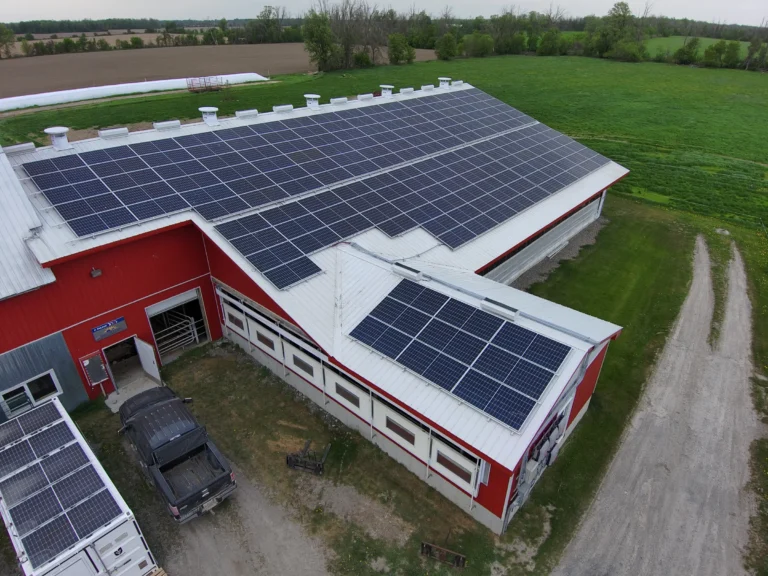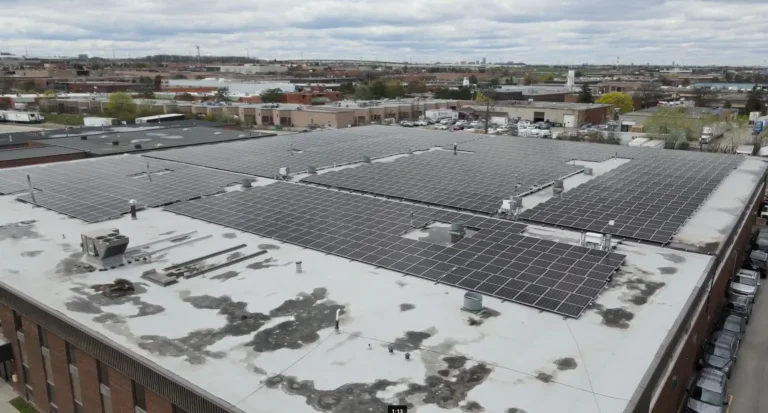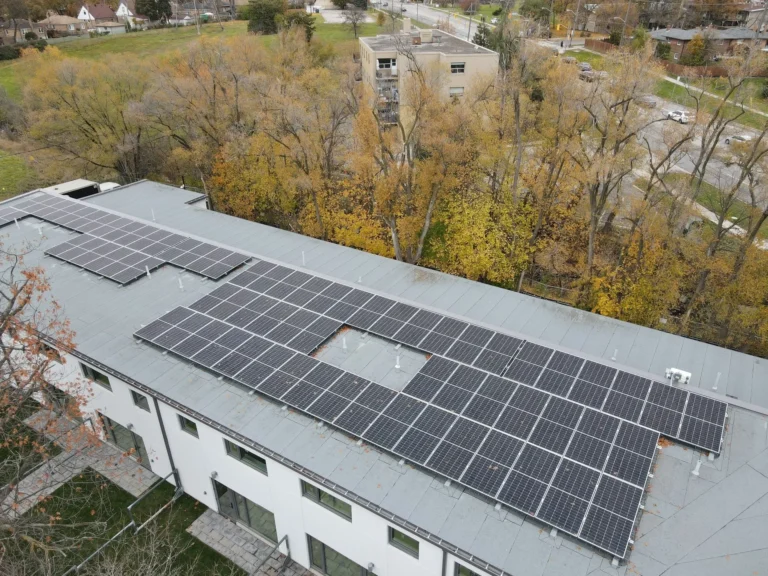
129.8 kW ground-mount solar for an agricultural operation in Blenheim, Ontario
Ground-mount agricultural solar system delivering 51.6% annual electricity offset for an Ontario farming operation.
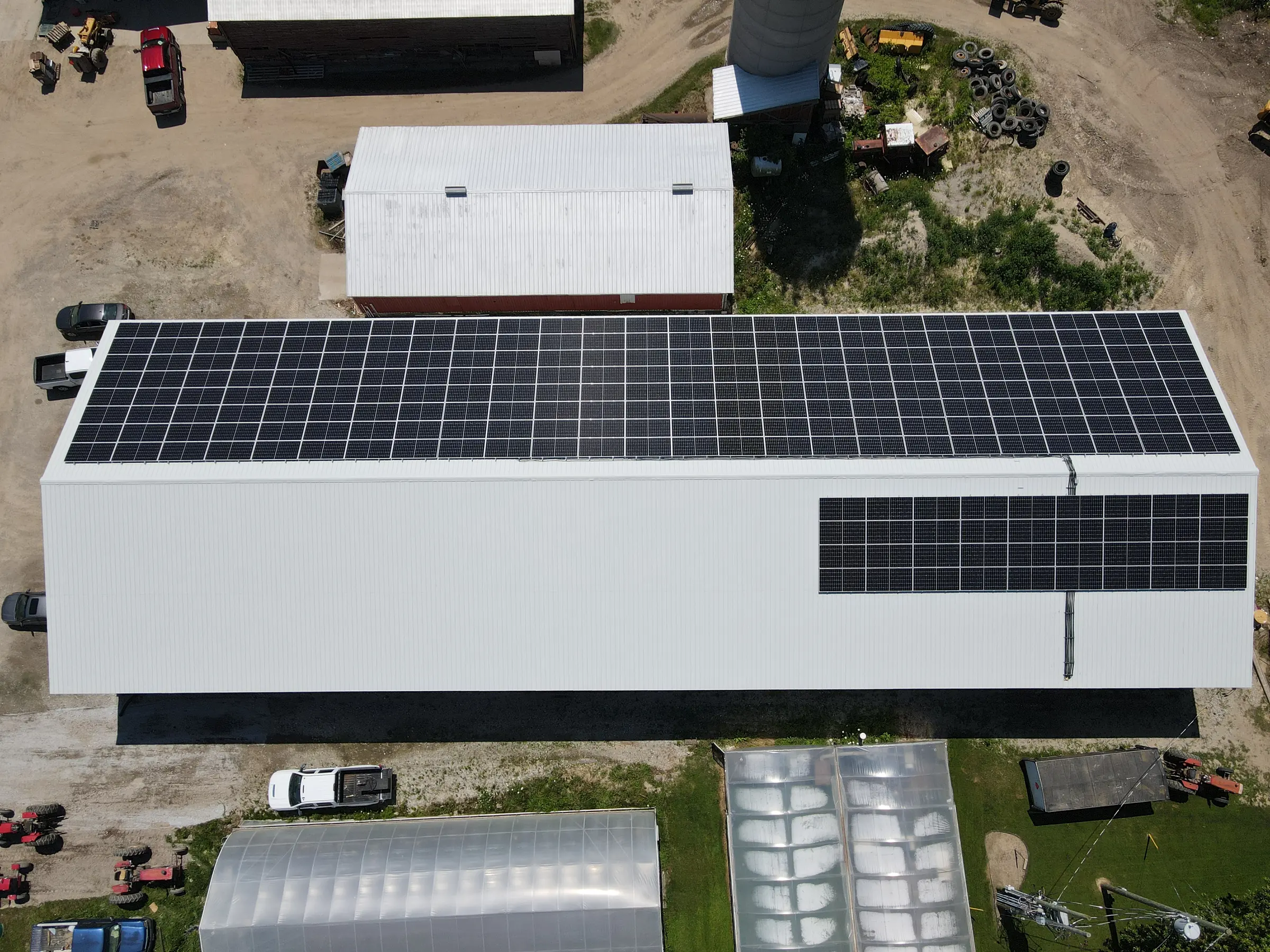
A high daytime load against a roof asset approaching the end of its replacement cycle.
Modern agricultural operations rely on consistent, dependable electricity to support daily production, equipment operation, and facility management. While electricity use varies seasonally, reliability is essential — interruptions can directly impact productivity, operational planning, and cost control.
At R Brush Farms, the objective was to reduce long-term exposure to grid electricity costs while maintaining operational flexibility. Solar was evaluated not as a standalone sustainability measure, but as a practical component of the farm’s electricity strategy.
Size to the service. Mount without penetrations.
A ground-mounted solar PV system was engineered with sizing and layout determined to deliver reliable generation aligned with the farm’s annual electricity consumption profile. The design prioritized straightforward integration with existing electrical infrastructure and durability in an agricultural environment.
Rather than maximizing system size, the focus was on delivering consistent, predictable generation that could meaningfully offset annual electricity use. The system reached commercial operation on February 16, 2025.
The numbers, then the consequence.
- 01141,833 kWh of solar electricity generated annually.
- 0251.6% of the farm's annual electricity consumption offset by solar.
- 03System commissioned February 16, 2025.
Equivalent to removing 2 passenger vehicles from Ontario roads annually.
For the facilities and engineering audience.
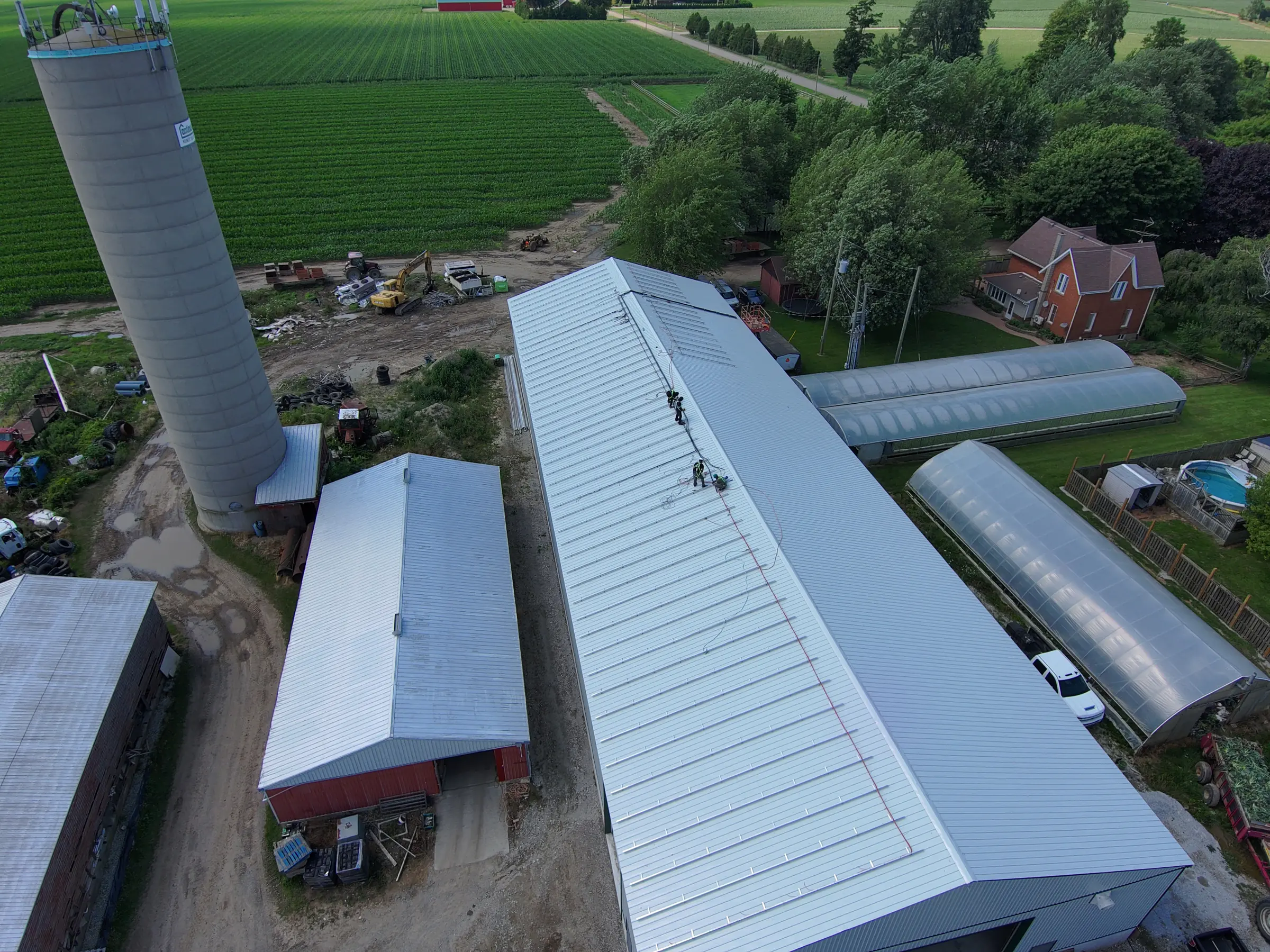
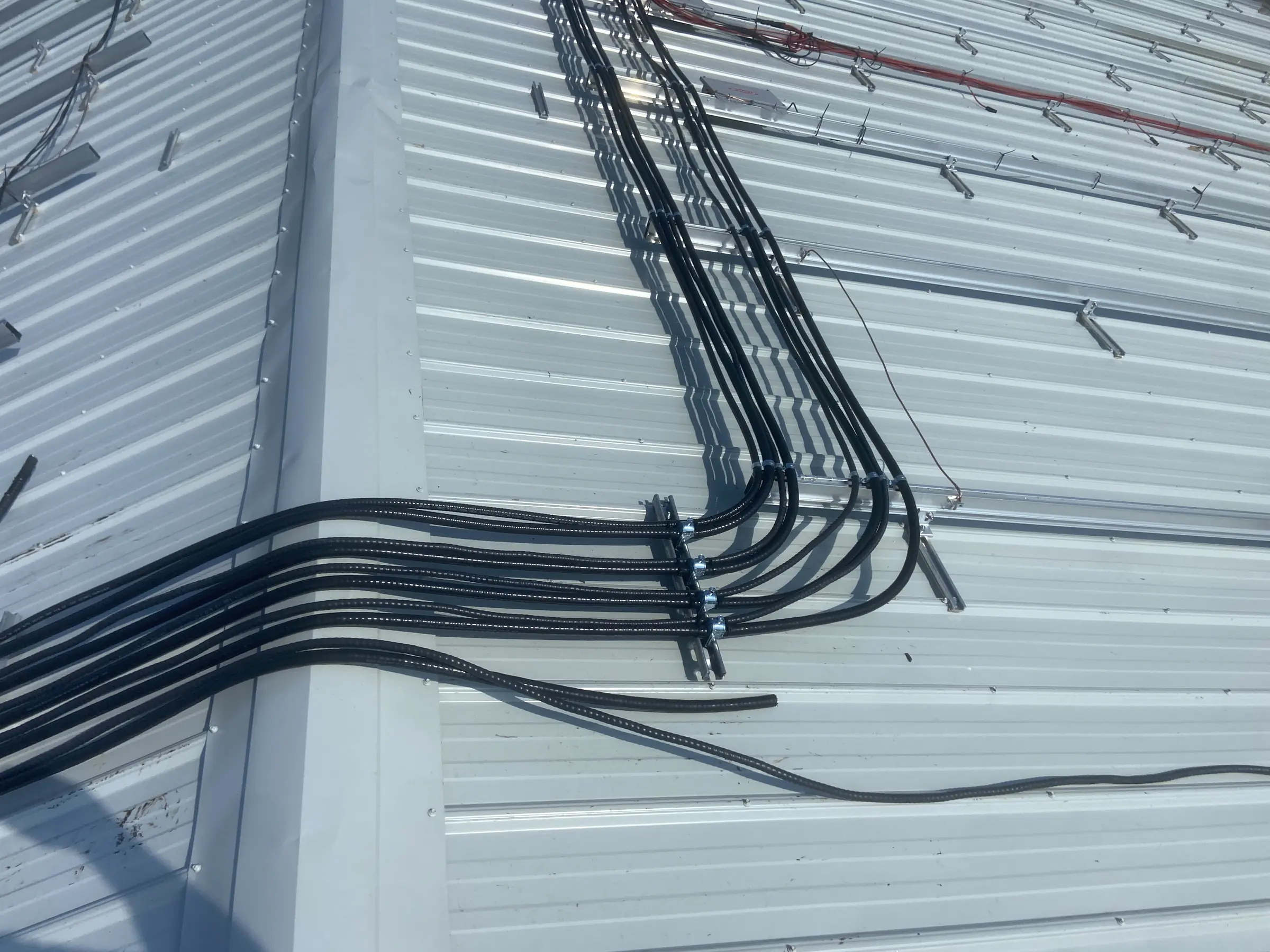
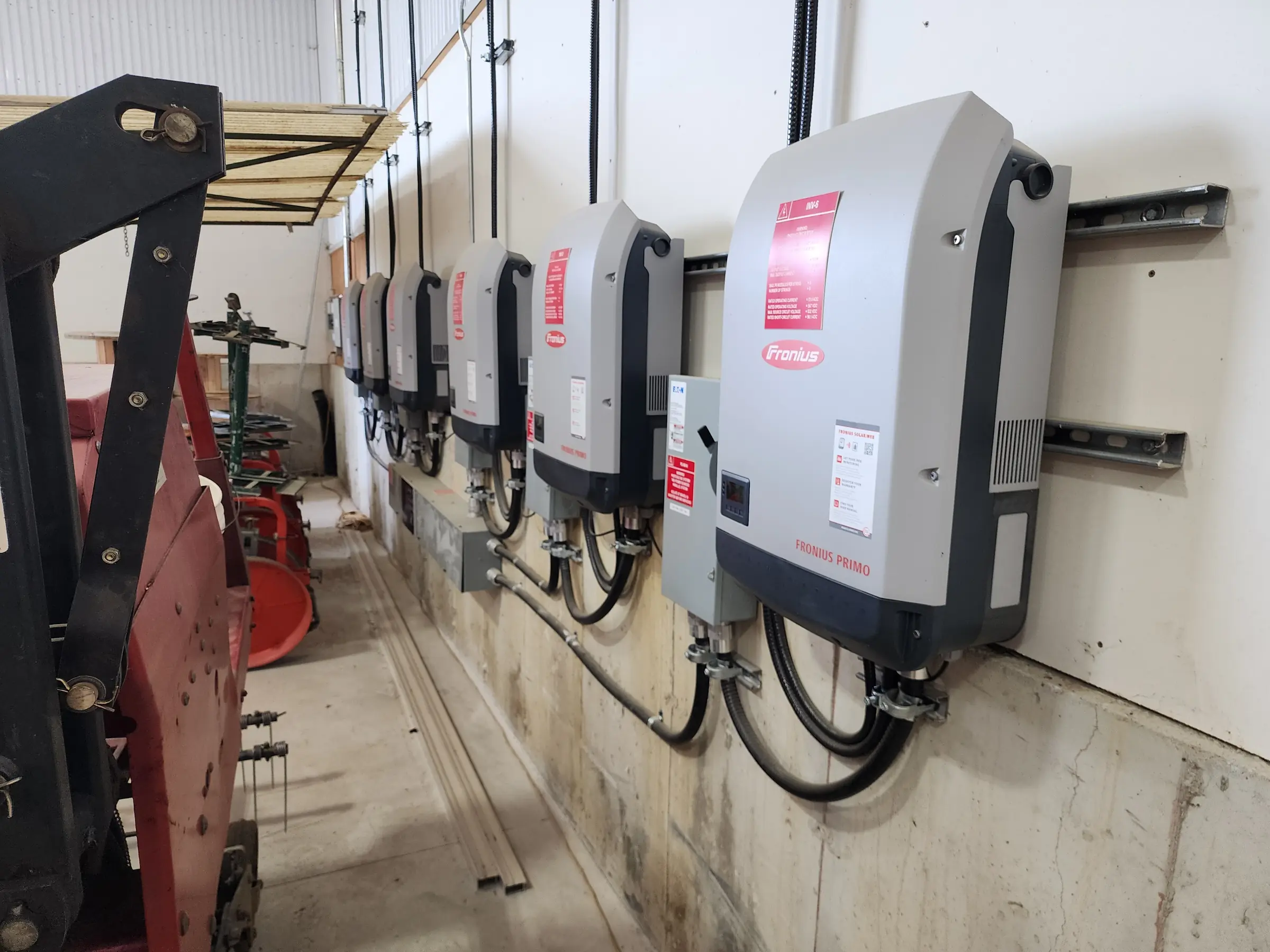
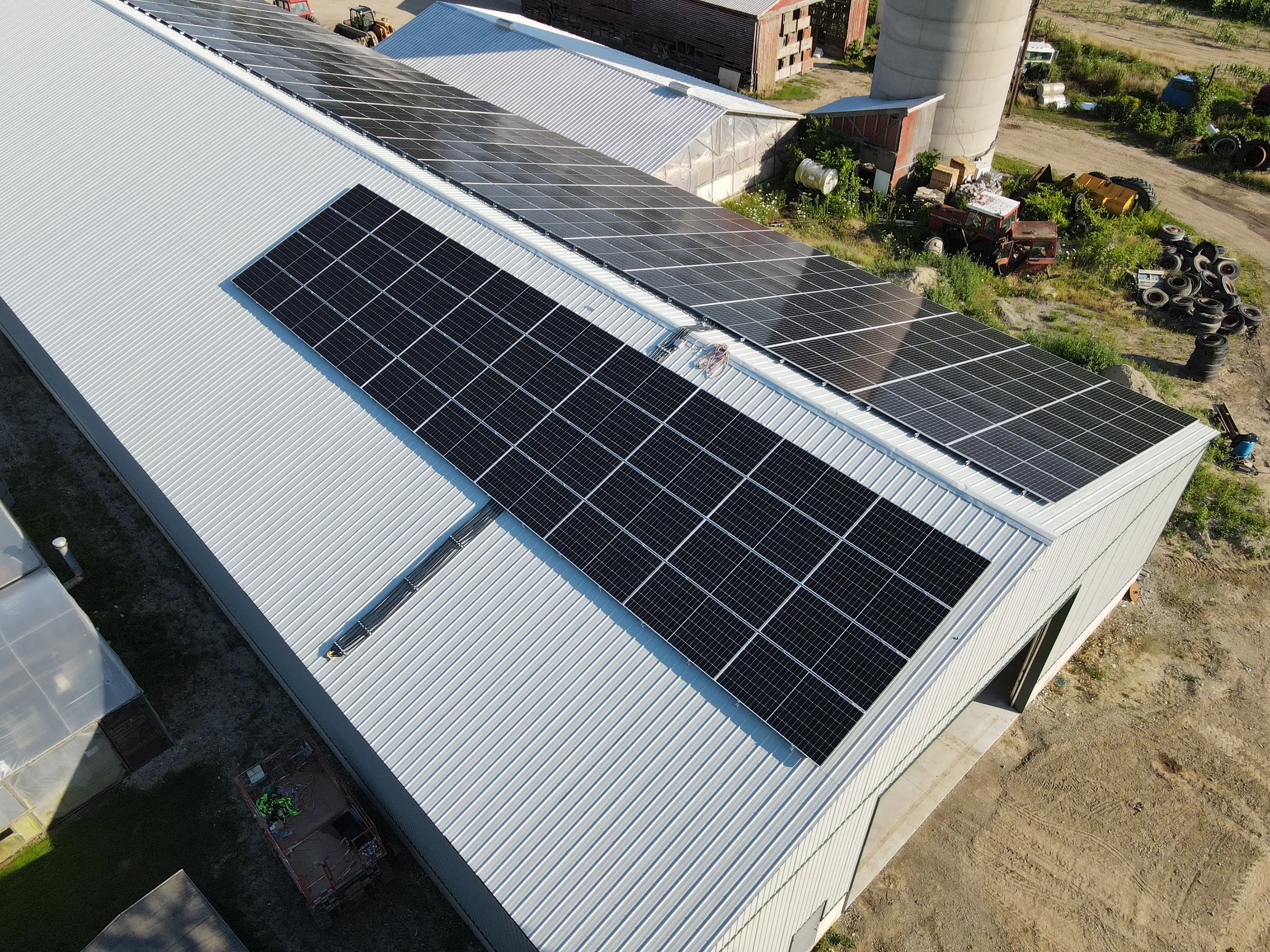
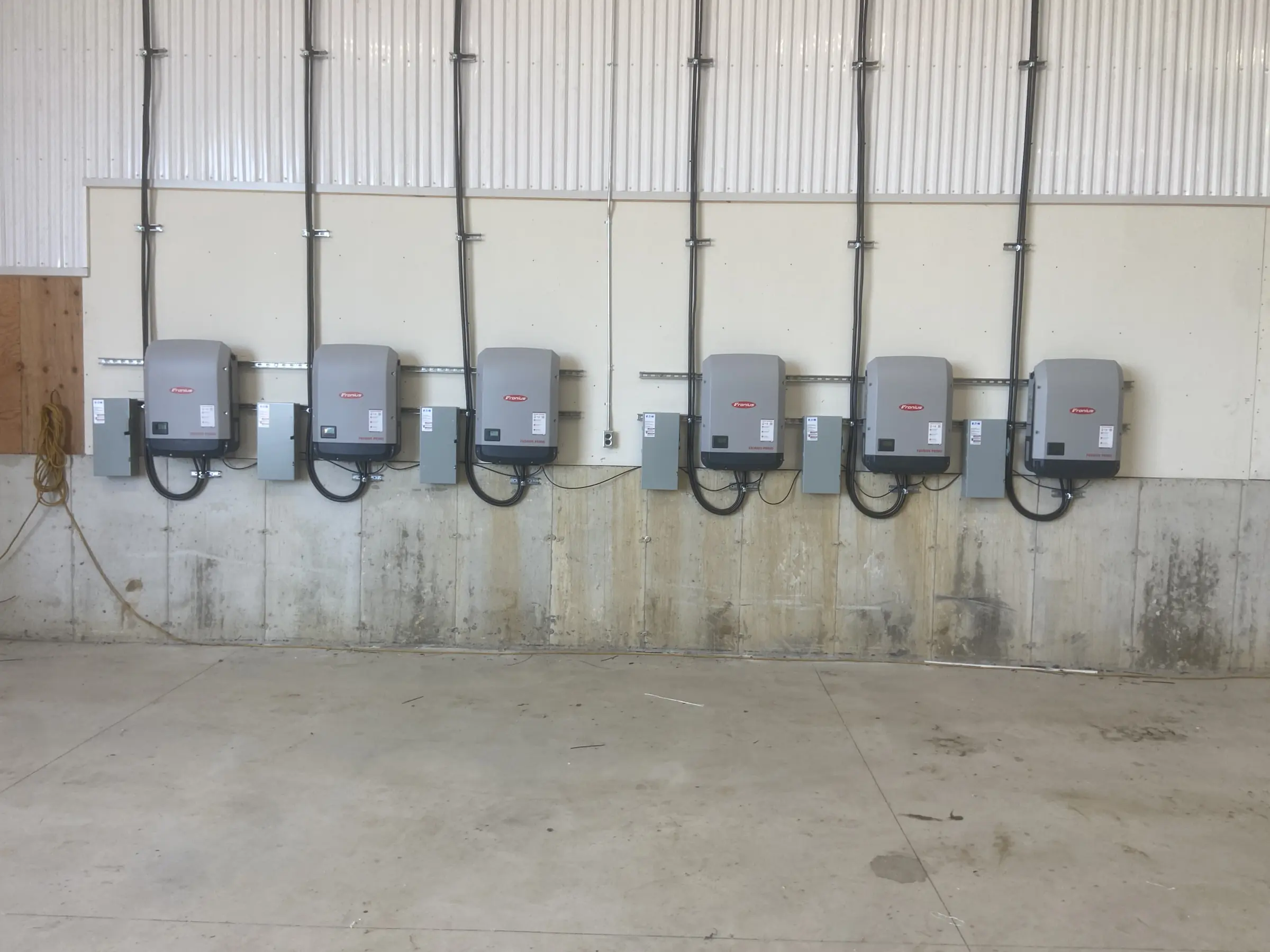
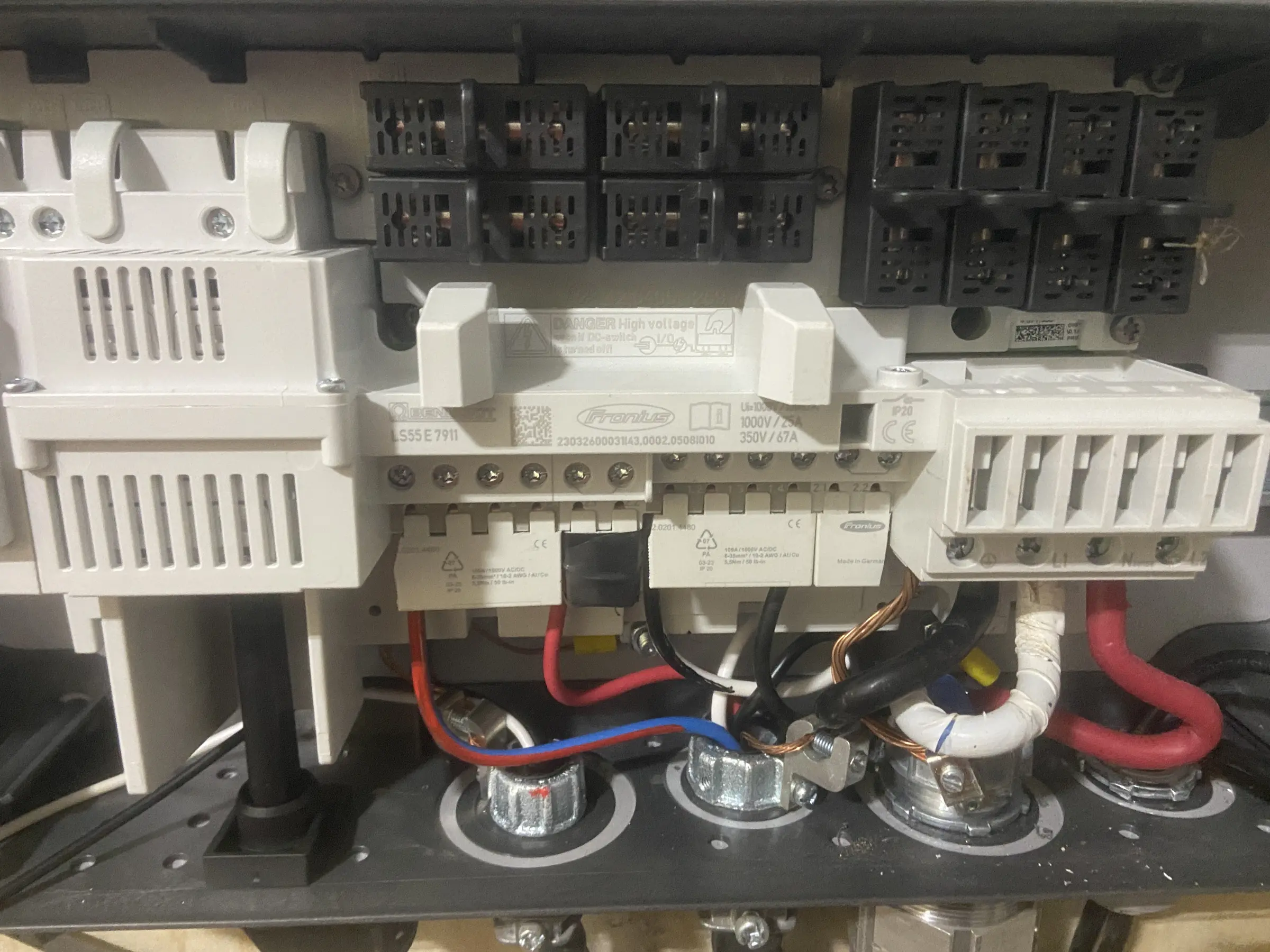
The system consists of 129.8 kW DC (236 Thornova Solar modules) paired with 90 kW AC via Fronius Symo inverters. Designed as an agricultural solar installation, the system was engineered to align with the farm’s annual electricity requirements while supporting reliable long-term operation.
Ground-mount configuration was selected based on site availability and land access, providing a stable installation with straightforward serviceability and supporting long-term solar operations and maintenance requirements.
Facility characteristics that shaped the design.
- Active agricultural operation with variable seasonal electricity demand
- Electrical loads driven by equipment operation, facility systems, and site infrastructure
- Open land suitable for efficient ground-mounted solar deployment
- Annual load profile enabling a material electricity offset without operational disruption
What was installed.
Questions This Project Helps Answer
Every facility has unique operational requirements, infrastructure constraints, and business objectives. These questions highlight some of the considerations, decisions, and lessons that emerged from this project and may help other organizations evaluating similar opportunities.
- Greenhouse and controlled-environment agriculture facilities can have electricity demand from ventilation, pumps, lighting, controls, heating support equipment, refrigeration, and other systems. The design must account for when and how electricity is used, whether the load is seasonal or year-round, and how solar production aligns with the facility's operating profile.
- Final system size depends on annual electricity consumption, available installation area, electrical infrastructure, utility requirements, structural conditions, and financial objectives. In agricultural operations, designers also consider whether loads vary by season and whether the system can produce electricity that the site can use effectively throughout the year.
- Greenhouse operators should evaluate solar alongside their actual production schedule and equipment loads. Electricity use can vary significantly depending on crop type, ventilation needs, lighting strategy, irrigation, refrigeration, and seasonal operating patterns. A site-specific review helps determine whether solar generation aligns with the facility's electricity demand.
Related Questions
Looking for more information? Explore related questions from our Knowledge Centre covering project planning, technology considerations, incentives, and operational best practices.
Evaluating rooftop solar for a commercial or industrial facility? Understanding how solar aligns with your consumption profile and long-term objectives is the first step.
- ·Roof structural and shading review
- ·Annual production model
- ·Net-Metering interconnection check
- ·Incentive & financing stack
- ·Two-scenario capital plan