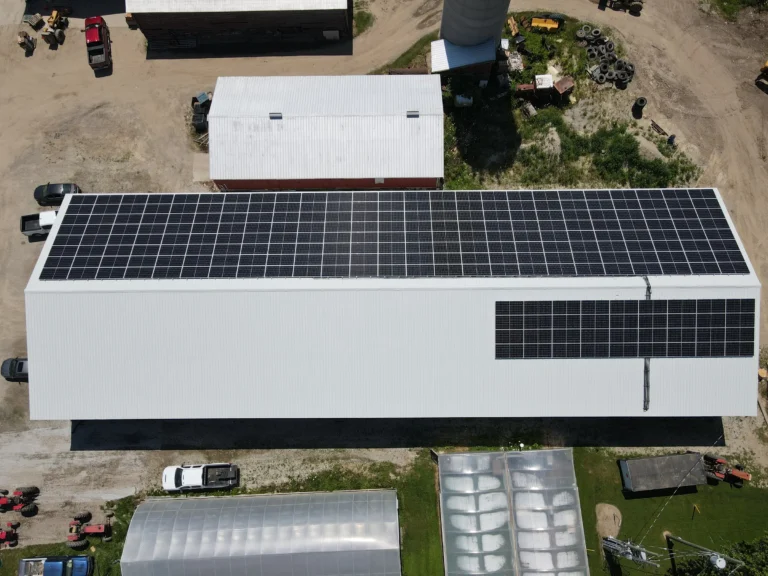

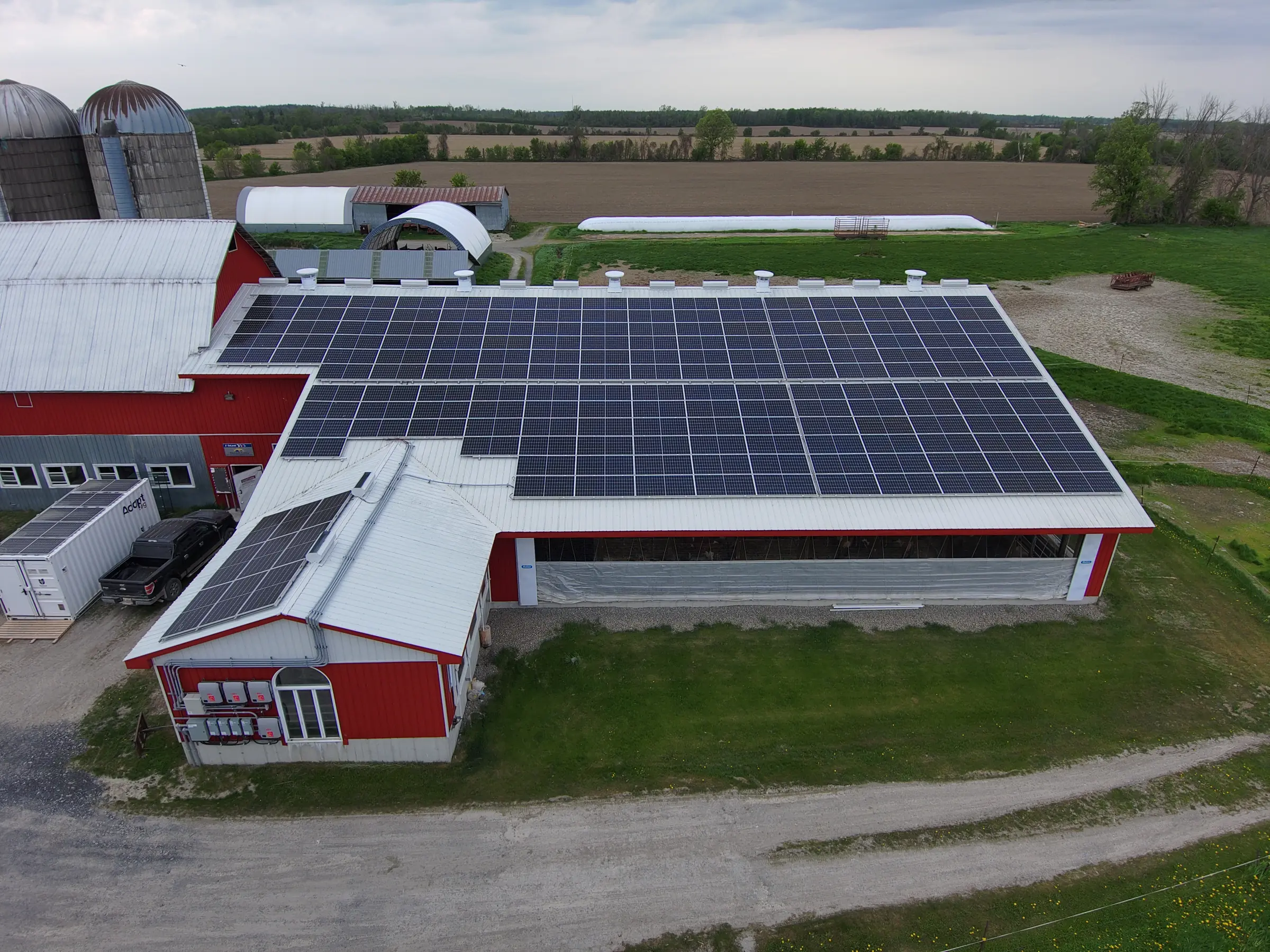
79.6 kW barn-roof solar offsetting 82% of electricity at a dairy farm in Osgoode, Ontario
82% annual electricity offset — the result of precise system sizing to actual farm consumption at a working dairy operation.
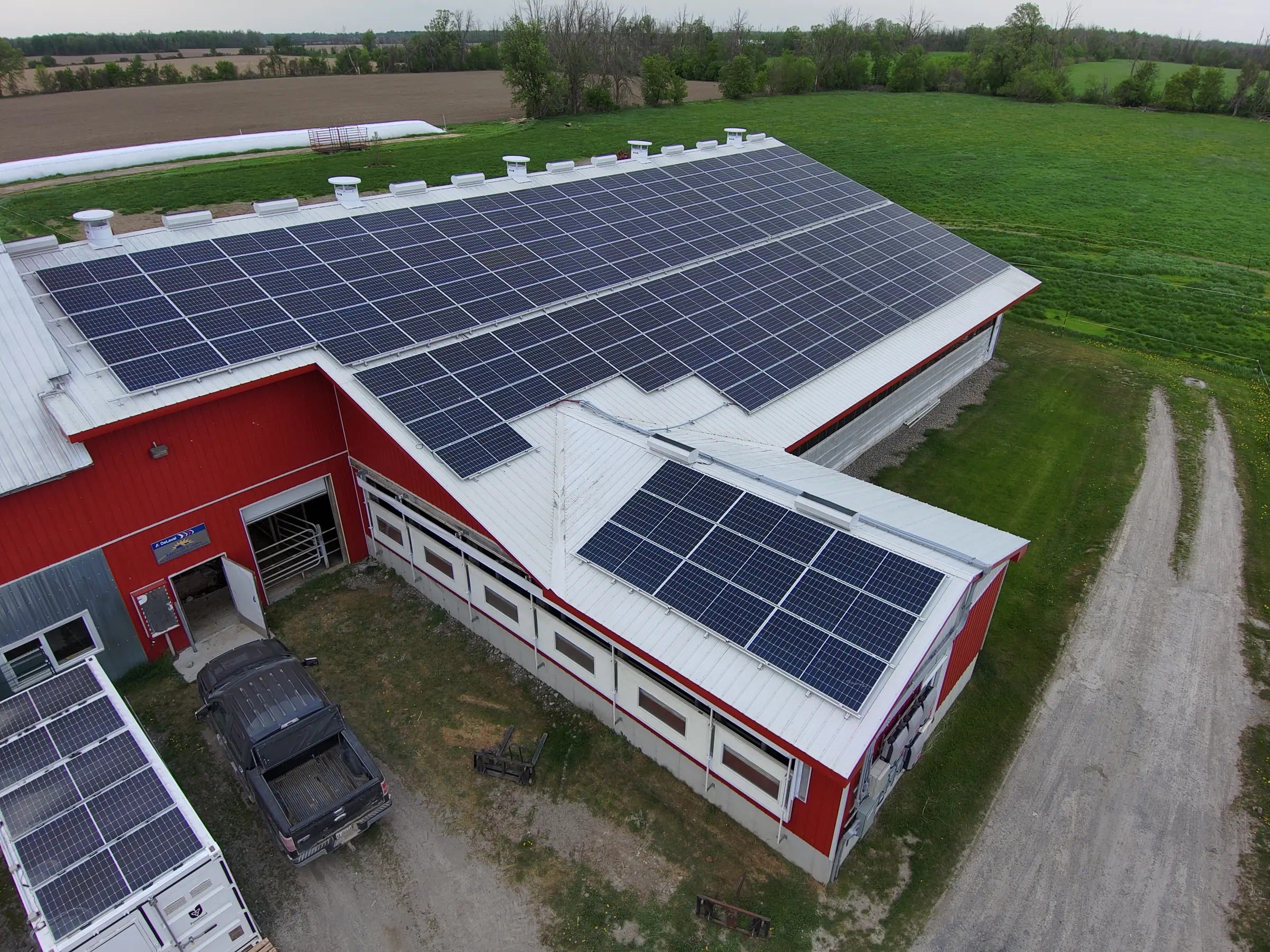
A high daytime load against a roof asset approaching the end of its replacement cycle.
Dairy farms operate year-round and rely on electricity for milking systems, refrigeration, ventilation, lighting, and animal care infrastructure. Managing electricity costs is an ongoing operational priority for agricultural businesses. While overall electricity use is lower than large industrial facilities, reliability remains critical to daily operations and animal welfare.
At Tilecroft Farms, the objective was to significantly reduce reliance on grid electricity while maintaining stable farm operations. The system needed to be sized accurately to match the farm’s annual electrical consumption, ensuring high on-site solar utilization without oversizing the installation.
Size to the service. Mount without penetrations.
A solar PV system was sized to the farm’s annual electricity consumption profile. System capacity and layout were selected to integrate seamlessly with existing electrical infrastructure.
Rather than maximizing system size, the design focused on achieving a strong electricity offset relative to the farm’s actual annual usage. The result is a straightforward, low-maintenance solar installation that supports predictable energy costs and long-term operational stability. The system reached commercial operation on March 28, 2023.
The numbers, then the consequence.
- 0193,400 kWh of solar electricity generated annually.
- 0282.03% of the farm's annual electricity consumption offset by solar.
- 03System commissioned March 28, 2023.
- 04The project demonstrates how properly sized farm solar systems can help agricultural operations reduce electricity costs while maintaining reliable day-to-day farm operations.
Equivalent to removing 1 passenger vehicle from Ontario roads annually.
For the facilities and engineering audience.
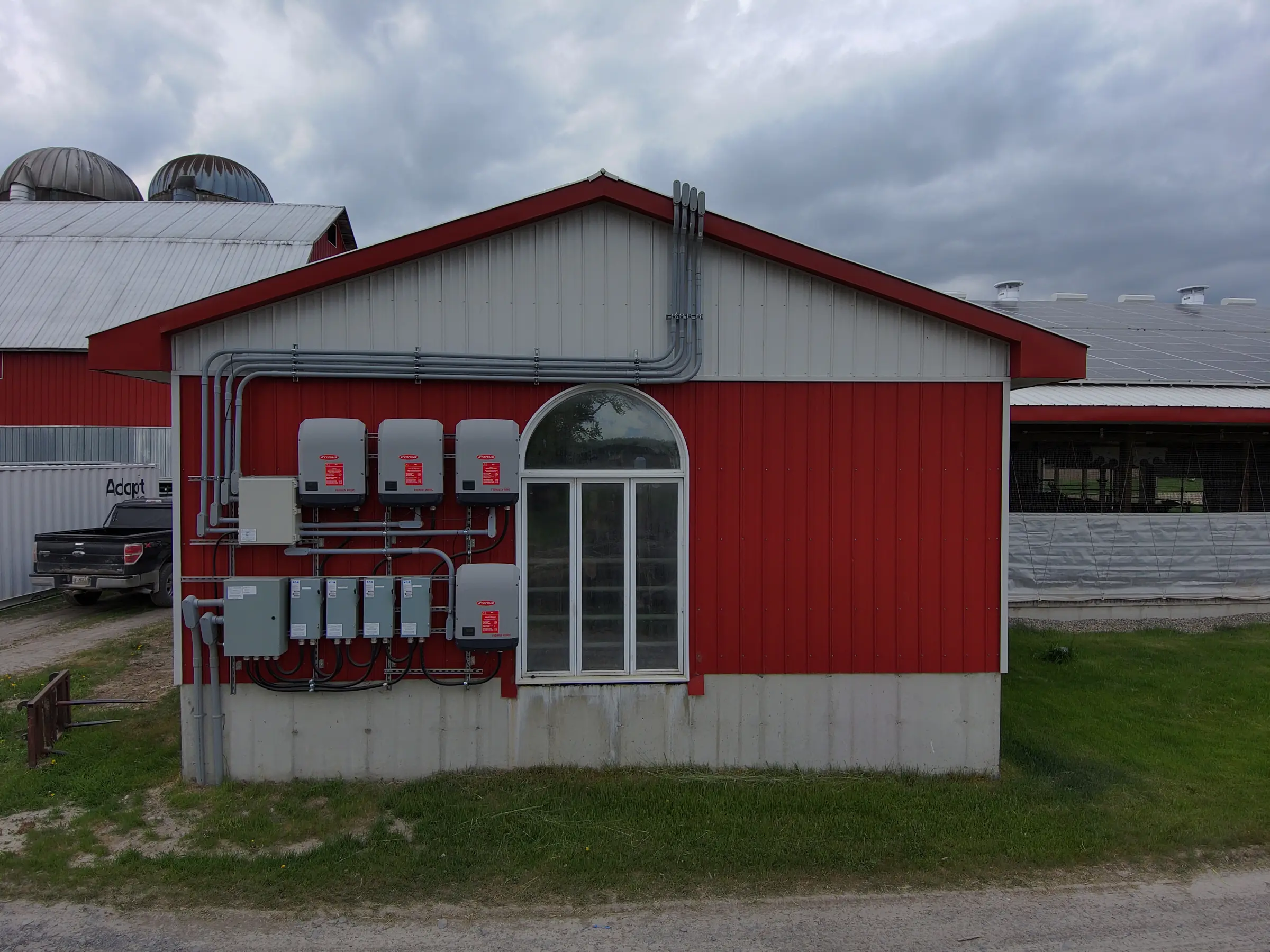
The system consists of 79.6 kW DC (175 LONGi Solar modules) paired with 60 kW AC via Fronius inverters. Unirac racking was selected to accommodate the existing barn roof structure while providing long-term durability in an agricultural environment.
The system was designed around the farm’s actual annual electricity consumption profile, including demand from milking equipment, refrigeration systems, ventilation, and lighting. Rather than maximizing installed capacity, the design focused on aligning generation with operational requirements to achieve a high electricity offset while maintaining strong project economics.
Agricultural facilities often combine solar generation with energy audits and ongoing system maintenance programs to maximize performance, improve operational efficiency, and support long-term energy planning.
Facility characteristics that shaped the design.
- Dairy farm operation with year-round electrical demand from production, refrigeration, ventilation, and animal care systems
- Electricity consumption distributed across milking equipment, refrigeration systems, ventilation equipment, lighting, and supporting agricultural operations
- Agricultural site conditions providing suitable roof area and solar exposure for long-term electricity generation
- Electrical consumption profile supporting a high percentage of on-site electricity offset through solar generation
What was installed.
Questions This Project Helps Answer
Every facility has unique operational requirements, infrastructure constraints, and business objectives. These questions highlight some of the considerations, decisions, and lessons that emerged from this project and may help other organizations evaluating similar opportunities.
- Dairy farms often have recurring electricity demand from milking equipment, refrigeration, ventilation, lighting, water systems, and other support equipment. These loads create an operating profile that can influence solar sizing and expected on-site use. The system design must account for how electricity is consumed throughout the day and across the year.
- Rooftop solar can be practical when the agricultural building has suitable roof area, structural conditions, and solar exposure. It also avoids using productive land or adding new ground infrastructure. The decision depends on roof suitability, site layout, electrical access, land use priorities, and the farm's operating requirements.
- Dairy operations should evaluate solar using actual farm load patterns rather than general assumptions about agricultural electricity use. Milking schedules, refrigeration demand, ventilation, seasonal activity, roof conditions, and electrical infrastructure all influence feasibility. A farm-specific assessment helps determine whether solar can provide a practical electricity offset.
Related Questions
Looking for more information? Explore related questions from our Knowledge Centre covering project planning, technology considerations, incentives, and operational best practices.
Evaluating rooftop solar for a commercial or industrial facility? Understanding how solar aligns with your consumption profile and long-term objectives is the first step.
- ·Roof structural and shading review
- ·Annual production model
- ·Net-Metering interconnection check
- ·Incentive & financing stack
- ·Two-scenario capital plan