
Your facility’s electricity costs
Two numbers get us started — your province sets local utility rates and irradiance; your bill anchors the whole estimate.
From this estimate to a completed project.
What happens after a specialist receives your details — and how the assessment turns into a working system.
Assessment
We review your energy profile — consumption, demand, and the full facility efficiency picture before recommending a system size.
Design & Incentives
A tailored system sized to your annual consumption profile, with a full incentive plan — federal ITC, provincial programs, and financing options.
Installation & Beyond
One team from permitting through commissioning. The same project lead manages your installation and supports your facility for the system’s life.
Real numbers from Canadian facilities.
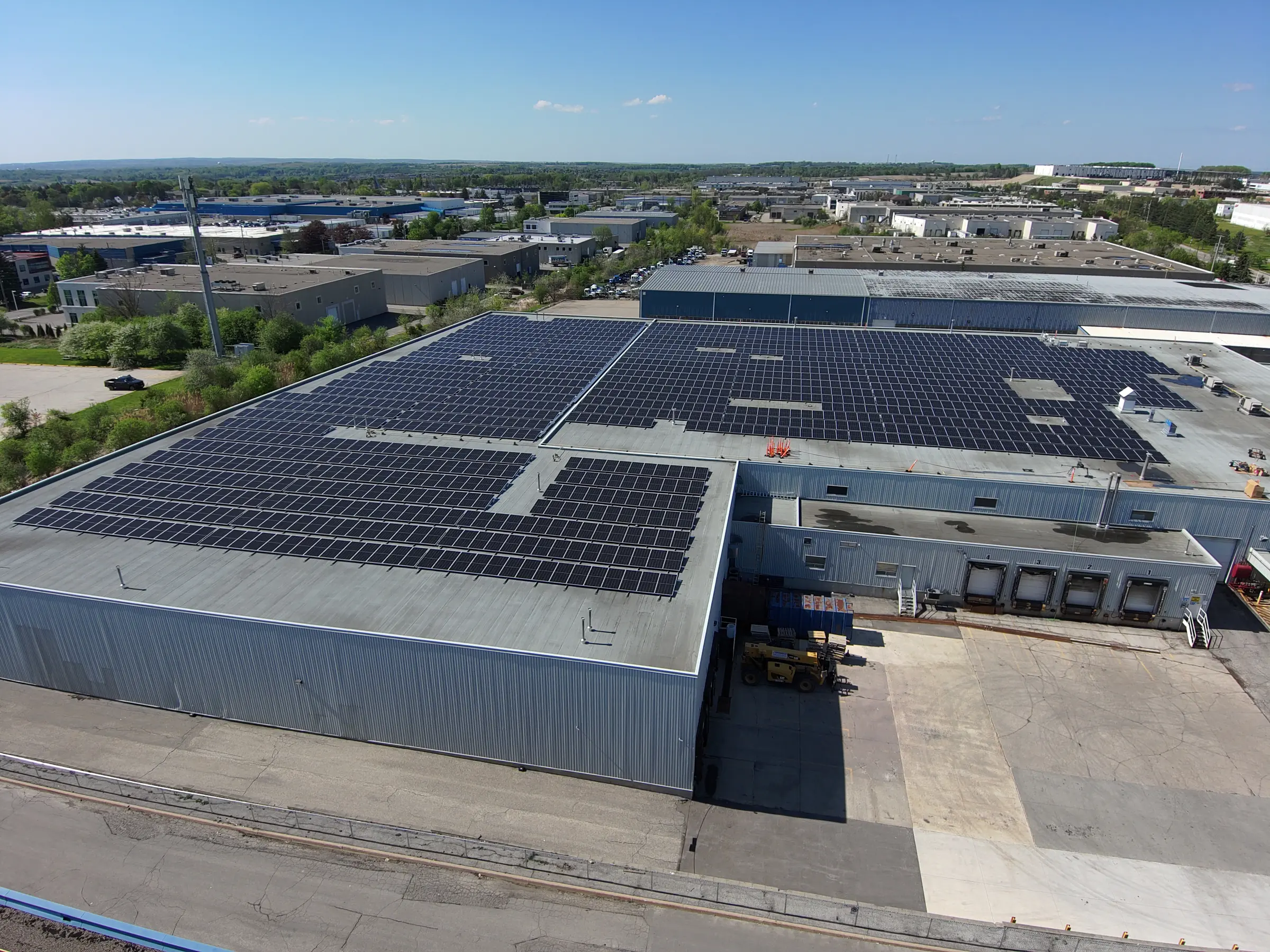
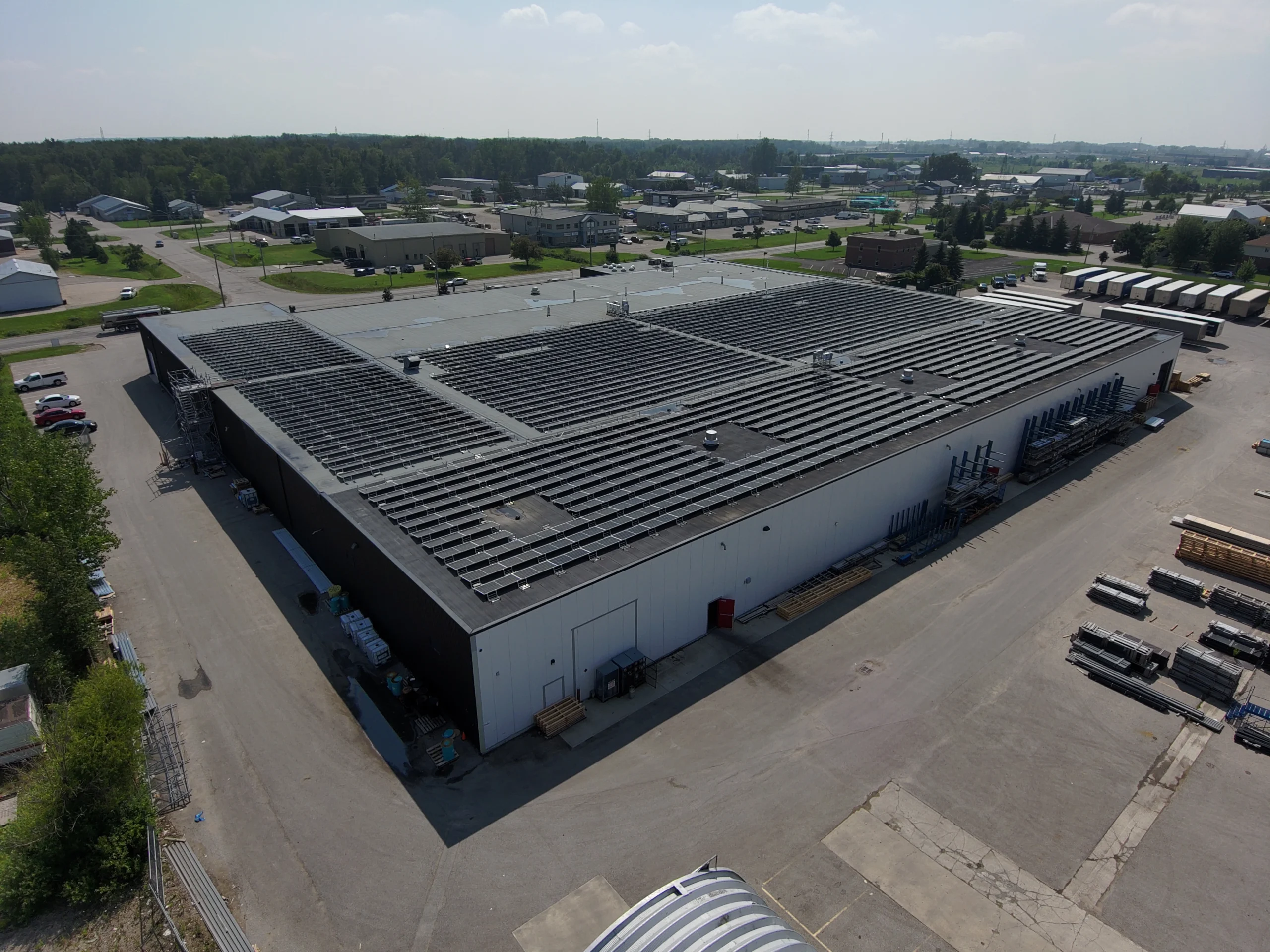
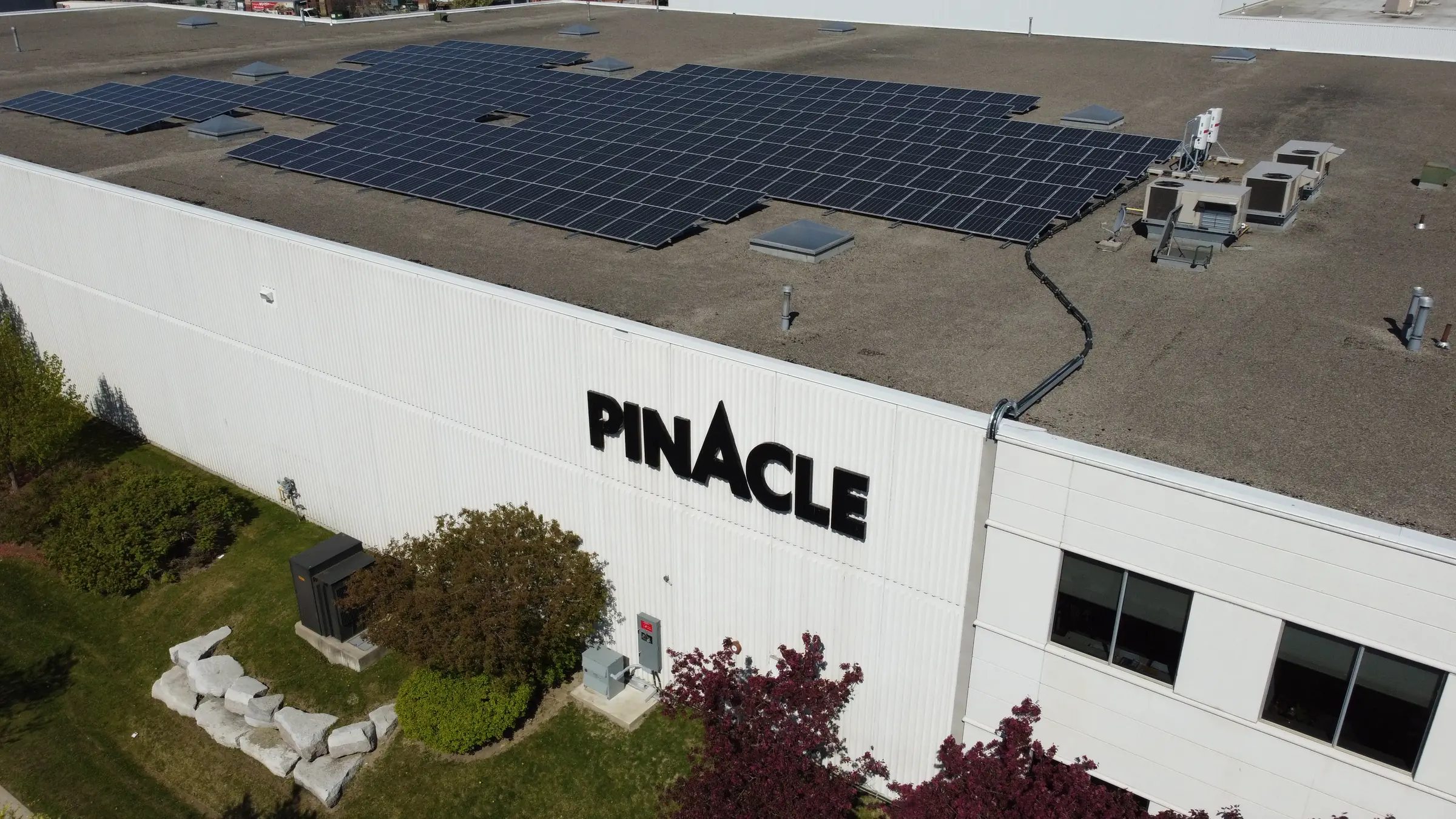
Three projects illustrating the range of commercial solar outcomes — single-site to multi-province portfolios.
Commercial solar in Canada — the questions our calculator users ask.
Six answers, written to lead with the directly useful fact. Pulled from real specialist conversations.
Commercial solar typically reduces electricity costs by 40% to 99% annually, depending on facility size, roof availability, and annual consumption. Across the Green Integrations portfolio, completed C&I projects offset between two-thirds and full annual load — Ce De Candy reached near-complete offset at 90,000 sq ft, while smaller facilities commonly sit in the 60–80% range.
Commercial solar system size is calculated against a facility’s annual electricity consumption profile — not peak daytime load. We total 12 months of utility data, divide by the provincial irradiance factor (kWh per kWp per year), and design a system sized to offset that annual consumption. Roof area, structural capacity, and shading are then layered in.
The primary federal incentive is the Clean Technology Investment Tax Credit — a refundable credit of 30% of eligible capital costs. Provincial programs layer on top: IESO saveONenergy in Ontario, BC Hydro Net Metering, Hydro-Québec programs, and others. CCA Class 43.2 also allows accelerated depreciation. Stacking these is where significant project value lives.
Commercial solar projects in Canada typically achieve payback in 4.6 to 7.6 years, based on completed C&I installations across the GI portfolio. Variables that move the number: provincial electricity rate, irradiance, system size relative to consumption, and which incentives the project qualifies for. High-rate provinces (NS, SK, NB) often sit at the shorter end of the range.
For facilities targeting 100% or more solar offset, reviewing the full energy picture before sizing a system improves cost accuracy. Conservation measures — LED retrofits, mechanical upgrades, controls — lower the consumption baseline. A smaller system on an optimised baseline is cheaper than a larger system on a wasteful one. Not every project needs this; for partial-offset installs, solar can move first.
This calculator provides a directional estimate based on your monthly electricity bill, province, and facility type. It uses provincial averages for utility rate and irradiance, applies a simplified cost band ($2,600–$3,200 per kW installed), and assumes a typical commercial offset range. A site-specific analysis — using your actual consumption data, satellite roof modelling, and rate-tariff structure — is where bankable numbers come from.
