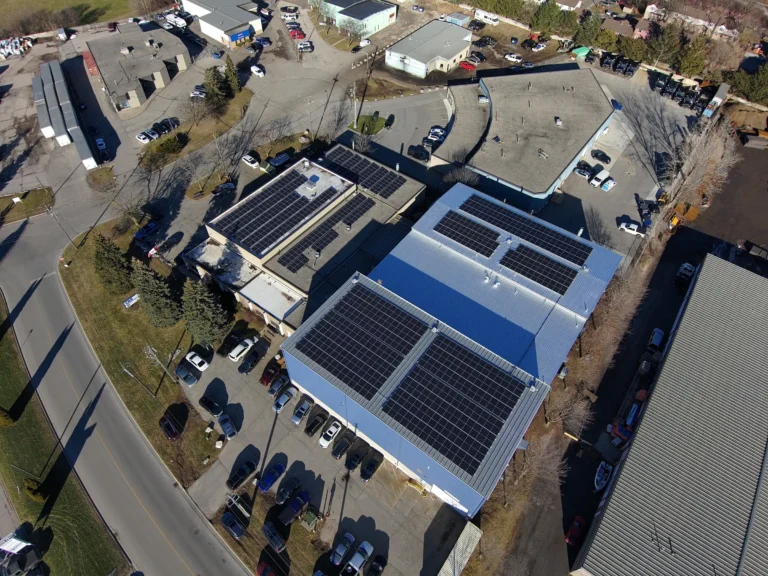
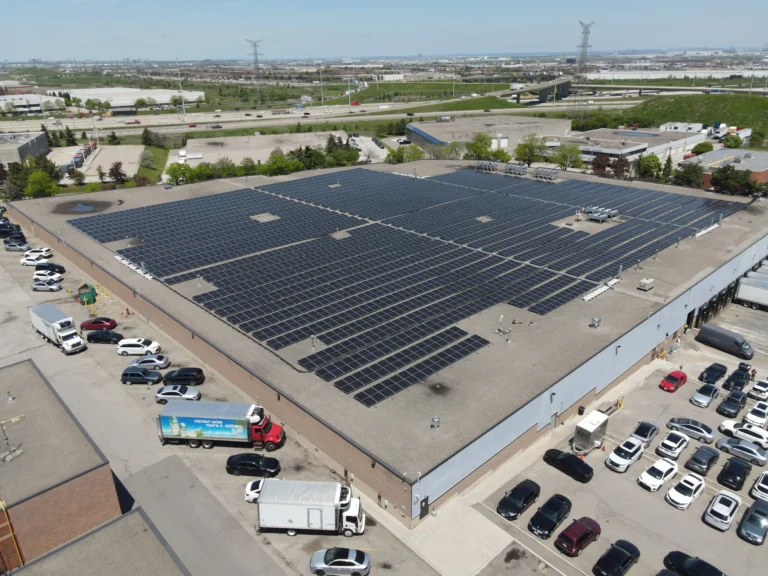
1.27 MW rooftop solar for a grocery distribution facility in Mississauga, Ontario
Coopers Drive, Mississauga, ON · 2025
67.2%
Annual offset
1271 kW DC
System size
How much of a business’s electricity can commercial solar actually offset? See how electricity consumption, load profile, roof space, infrastructure and project economics determine the right system size—and why the biggest system is not always the best investment.
In business, it is not uncommon to see smaller objectives overshadow or even conflict with larger, final goals. In the context of solar power, a classic example is the common, misplaced focus on maximizing solar panels on a facility instead of finding the optimum system size – one that offers maximum returns.
Commercial solar power systems are a more complex technology than it initially seems. When using solar to offset a business’s electricity consumption, we require the consideration of numerous factors – factors that go beyond just the quantity of panels. What follows is an overview of those factors, to help you understand how effective solar can be for your particular business.
Electricity offset on a commercial property means how much of its typical electricity purchase is prevented by generating that electricity on site with solar power.
For instance, let us suppose that a business is consuming one million kWh of electricity annually, but now generates 600,000 kWh with its rooftop solar system. This means it offsets 60% of its electricity consumption with solar.
It is important to note that the total energy use of a business may or may not be entirely offset with solar energy. But, at the risk of repeating the obvious – maximizing the financial returns from a system is more important than maximizing the electricity offset.
The amount of electricity a commercial solar panel system supplies depends on a complex mix of factors relating to the facility’s consumption, available space, regional climate, existing electrical infrastructure, utility constraints, and more.
Let us look at a few key things that a reputable installer will closely look at when designing a solar power system for a commercial or industrial facility.
The first and most decisive factor in the size of a solar energy system is the business’s annual electricity use. While other factors are also important, a facility’s annual consumption will have the largest bearing on its system size. In most cases, this electricity usage history is available from its utility bills.
Nearly everywhere on Earth, the sun arrives and departs in daily cycles, which means energy generation will start and stop at certain times every day. This makes it important to check how much of a facility’s energy consumption matches the hours of energy generation.
Historically, installers tried to prioritize daytime load when designing a system, but net metering has changed things. In Ontario, for example, businesses can send their excess daytime electricity into the grid in exchange for bill credits, which can then be used to purchase grid power, essentially using the grid for the same purpose as that of a battery.
Just as the amount of sunlight varies throughout the 24 hours of a day, it also varies throughout the 12 months of a year. Here in the northern hemisphere, winter months generally have shorter and more overcast days. In Canada, this period aligns with the last and first quarter of every year, when solar production can drop by about half or more. Whether a business uses more electricity in summer or winter can impact the system size considerations.
The roof or land (for ground-mounted systems) space can sometimes put a limit on how many solar panels can be installed on a facility or on its campus. Modern solar panels have become significantly more efficient than their ancestors, and need smaller space for the same power output.
However, facilities that operate heavy electrical loads may find their roof or land space insufficient. But this does not mean solar is not viable for such businesses. Installing the right size of a solar energy system can still help save noteworthy amounts of electricity costs.
Another roof aspect worth mentioning is the problem of shading. In some cases, nearby trees, buildings or other structures may cast a shadow on a roof, which can hamper solar generation. Installers typically avoid installing in shaded spaces.
Commercial roofs are often populated with HVAC units, exhaust vents, skylights, and plumbing stacks. Installers must design a system around these obstacles. Several building and fire codes also mandate pathways and access points, which must be respected in a design and installation process.
A roof’s age and health is also crucial to consider before putting panels on it. If a roof membrane is already 20 years old, installing a massive solar array with a 25-30-year lifespan can cause a logistical nightmare when the roof needs replacing.
Certain electrical constraints also impact the design of a system. For example, if the solar array is too far from the main electrical panel, longer cables cause greater electrical resistance and can lead to voltage drops that reduce the final system output, and may create a need for over-designing the system.
Similarly, if the existing busbar’s current rating is lower than specified, a business may need to upgrade their main service panel or choose a smaller system to avoid the costs.
Any grid-connected, commercial solar system is subject to the limits of its neighbourhood’s transformer. Every utility sets a limit for how much solar or other on-site energy generation systems can be connected to a transformer to maintain its health. In some cases, a large facility may need to install a smaller system to stay within the transformer’s specified limits.
As we discussed in the previous section, a building’s size alone cannot decide how big a solar panel system it can accommodate and how much electricity it can offset. The best way to understand this is with a few examples. At Green Integrations, we have spent years installing commercial solar panels for businesses, and a simple comparison of some of our projects proves the complexity of system sizing.
Let us begin with Rabba Fine Foods, where we installed a 1,270 kW system, offsetting 67.2% of their electricity needs. The facility itself was close to 144,000 square feet in area, but we utilized about 100,000 sq.ft. (69%) of the available space.
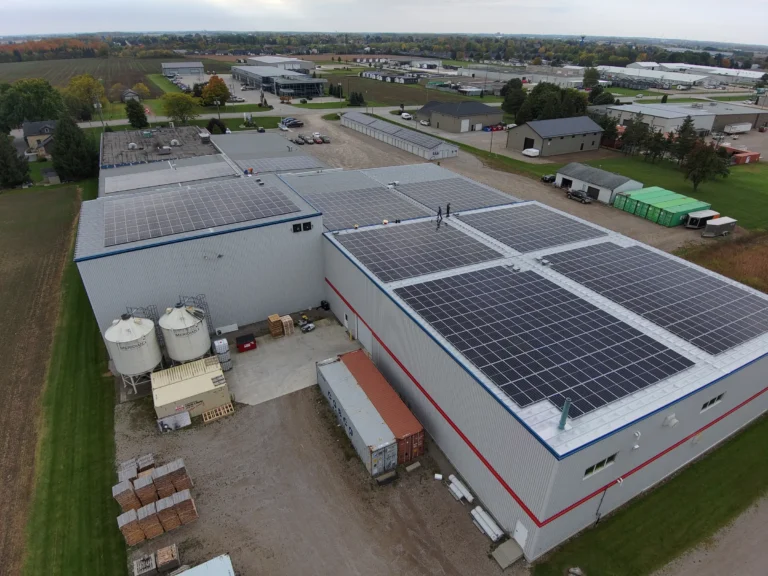
Secondly, we have Canadian Babbitt Bearings, where we installed a 262 kW system, offsetting 50.4% of the company’s electricity usage. Note that the total roof space here is quite ample, at about 40,000 sq. ft., but we could utilize only around 12,000 sq. ft. (30%).
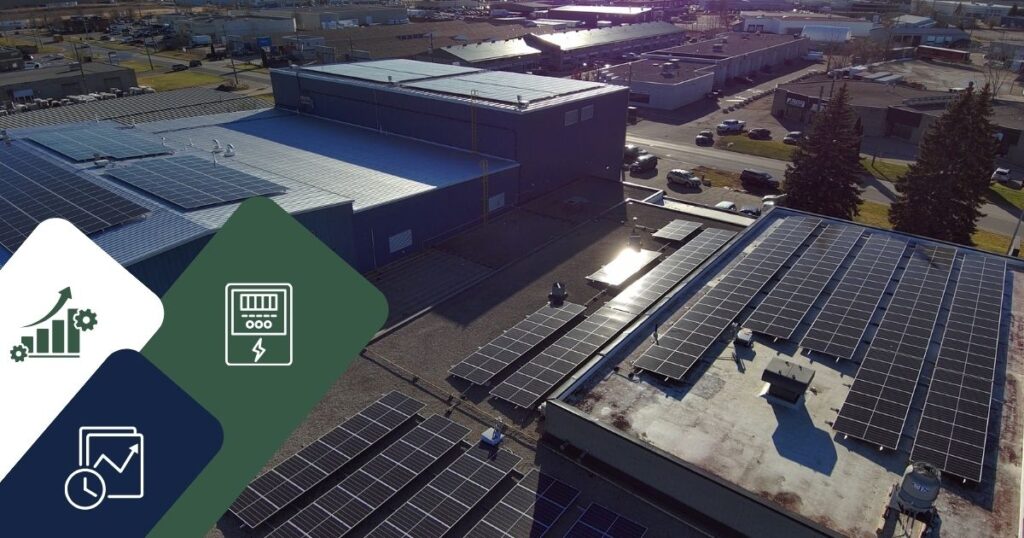
Lastly, let’s look at Syfilco, a textile mill where we installed a 504 kW system, offsetting about 80% of the facility’s needs. The available roof surface area in this case was about 70,000 sq.ft., but we ended up using just over 30,000 sq.ft. (43%)
Here are the important numbers in a tabulated form:
| Project | Rabba Fine Foods | Canadian Babbitt Bearings | Syfilco |
| Utilized roof area percentage | 69% | 30% | 43% |
| Electricity offset percentage | 67.2% | 50.4% | 80% |
Someone not familiar with the science of solar design may wonder why we wouldn’t utilize 60% roof space for the second example and offset 100% of their electricity use. The answer lies in all the other factors of consideration we discussed earlier – factors that make a bigger system less practical.
To be more specific, Canadian Babbitt Bearings had a layered roof, where the lower layer suffered shading from the higher layer, making solar panels a poor choice for that roof space. Check the image of the installed system below:
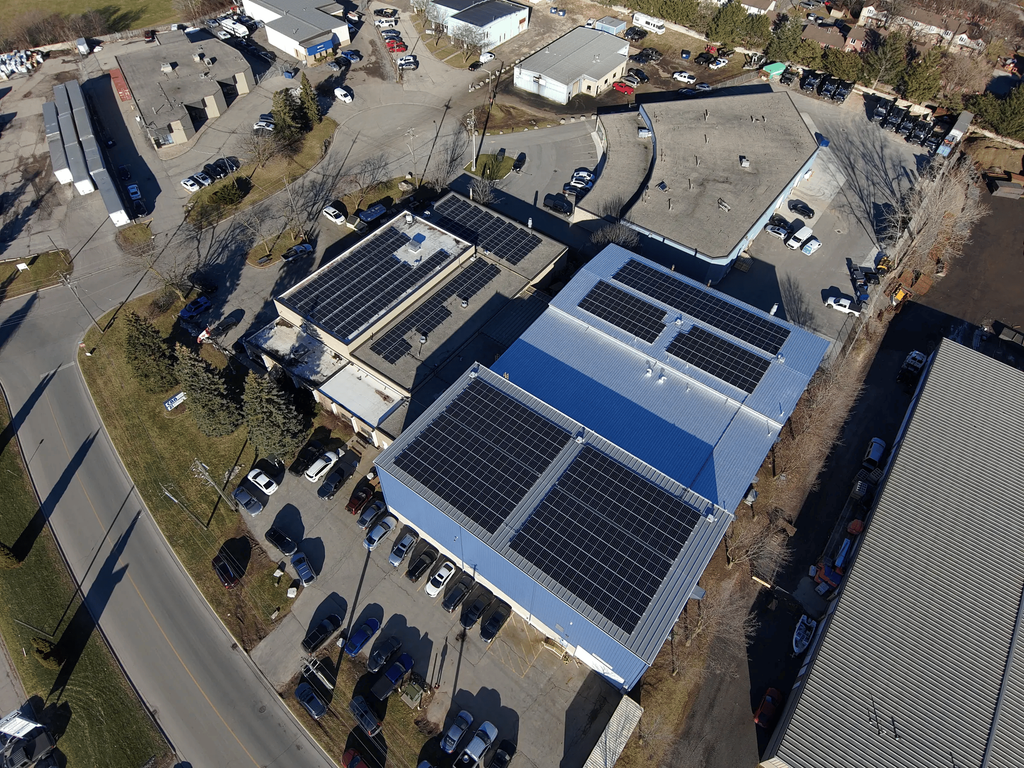
Shaded parts of roof not utilized for solar
As mentioned at the beginning of this article, a solar energy system should be designed for maximum financial returns instead of maximum offset. Sometimes, offsetting 70% of a business’s consumption requires a 500 kW system, but offsetting 100% of that same system may require a 1500 kW system, because the remaining roof space has a poor orientation and/or shaded parts.
In another case, offsetting 100% consumption would require an expensive service panel upgrade, which lengthens the payback period of the system and makes it less lucrative. In other words, the objective should always be to size a system to build the strongest long-term business case, instead of maximizing panels.
The sizing of a solar energy system is as crucial as the installation itself. Below are the steps engineers typically follow when sizing solar PV for businesses:
A solar designer will always check a facility’s energy consumption first. They do this by looking at the building’s electricity bill history, preferably over the past year or more. From the annual consumption, the designer calculates a daily consumption, then based on the solar potential in that location, they calculate a system size in kilowatts (kW). The basic concept/formula used in this step is: Daily consumption (kWh) / peak sunshine hours per day (h) = system size (kW).
While the annual values and daily averages of energy consumption are important, they form only part of the whole picture. Electricity use in any facility is never constant, and varies daily and seasonally. Reviewing interval data or load data allows designers to understand when the peak consumption of power occurs – what time of the day sees the strongest power draw.
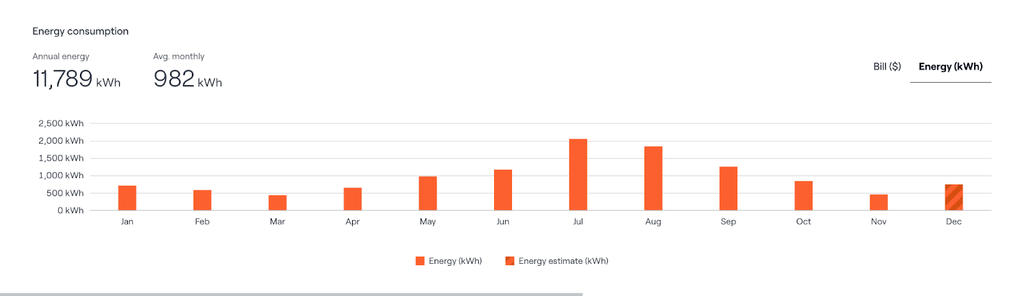
Interval/load data in graph form on Aurora, a solar design software
The system is then designed not just to satisfy the average daily/yearly needs but also to fulfill these variations, visible on the electricity load profile. For example, in provinces where net metering does not exist, a facility with strong consumption during evening hours may benefit from a battery storage system.
The system design in the previous steps gives us the size of the ideal solar panel system, but the actual system is constrained by the available, usable space. Engineers usually use a combination of a physical site survey and online, satellite-imagery tools to find out how much of the roof space can practically be used for the system. Modern software platforms also allow designers to simulate a solar energy system installation on the roof in question.
As we dis cussed earlier, the existing electrical infrastructure of a building can impact the size of a solar system. Especially when it comes to commercial solar systems, engineers assess the existing electrical infrastructure, such as the age, health and capacity of the cabling, service panels, breakers, bus bars, and more.
Once an engineering team is satisfied with the above things, it will create a design for the optimal solar power system in a reputable software. This software then allows the designers to model the solar production based on meteorological data. This way, a commercial customer can know how their system looks and performs before even it is installed.
Commercial solar systems are typically a sizable investment, which means the customer is not relying on trial and error but needs concrete values of costs, savings, payback, and overall return on investment. Fortunately, engineers can calculate all of these, and more, using the modeled solar production and comparing it with the facility’s existing grid power pricing.
The perfect commercial solar panel system is a fine balance between the numerous aspects of available space, electrical infrastructure, utility restrictions, and of course, the facility’s energy consumption values and patterns.
Going solar is a big decision, and a part of many businesses’ capital planning goals. It is one of the safest investments you can make in today’s rapidly changing markets, as sunlight is more reliable than pretty much any other market dynamic.
However, not all system designs are the same. Experienced, reliable installers will always try to design and install a system that offers you maximum benefits rather than maximizing the system size, which is what we do at Green Integrations. If you are curious about how much savings and emission reductions solar panels can bring you, we can help you evaluate the right size and type of solar for your facility.
Related questions covering planning, technology, and incentives.