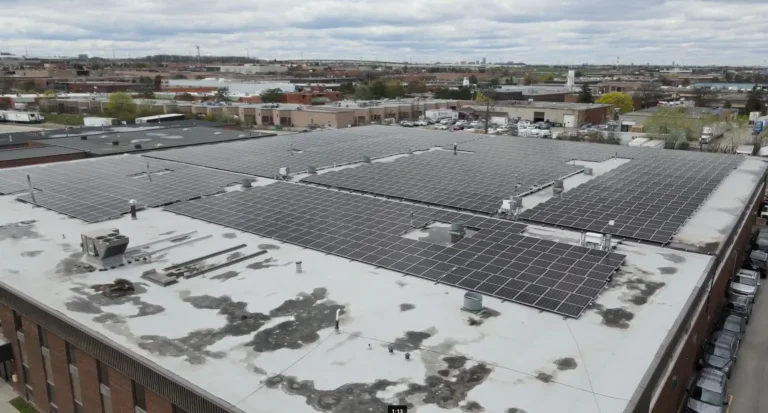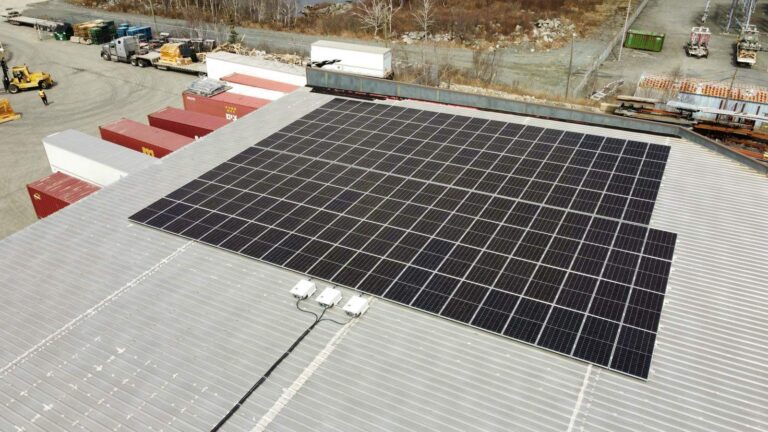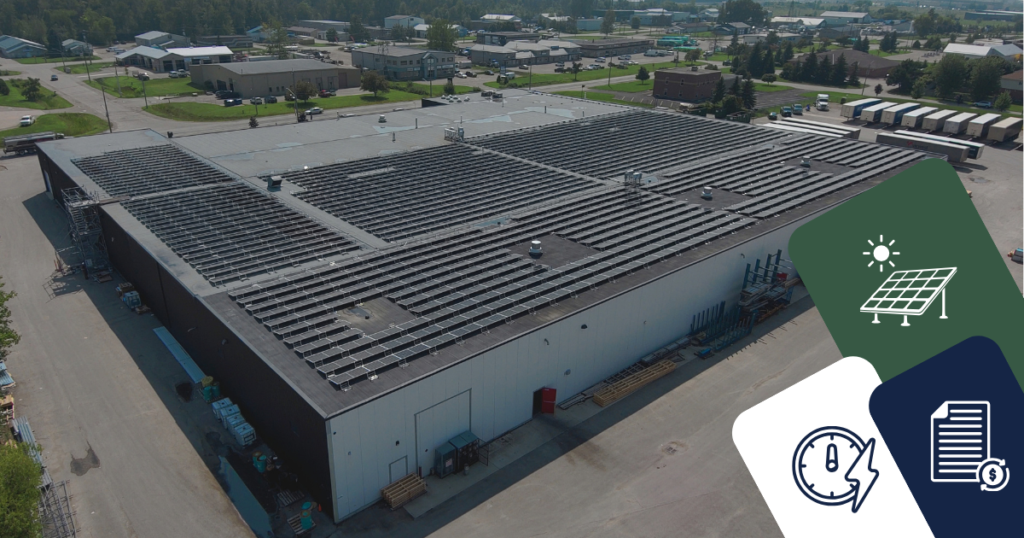

966 kW rooftop solar for a confectionery manufacturer in Newmarket, Ontario
Newmarket, ON · 2025
99.6%
Annual offset
966 kW DC
System size
A practical guide to business solar panel costs. Learn what influences pricing, typical investment ranges for commercial installations, and how to assess the financial value of going solar for your organization.
Every business wants three things from any new investment – good returns, predictability, and future-proofing ability. Interestingly, there is one investment that offers all these, and more – solar power.
An increasing number of businesses in Canada and worldwide are going solar. Experts even believe in a solar singularity – a scenario where solar will be the default choice for all businesses and homes.
In the early years of technology, solar power was expensive. This discouraged many business owners from Commercial Solar Installers. But things have changed, and the adoption of solar power is faster than ever.
You may still be wondering – “Just how much does it cost for a business to go solar?” There is no straightforward answer to this question – no single, golden number, but here’s an attempt to still answer the question as best as possible.
In general, any system ranging from 100-500 kW costs around $2.5 per watt of capacity installed. For example, a 300 kW system may cost about 300,000 x 2.5 = $750,000.
As the size of a system increases, its cost per watt goes down. For a system ranging between 500 kW and 1 MW, it may cost around $2/W. For example, an 800 kW system may cost around 800,000 x 2 = $1.6 million. And for systems larger than a megawatt, the costs decline further.
One thing to keep in mind is that the above numbers are averages, and they apply to typical systems with standard requirements. There are a multitude of factors that can affect the pricing of your solar power system, and we will discuss those factors further in the article.
For now, let’s take a look at the price breakdown of a typical system – a frequently asked question.
Any solar power system is a combination of several different components. The design and installation of a system also require an elaborate process with a number of steps. These components and steps together decide the price of a solar system. Here’s a quick rundown.
The most important component of any solar plant also claims the largest portion of its cost. Solar panels collect sunlight and convert them into electrical current, and they make up 35-40% of any system’s cost.
Another essential component of any commercial solar system, inverters convert DC power coming from the solar panels into usable, AC power. Of any system’s total cost, about 20-25% is required for the inverters.
Some businesses opt for microinverters, a revolutionary new tech wherein every solar panel has a dedicated small inverter. This offers several benefits such as greater performance and lower system downtimes. However, systems with microinverters cost more than those with regular string inverters.
Solar panels cannot be just laid down on the roof, and need to be oriented correctly for maximum power generation. In Canada, panels are installed facing south so they are directly facing the sun’s rays for the most part of the day.
For this purpose, panels need racking, or mounting structures, which hold them in place at a certain angle. Additionally, the system needs many other smaller components such as cables, conduits, circuit breakers, combiner boxes, etc.
Together, the racking and the miscellaneous equipment make up about 20-25% of the system’s cost.
Besides the equipment itself, there is a lot of work that the installer puts into building a system. This begins with the engineering/design phase, in which an expert surveys the location, and a designer designs the perfect system on sophisticated software, sometimes using drone imagery.
Such a design comes with clear predictions of energy production, emissions offset, and electricity bill savings. It also includes a digitally created layout of how the installed system will look in the actual location.
The engineering and design phase takes up about 5% of the system’s cost.
When it comes to finally install the system on a business, it is often a herculean task. Hundreds, sometimes thousands of solar panels, mounting racks, and other equipment need to be moved to the customer location, then transferred to the roof.
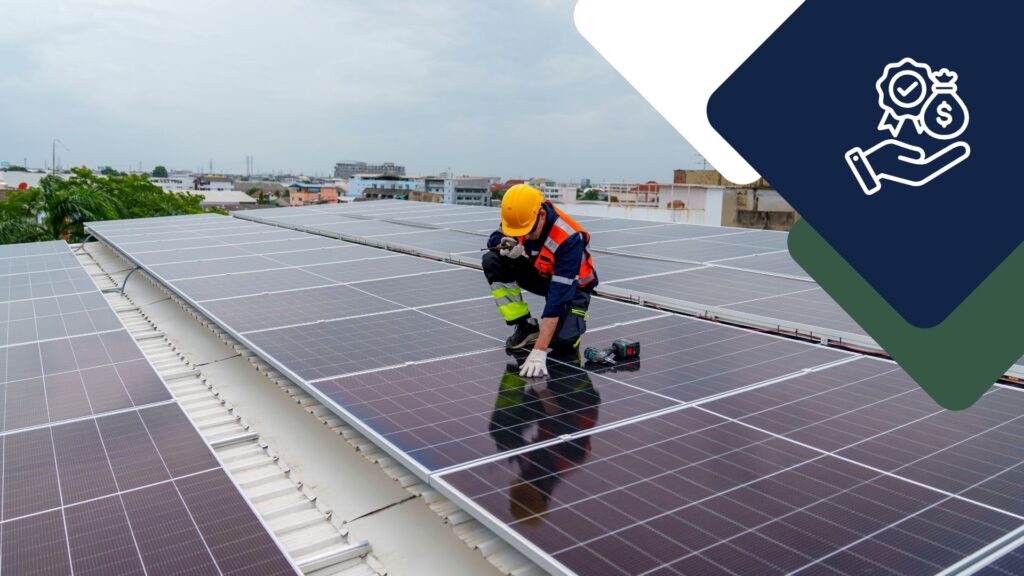
A team of certified technicians work for days to install each rack, and each panel, and connect each cable precisely in its decided position. The labor and logistics step consists of about 15-20% of the system’s total cost.
With the exception of some off-grid homes/cabins, solar power systems are always connected to the grid. This helps you send excess power back into the grid or use some power from the grid (net-metering).
Naturally, you need the approval of the local utility company before installing a system that connects to their grid. There are often other permit requirements too – from the city or other local authorities. Your system installer works with all the authorities to complete the permitting process and get all the required approvals.
This step takes time, and usually a significant amount of effort by the installer. Therefore, the permitting step takes about 1-2% of the total system cost.
The price ranges mentioned at the start of this article are averages. In reality, the system can cost more, or sometimes less than the provincial or national average. There are a number of factors that can affect the cost of any system. Here’s a list of the most important ones.
The most obvious factor that decides the price of your solar power system is how big the system is. This in turn is decided by how much power your facility uses.
Larger businesses or facilities, especially those with power-hungry machinery need much bigger systems than smaller, simpler facilities.
Solar panels might be one of the lightest power generation technologies, and yet, they can exert a significant amount of weight on any roof. As such, the installer always takes the roof type, size, inclination, and age into consideration.
For older roofs that cannot bear much weight, it is advised to install a new roof before installing a solar system. This may change the cost noticeably.
In the last couple of decades, thousands of new companies have jumped into solar equipment manufacturing. This offers a tremendous variety of components, with equally wide-ranging prices.
Based on the type, brand, and features you choose in the solar equipment, the price of your entire system will vary. At Green Integrations, we choose highly reliable, top-quality equipment that offers the maximum value for our clients without costing a fortune.
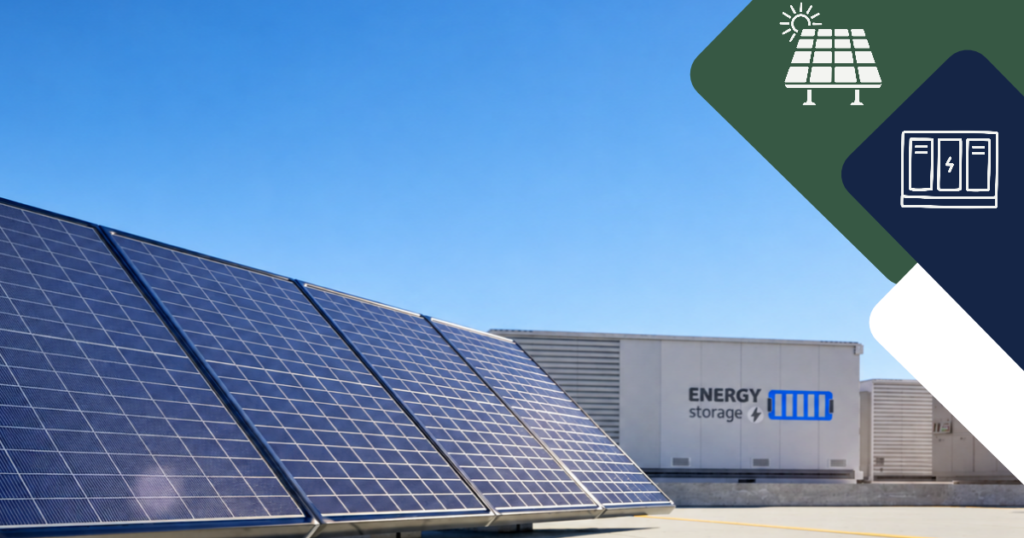
Thanks to net metering, most solar power users are also able to use grid power in conjunction. This eliminates the need for storing solar energy in batteries. However, having an Battery Energy Storage System (BESS) has its own perks.
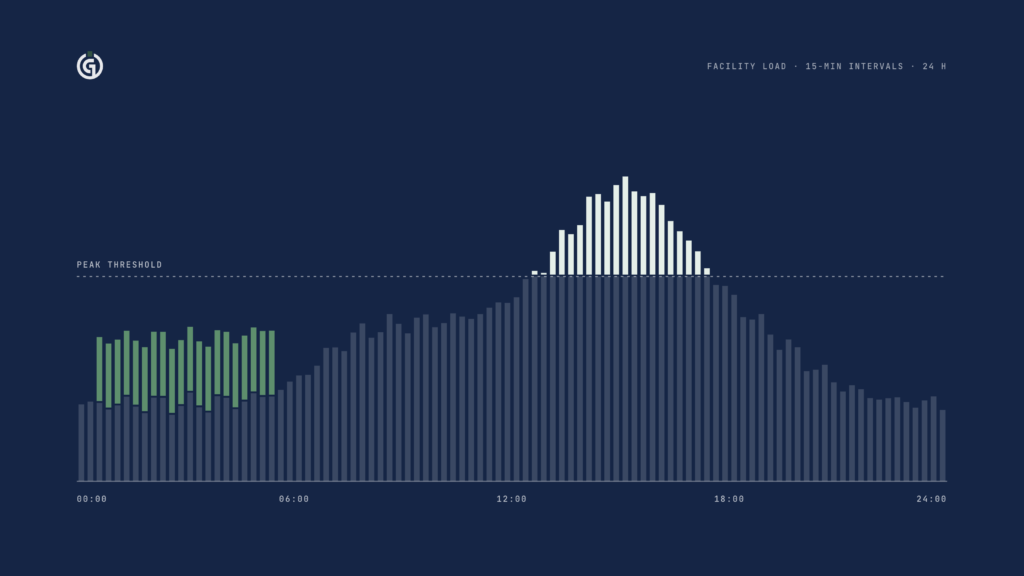
For instance, the BESS can help reduce electricity bills by reducing grid power consumption during pricier, time-of-use hours. It can also add resilience to the company against blackouts. Adding a BESS to your solar power system can take the cost of the total system higher.
There’s no doubt that a solar power system’s cost is the first thing to look at when deciding whether to invest in it. But that is not the only thing. Rather, there are certainly other metrics that prove to be much better indicators of a system’s value. Let’s take a look.
The payback period is the duration in which a solar power system pays itself off through the generated savings. The shorter the payback period, the more net savings a system generates.
The payback of any system depends mainly on the existing cost of electricity. In Canada, solar power systems installed for businesses normally have a payback period ranging from 5 to 12 years.
A solar power system usually lasts around 30 years or more. This means even systems with the longest payback periods can save money for an impressive 20 or so years.
The LCOE of a system converts the expenses and savings of a solar power system into cost per kWh of energy generated/consumed over the lifetime of the system. This makes it easier to compare it to the existing cost of electricity.
For example, a system costing $500,000 may have an LCOE of $0.05, against the grid power price of $0.09. This means with solar you will save 4 cents on every kWh of energy saved, and if the system generates 1000 kWh every day, your business saves $400 each day.
Related questions covering planning, technology, and incentives.