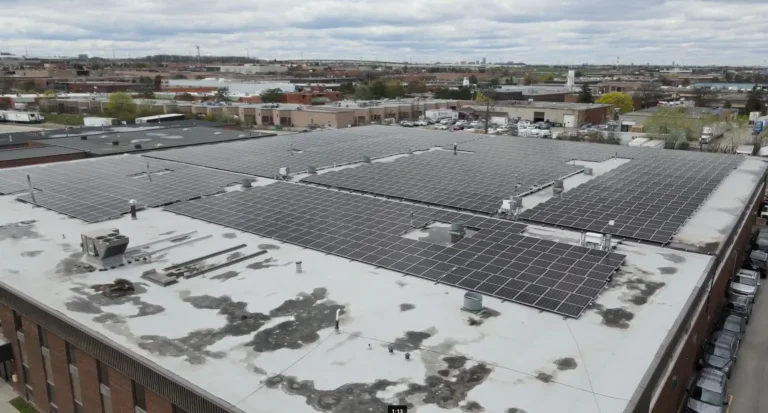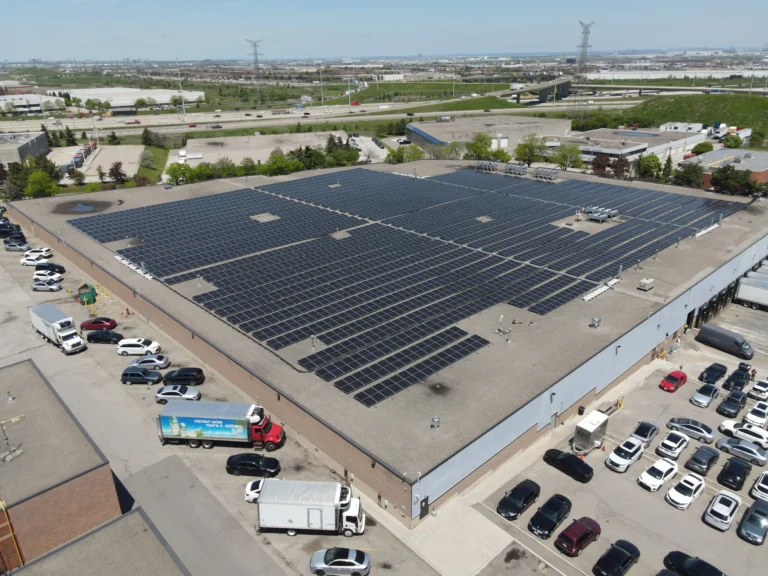

90.48 kW Commercial Solar Installation in Nova Scotia
Commercial rooftop solar delivering 97.5% electricity offset for a manufacturing facility in Lakeside, Nova Scotia.
A high daytime load against a roof asset approaching the end of its replacement cycle.
Small and mid-scale manufacturing facilities often operate with consistent annual electricity demand driven by production equipment, lighting, and building systems. Energy costs remain a meaningful operational expense — particularly in regions with higher electricity rates.
At Goodspeeds Manufacturing’s Lakeside facility, the objective was to dramatically reduce reliance on grid electricity without disrupting production activities. The challenge was not scale, but accuracy — engineering a system capable of offsetting nearly all annual electricity consumption within the limits of an existing manufacturing building.
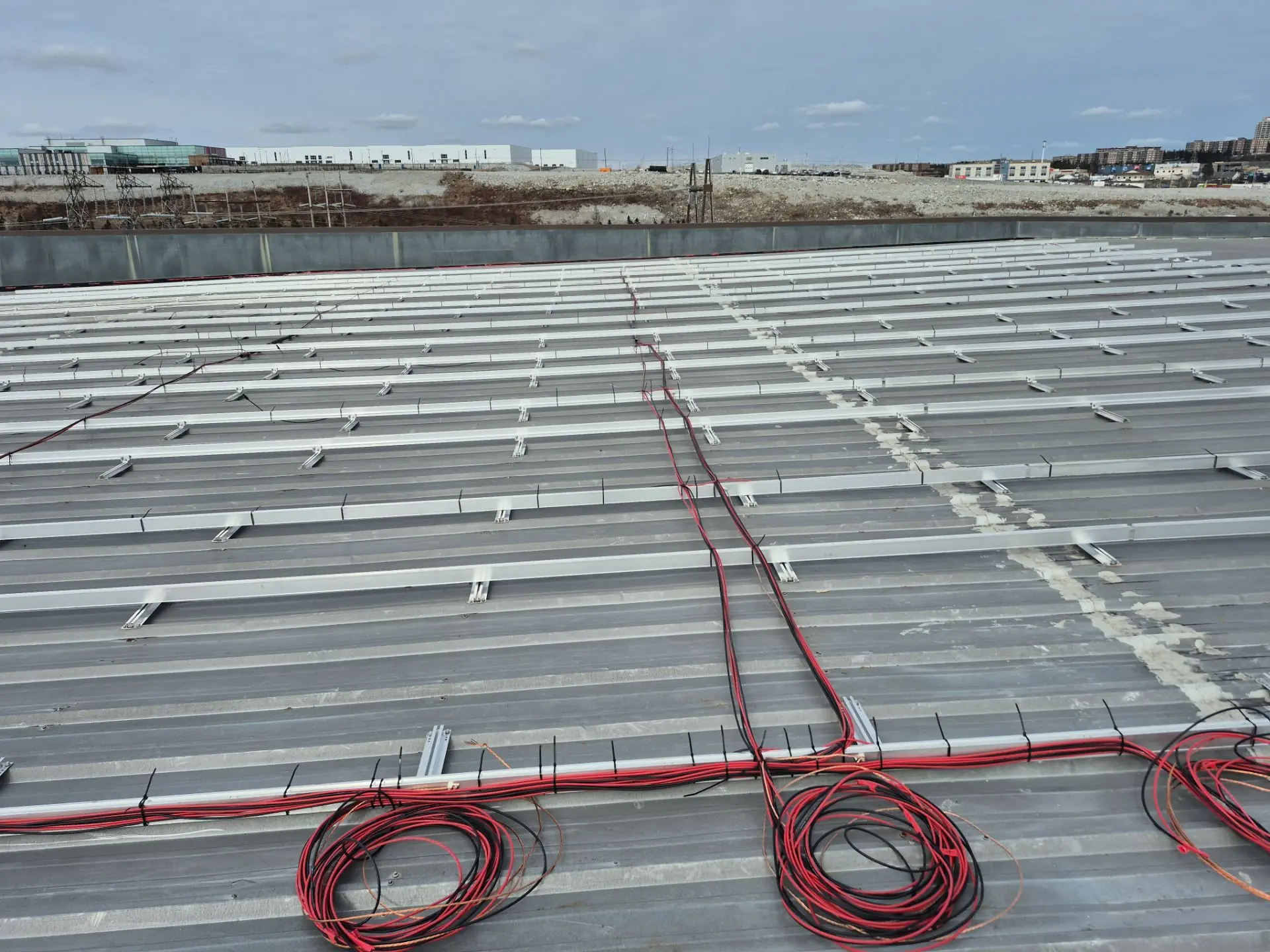
Size to the service. Mount without penetrations.
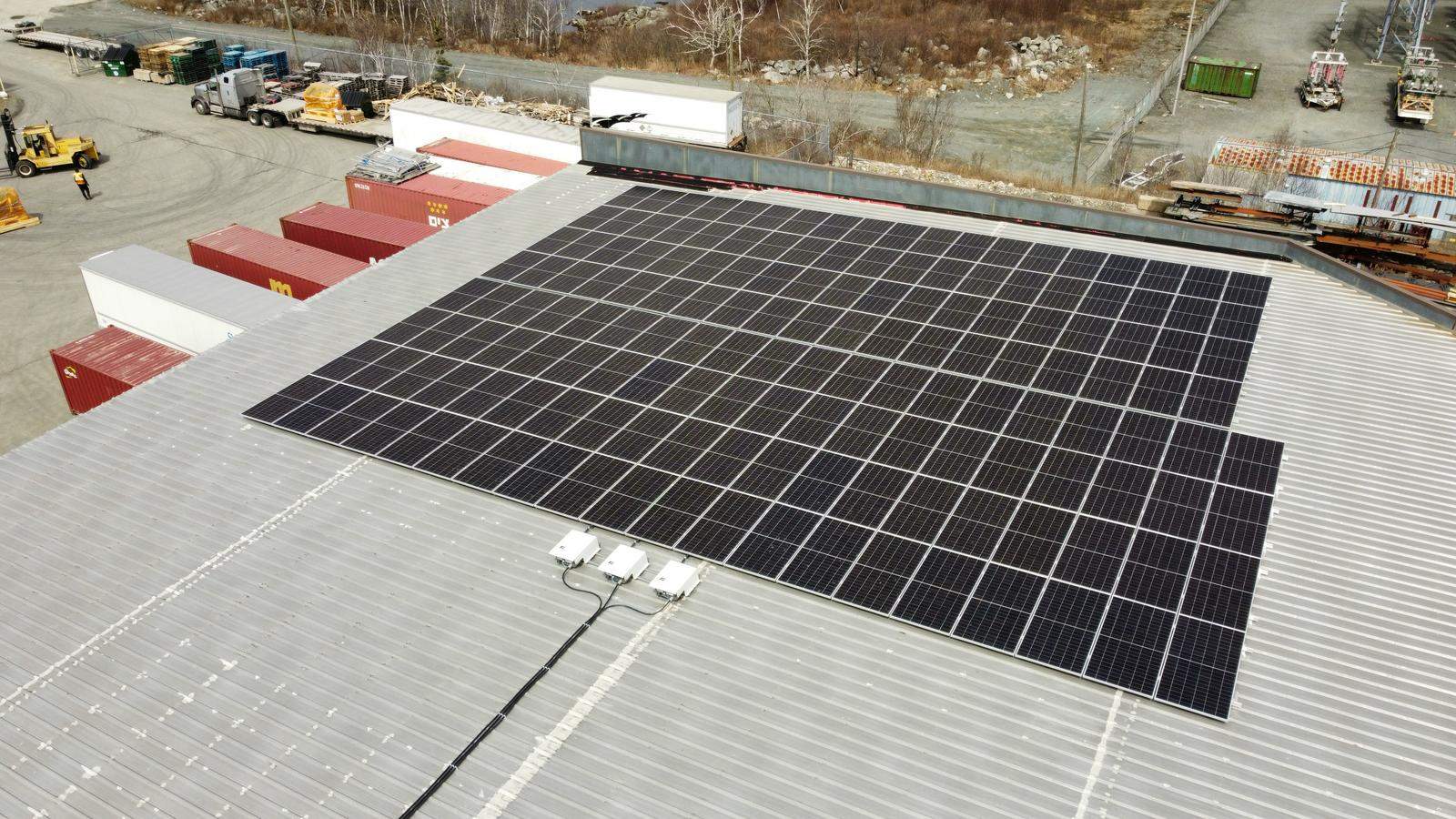
A rooftop solar PV system was engineered with capacity and layout determined based on roof availability, electrical infrastructure, and operating patterns specific to light manufacturing.
Rather than oversizing the installation, the design focused on achieving near-complete annual electricity offset through careful alignment between generation and usage. The system reached commercial operation on April 25, 2025.
The numbers, then the consequence.
- 0194,964 kWh of solar electricity generated annually.
- 0297.53% of the facility's annual electricity consumption offset by solar.
- 03Minimal ongoing reliance on grid electricity for day-to-day manufacturing operations.
- 04System commissioned April 25, 2025.
Equivalent to removing 14 passenger vehicles from Nova Scotia roads annually.
For the facilities and engineering audience.
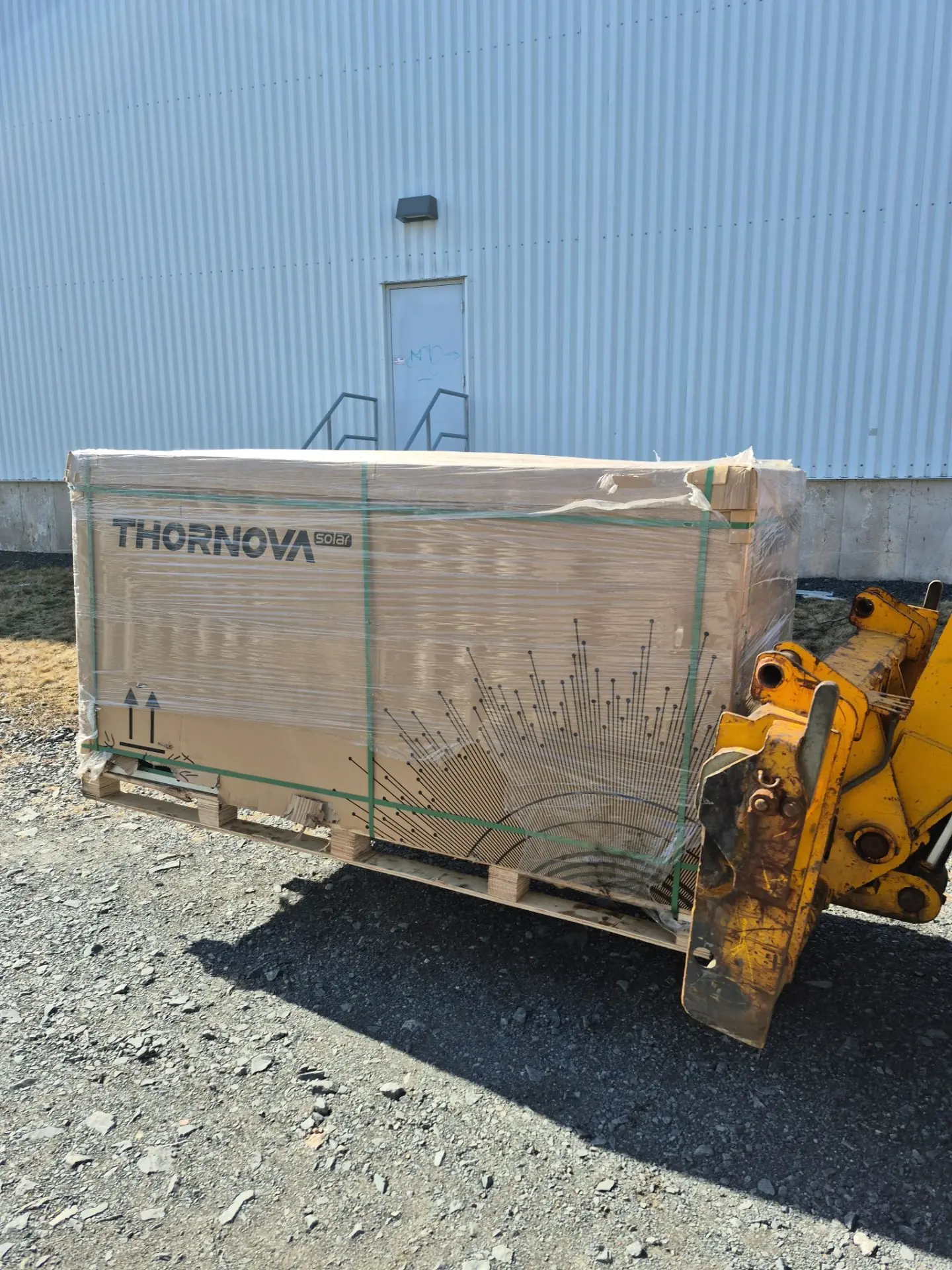
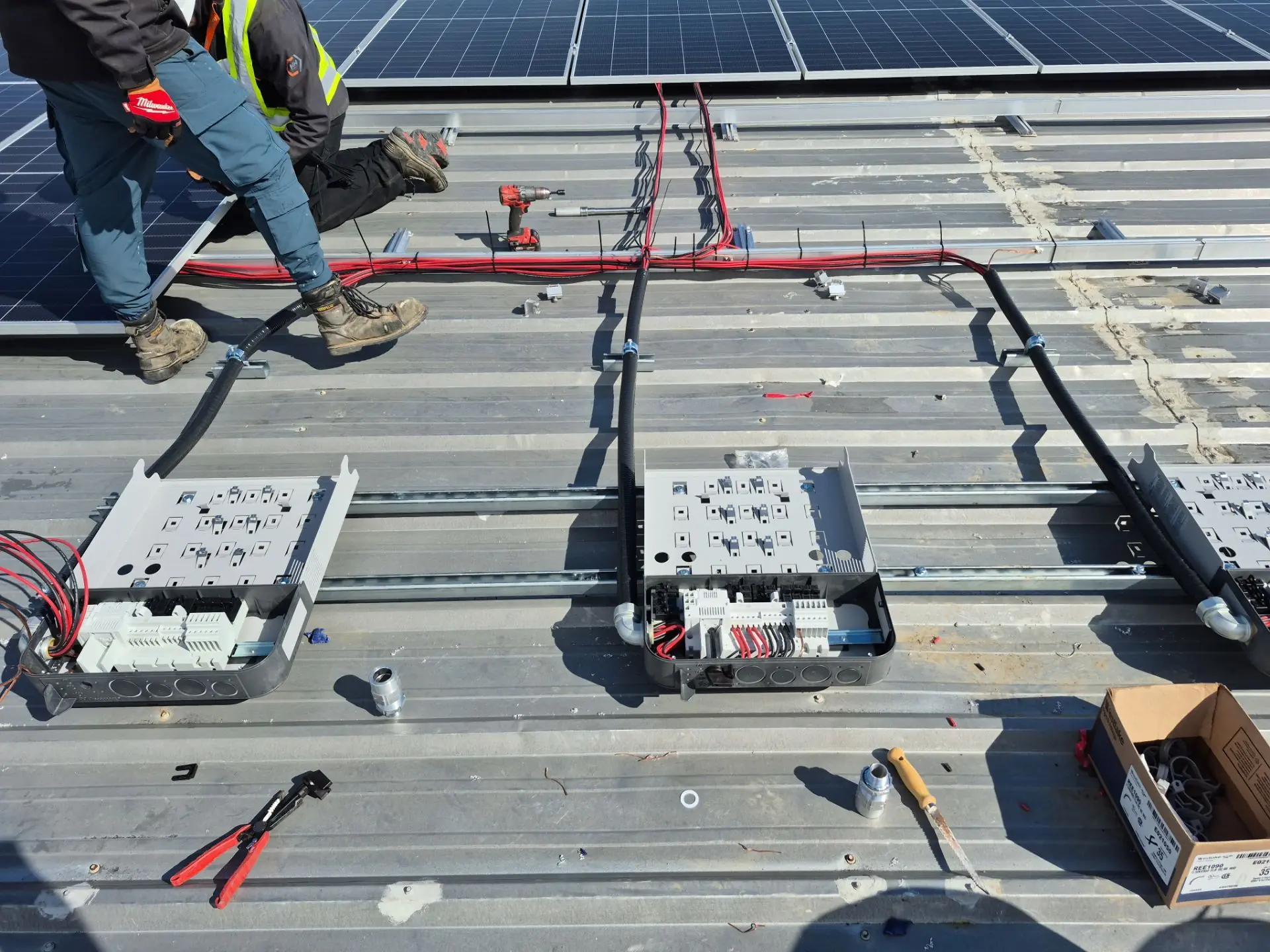
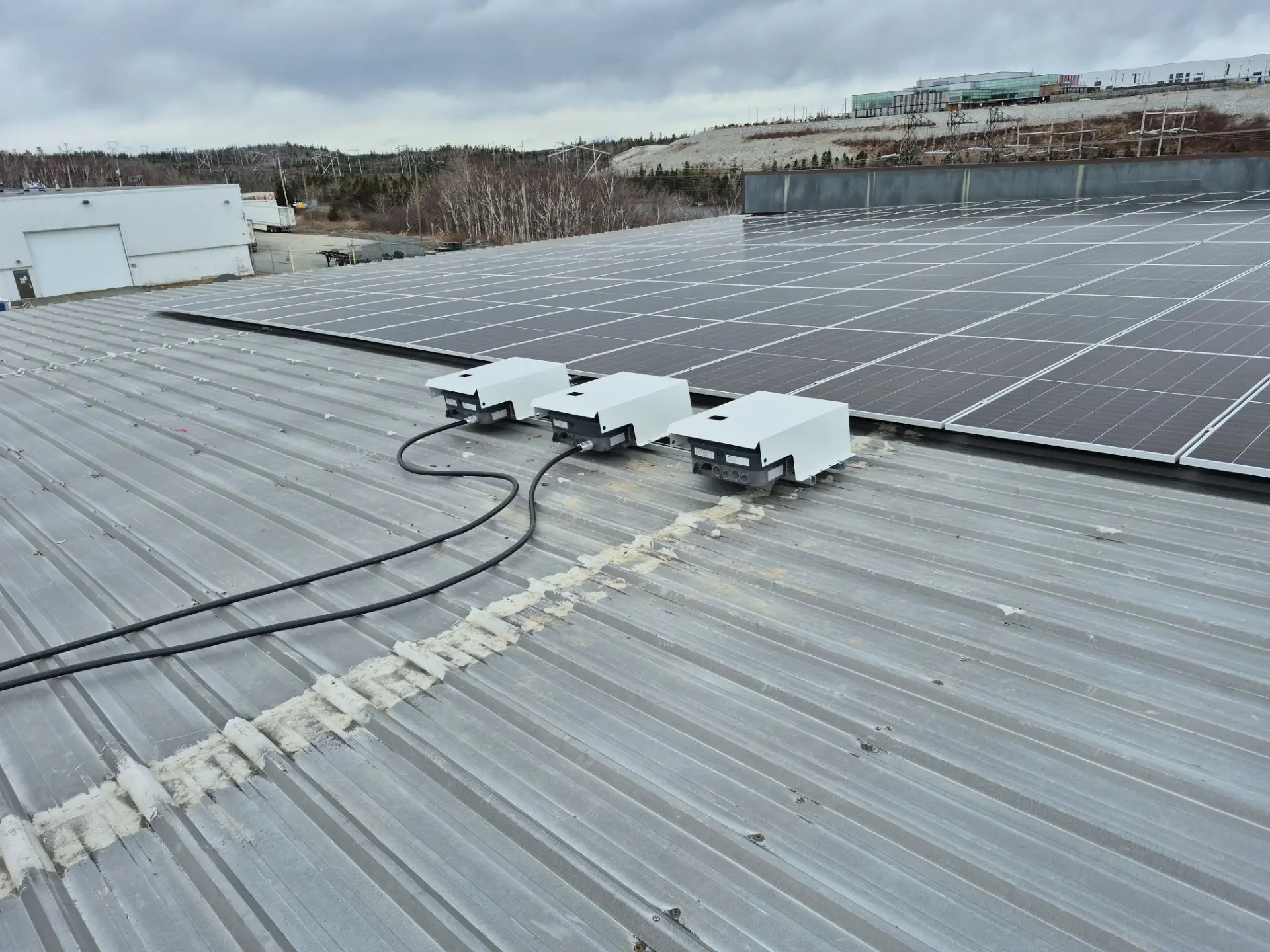
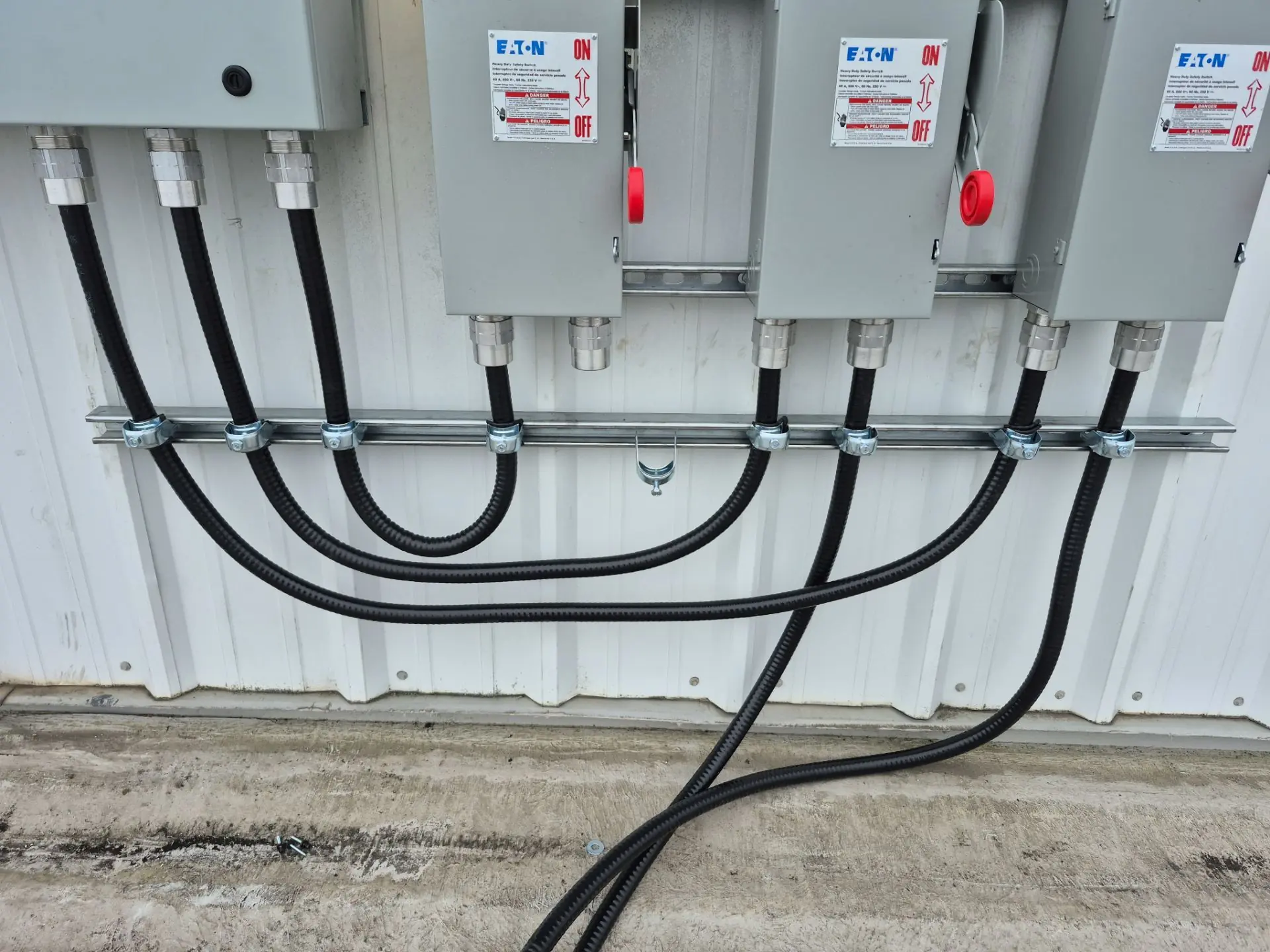
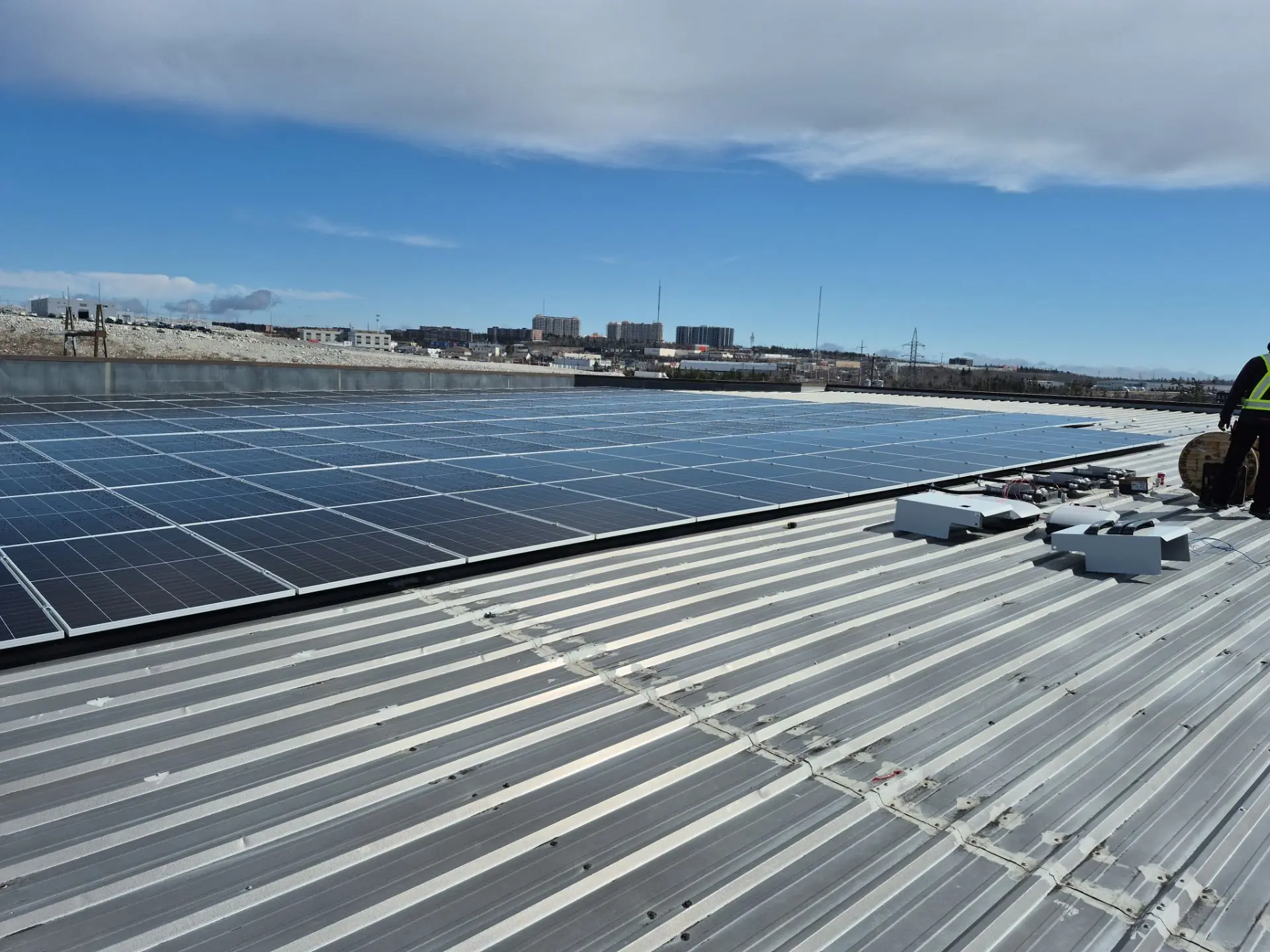
The system consists of 90.48 kW DC (156 Thornova Solar modules) paired with 72 kW AC via Fronius Symo inverters. Designed as a commercial solar installation in Nova Scotia, the system was engineered to maximize on-site electricity utilization and long-term operational savings.
Nova Scotia’s electricity grid has a higher emission factor than Ontario, making solar generation an effective strategy for reducing operating emissions and supporting long-term sustainability goals.
Facility characteristics that shaped the design.
- Manufacturing facility with a stable electricity profile suitable for commercial solar generation
- Electrical demand driven by production equipment, lighting, and facility support systems
- Rooftop configuration suitable for compact, high-utilization solar deployment
- High annual electricity utilization enabling near-complete solar electricity offset
What was installed.
Related Questions
Looking for more information? Explore related questions from our Knowledge Centre covering project planning, technology considerations, incentives, and operational best practices.
Evaluating rooftop solar for a commercial or industrial facility? Understanding how solar aligns with your consumption profile and long-term objectives is the first step.
- ·Roof structural and shading review
- ·Annual production model
- ·Net-Metering interconnection check
- ·Incentive & financing stack
- ·Two-scenario capital plan