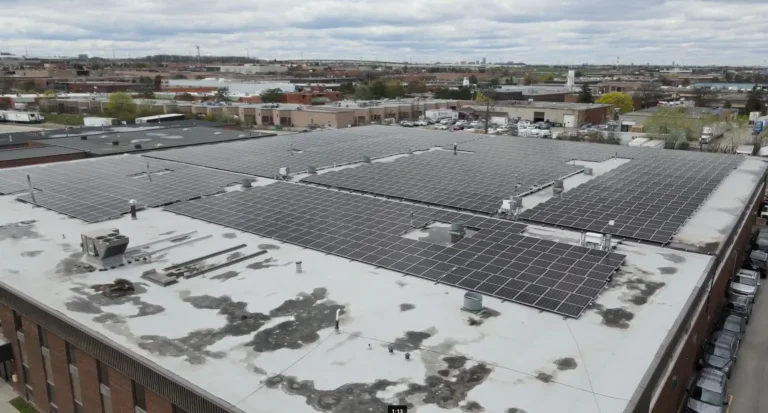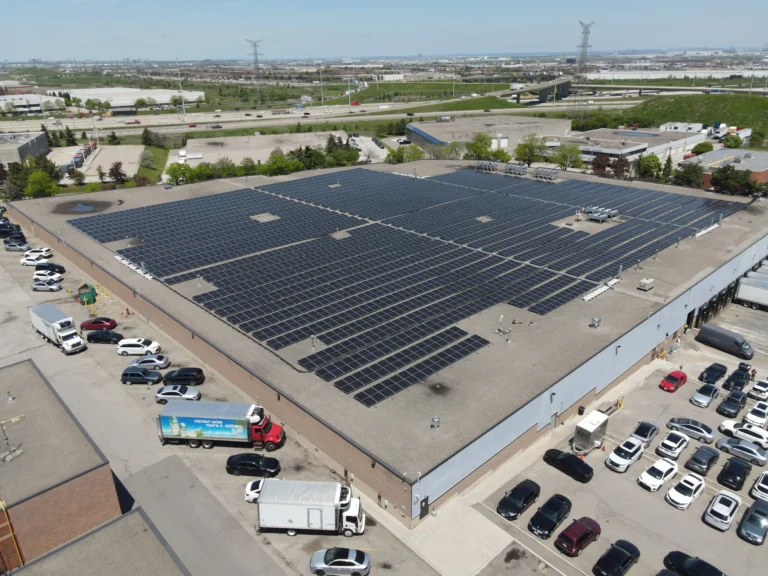

64.96 kW rooftop solar offsetting 99.7% of electricity at an industrial manufacturer in Barrie, Ontario
99.7% annual electricity offset — the highest in the Green Integrations solar portfolio.
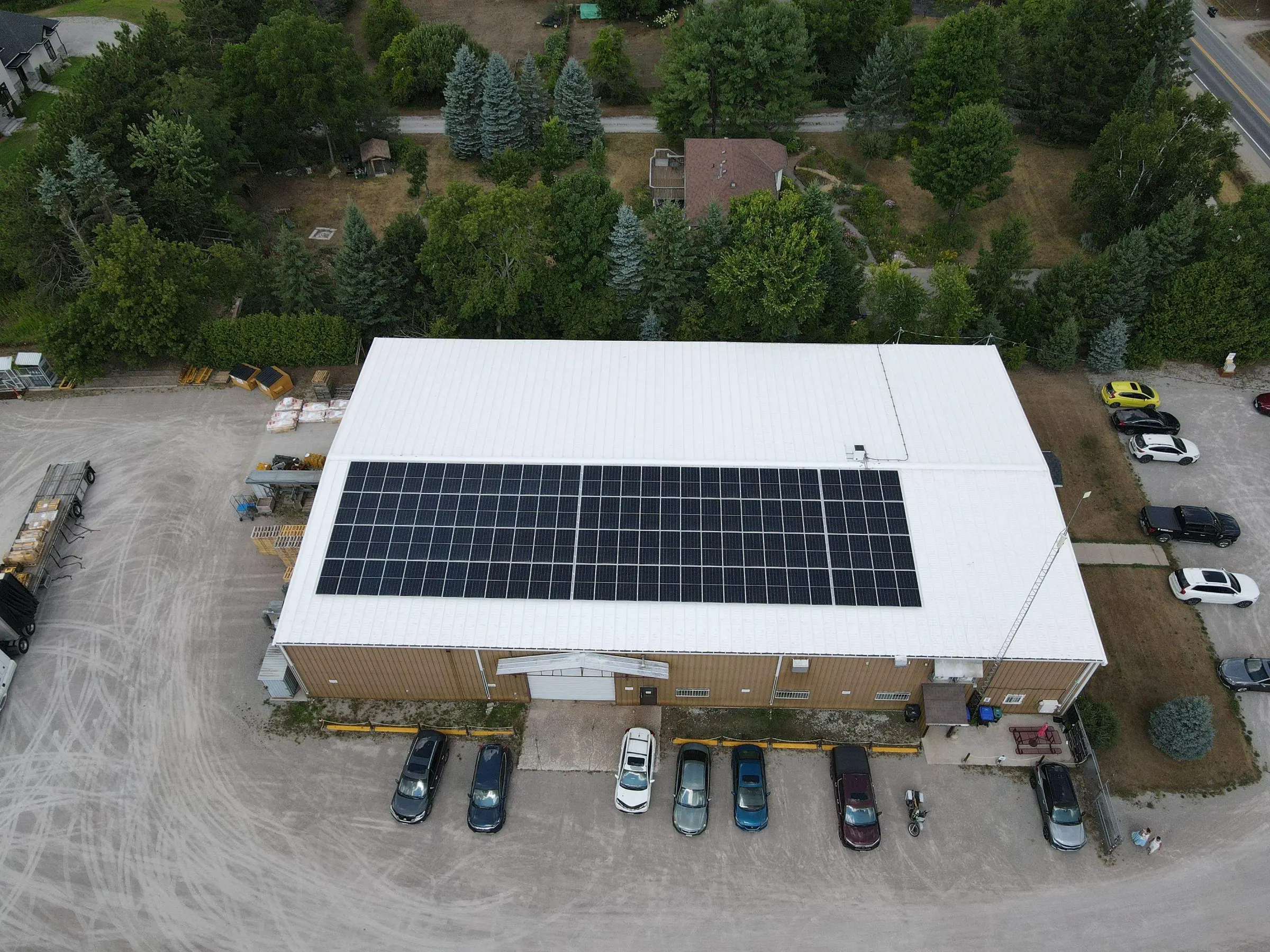
A high daytime load against a roof asset approaching the end of its replacement cycle.
Industrial safety equipment manufacturers typically operate with steady annual electricity demand driven by fabrication equipment, assembly operations, lighting, and facility systems. Reliability and predictability are critical, as production supports safety-critical equipment used in demanding industrial environments.
At Belt Conveyor Guarding’s Barrie facility, the objective was to dramatically reduce reliance on grid electricity while maintaining uninterrupted manufacturing operations. The solar system needed to be sized to closely match the facility’s actual annual electricity usage, ensuring very high on-site solar utilisation without oversizing the installation.
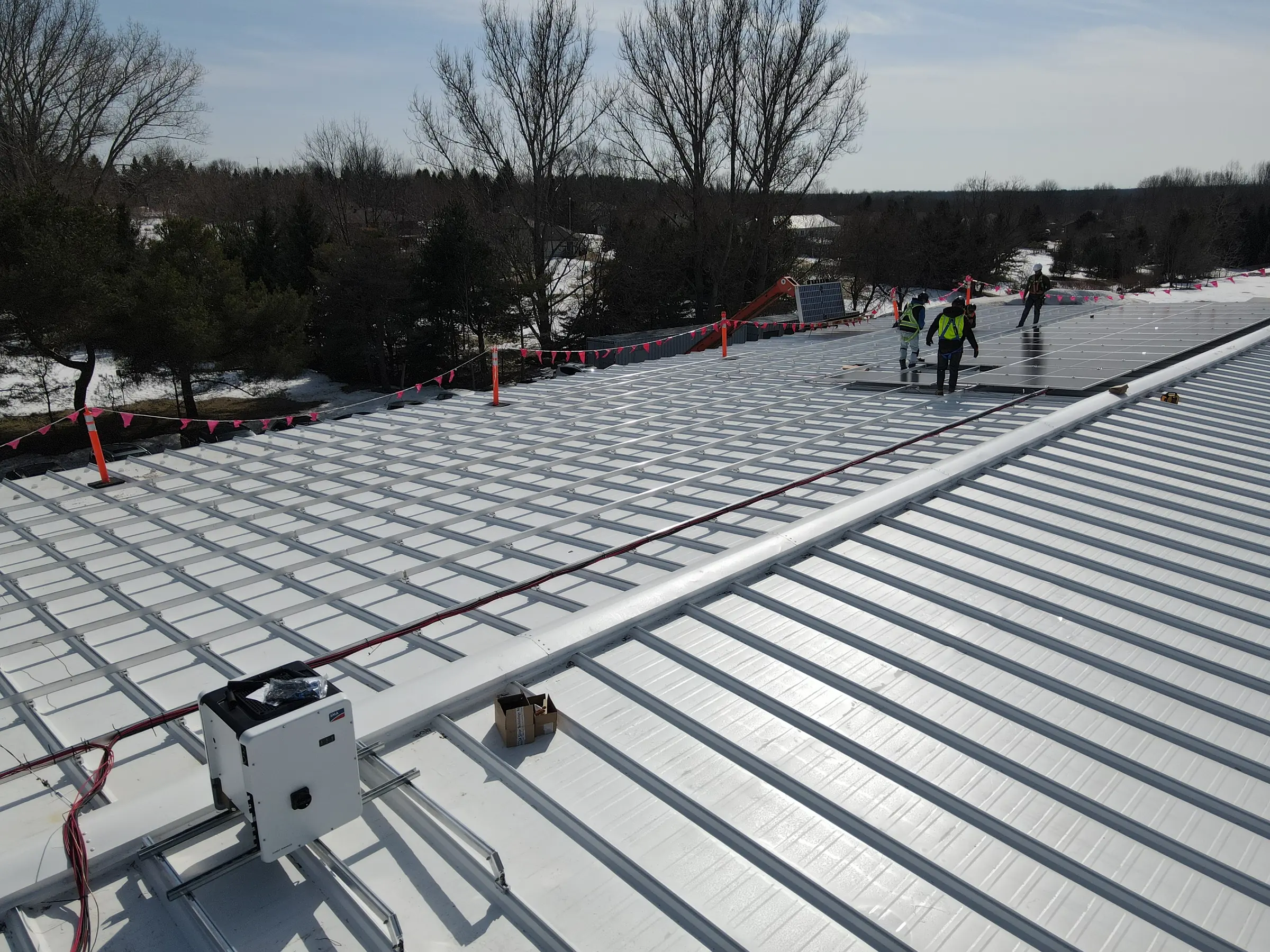
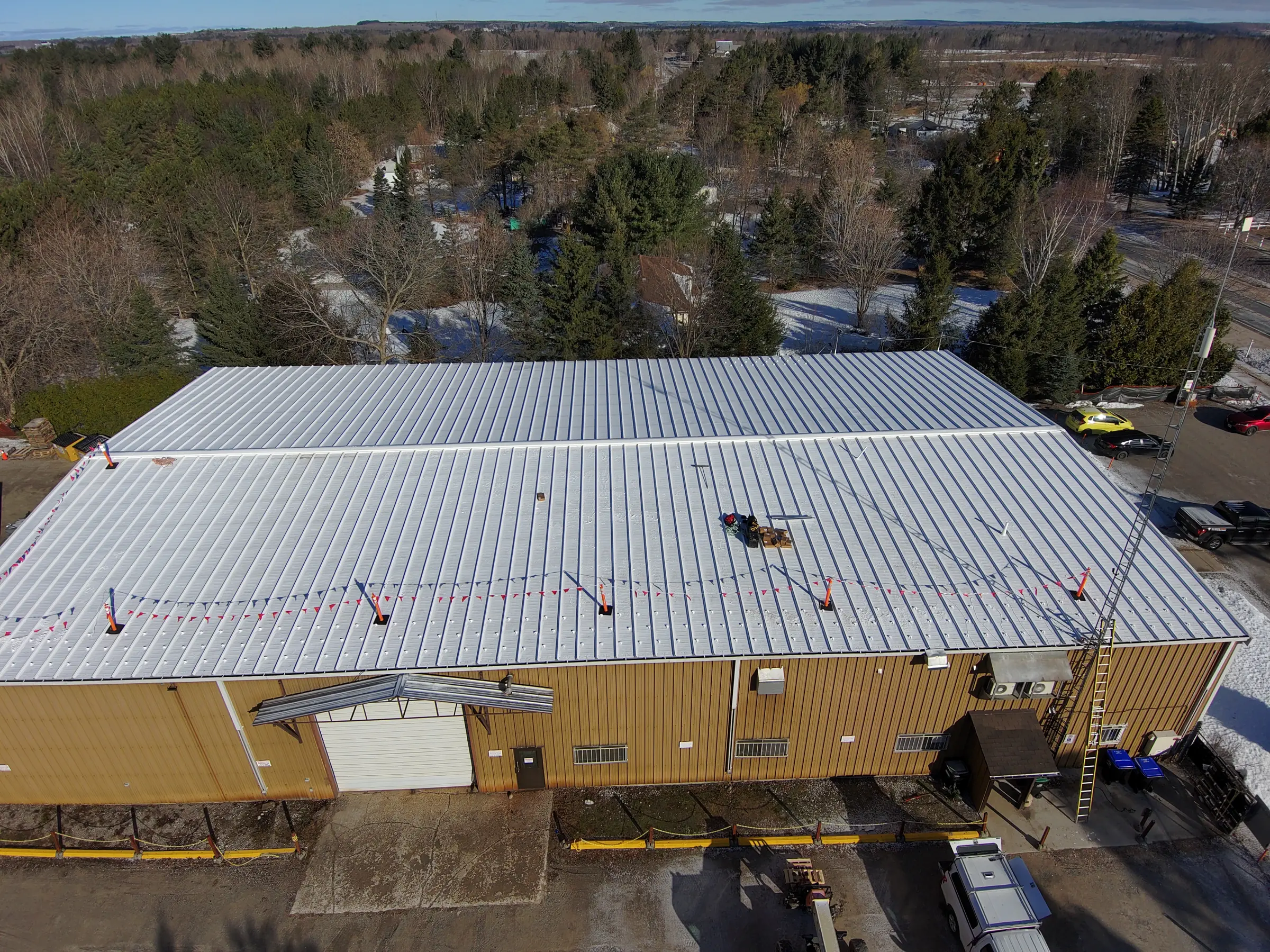
Size to the service. Mount without penetrations.
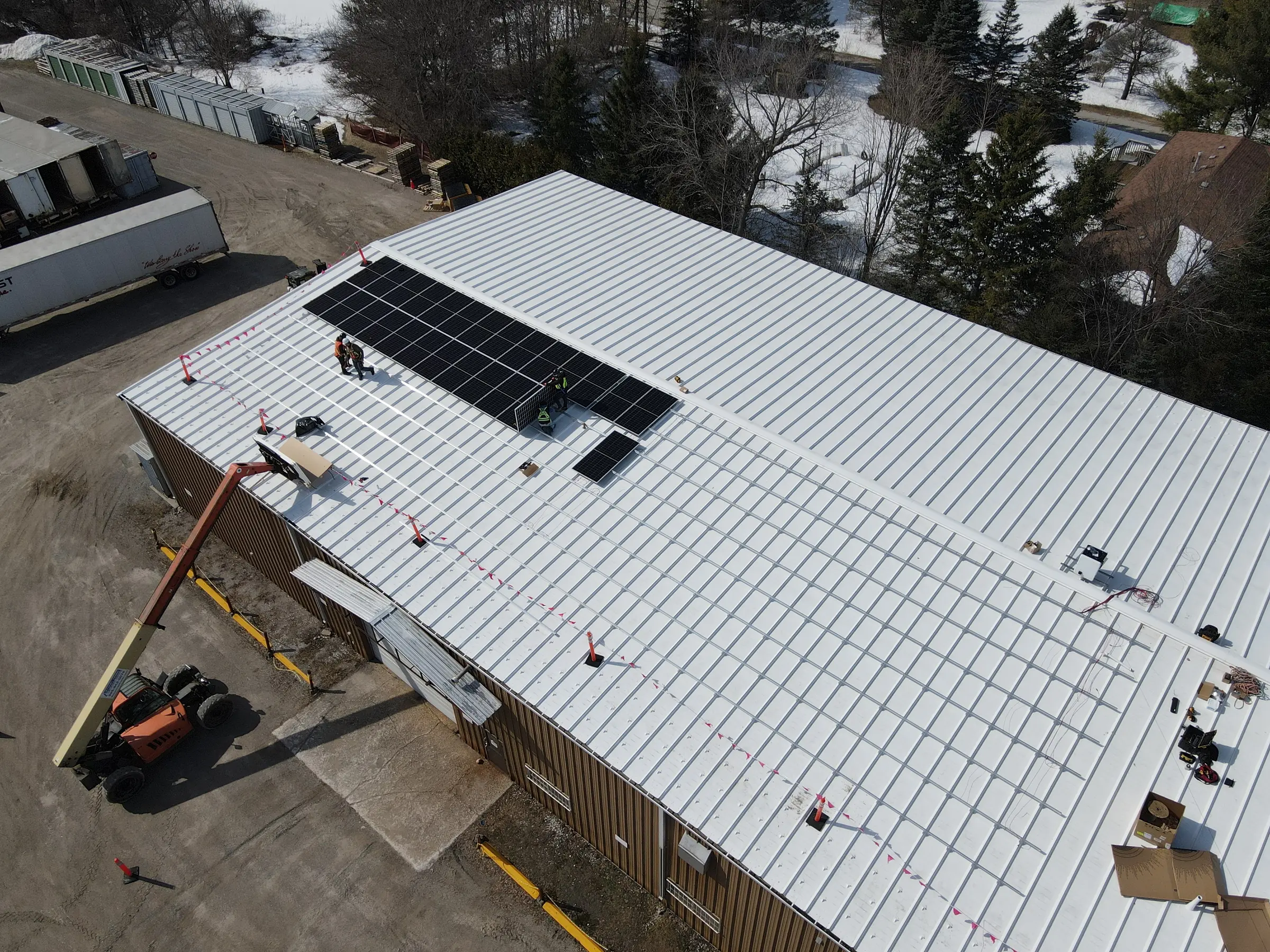
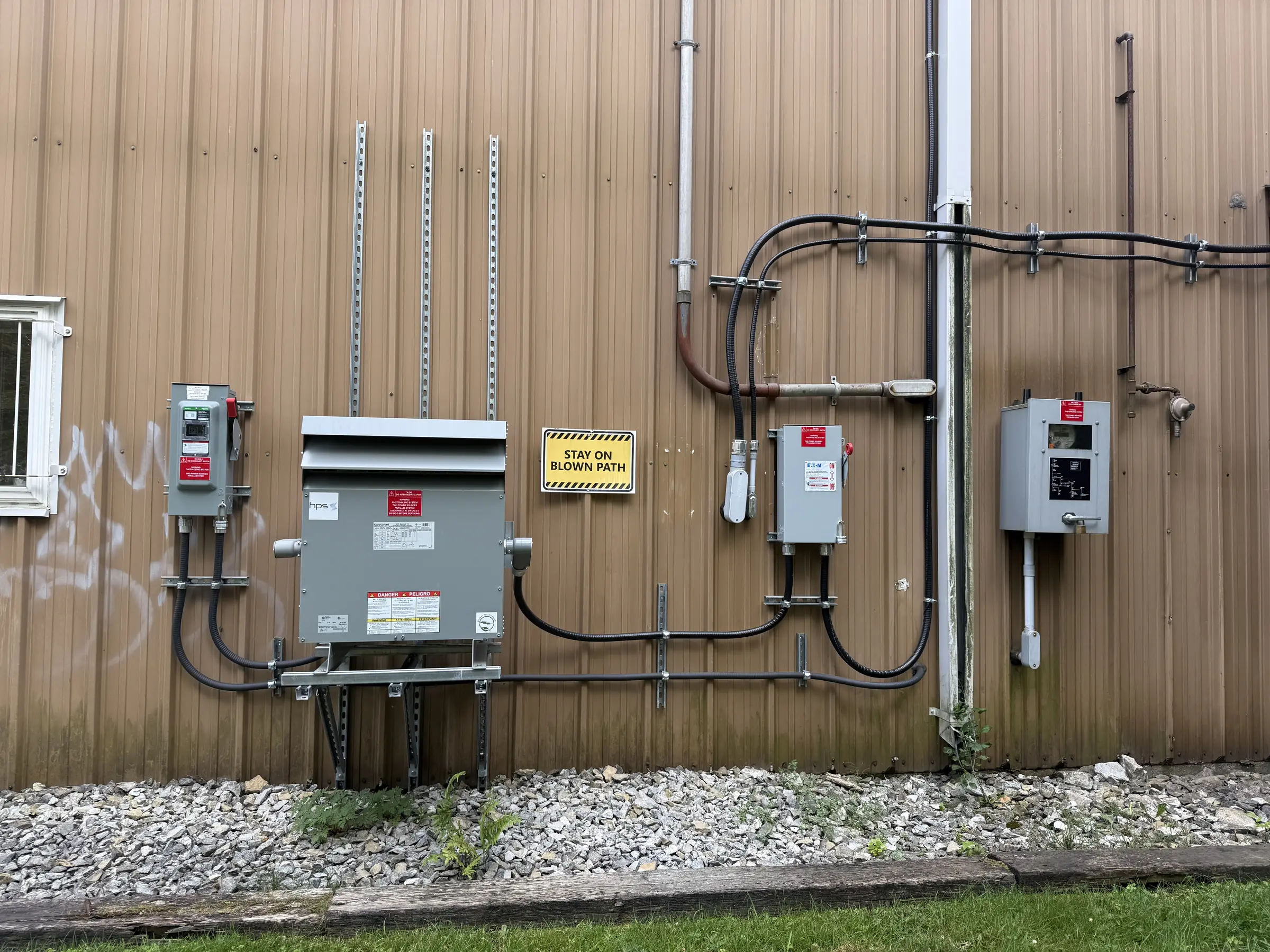
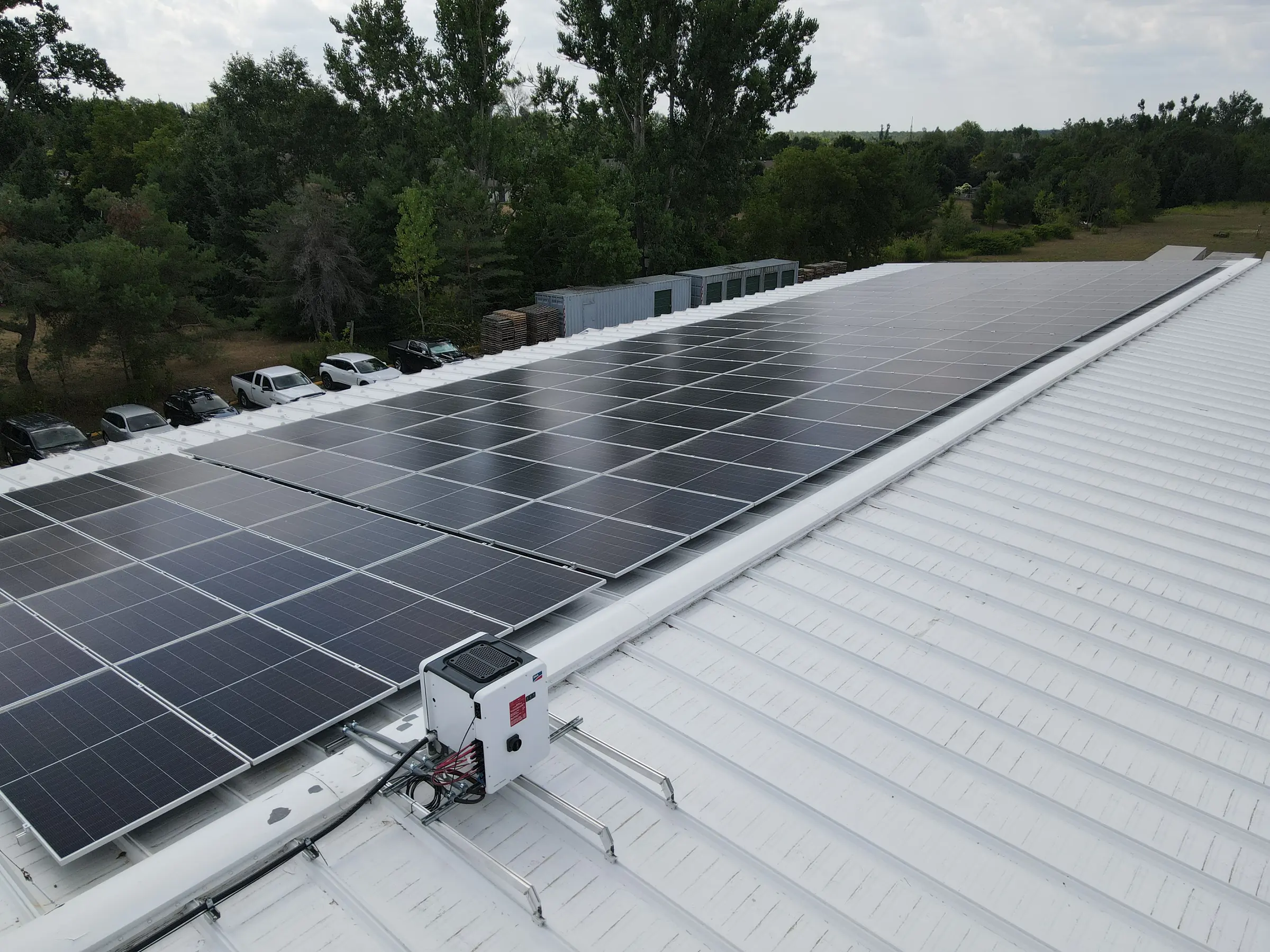
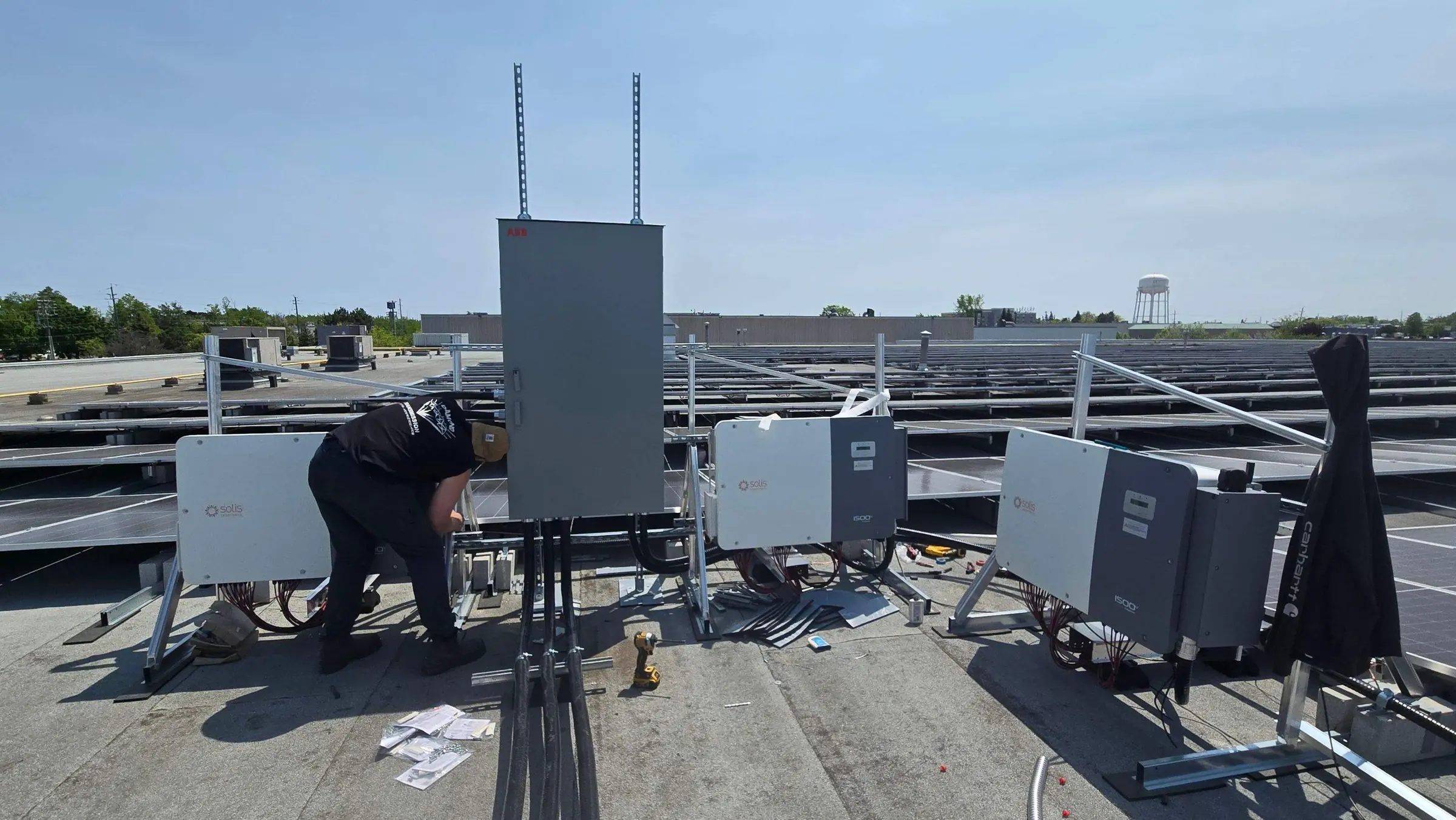
A rooftop solar PV system was engineered with system capacity and layout determined based on roof availability, electrical infrastructure, and operating patterns specific to industrial safety equipment manufacturing.
Rather than maximizing installed capacity, the design focused on precise alignment between annual generation and annual usage, resulting in a solar system capable of offsetting virtually all of the facility’s annual electricity consumption while integrating cleanly into existing operations. The system reached commercial operation on June 5, 2025.
Properly sized industrial solar systems can significantly reduce electricity purchases while supporting long-term operational cost control and energy planning.
The numbers, then the consequence.
- 0175,152 kWh of solar electricity generated annually.
- 0299.7% of the facility's annual electricity consumption offset — the highest in the Green Integrations portfolio.
- 03Minimal ongoing reliance on grid electricity for day-to-day operations.
- 04System commissioned June 5, 2025, integrated without disruption to manufacturing.
Equivalent to removing 1 passenger vehicle from Ontario roads annually.
For the facilities and engineering audience.
Achieving a 99.7% annual electricity offset required exceptionally close alignment between projected solar generation and actual facility consumption. The design prioritized utilization efficiency over maximum installed capacity, ensuring that nearly all generated electricity could be consumed on-site throughout the year.
The project demonstrates the value of load-profile-driven system sizing. Rather than maximizing roof coverage, system capacity was selected to match the facility’s operational demand characteristics and improve long-term economic performance.
Manufacturing facilities with stable daytime operating schedules often achieve higher solar utilization rates than facilities with variable or seasonal loads. This operating profile was a significant factor in supporting one of the highest electricity offset percentages within the Green Integrations solar portfolio.
Facility characteristics that shaped the design.
- Industrial safety equipment manufacturing facility producing conveyor guarding systems
- Annual electricity demand driven by fabrication, assembly, and facility operations
- Existing rooftop suitable for compact, high-utilisation solar deployment
- Annual load profile enabling near-complete electricity offset without operational disruption
What was installed.
Questions This Project Helps Answer
Every facility has unique operational requirements, infrastructure constraints, and business objectives. These questions highlight some of the considerations, decisions, and lessons that emerged from this project and may help other organizations evaluating similar opportunities.
- Near-complete electricity offset is possible when solar production closely aligns with the facility's annual electricity consumption, available roof area, electrical capacity, and operating profile. A high offset is more likely when the facility has consistent daytime electricity use and the system can be sized without producing significant excess generation beyond what the facility can use.
- The design objective was to match generation to the facility's actual consumption profile rather than simply maximize roof coverage. This helps improve on-site utilization and project economics because more of the generated electricity is used directly by the facility. Close sizing also reduces the risk of installing capacity that does not provide proportional value.
- Manufacturers should evaluate both load profile and physical site conditions before assuming what level of offset is possible. Similar building sizes can produce very different results depending on operating hours, electricity demand, roof availability, utility requirements, and electrical infrastructure. A high offset requires alignment between the facility's usage pattern and feasible system capacity.
Related Questions
Looking for more information? Explore related questions from our Knowledge Centre covering project planning, technology considerations, incentives, and operational best practices.
Evaluating rooftop solar for a commercial or industrial facility? Understanding how solar aligns with your consumption profile and long-term objectives is the first step.
- ·Roof structural and shading review
- ·Annual production model
- ·Net-Metering interconnection check
- ·Incentive & financing stack
- ·Two-scenario capital plan