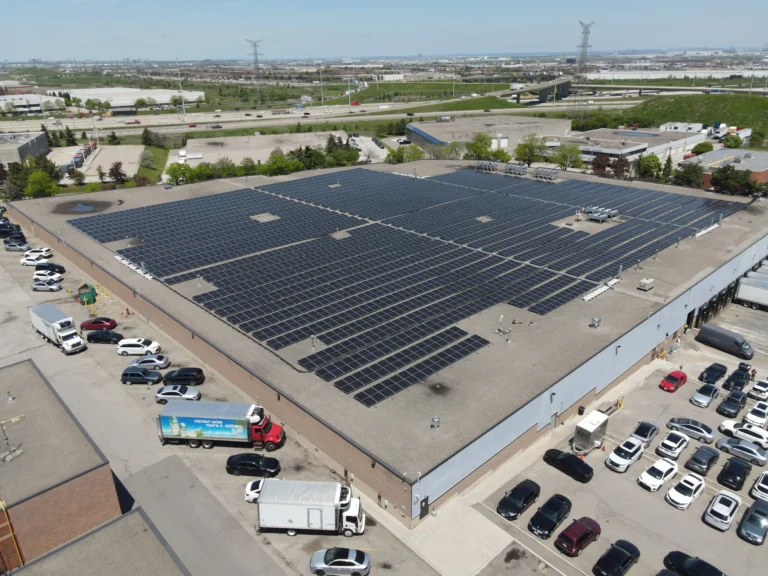

86 kW Food Manufacturing Solar Installation in Ontario
Commercial rooftop solar delivering 89.2% electricity offset for a meat processing facility in Millbank, Ontario.
A high daytime load against a roof asset approaching the end of its replacement cycle.
Small meat processing facilities operate under strict food safety and regulatory requirements, with electricity demand driven by refrigeration, processing equipment, ventilation, and sanitation systems. While overall facility size may be modest, electricity reliability is critical, and opportunities to reduce consumption through efficiency alone are often limited.
At Gerber Meats Ltd., the goal was to significantly reduce reliance on grid electricity without disrupting daily processing operations. Any solar solution needed to be carefully sized to match actual annual electricity usage, integrate cleanly with existing systems, and operate reliably in a regulated food production environment.
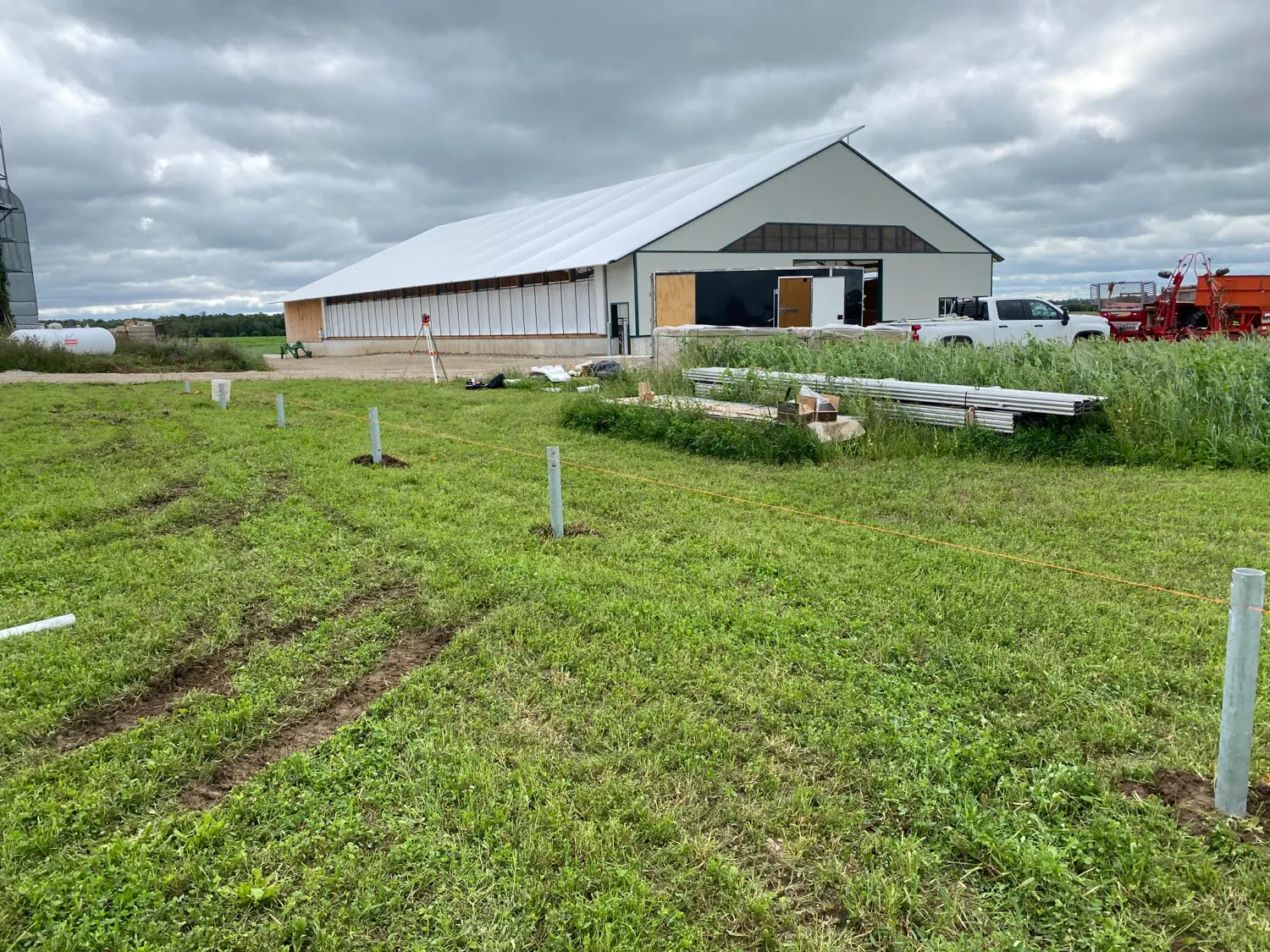
Size to the service. Mount without penetrations.
A rooftop solar PV system was engineered with system capacity and layout determined based on roof availability, electrical infrastructure, and the operating patterns of a small meat processing facility.
Rather than maximizing installed capacity, the system was sized to achieve high on-site annual utilization. This approach resulted in a solar installation capable of offsetting the majority of the facility’s annual electricity consumption while maintaining operational simplicity and reliability. The system reached commercial operation on June 18, 2024.
The numbers, then the consequence.
- 0195,702 kWh of solar electricity generated annually.
- 0289.2% of the facility's annual electricity consumption offset by solar.
- 03System commissioned June 18, 2024, integrated without disruption to meat processing operations.
Equivalent to removing 1 passenger vehicle from Ontario roads annually.
For the facilities and engineering audience.
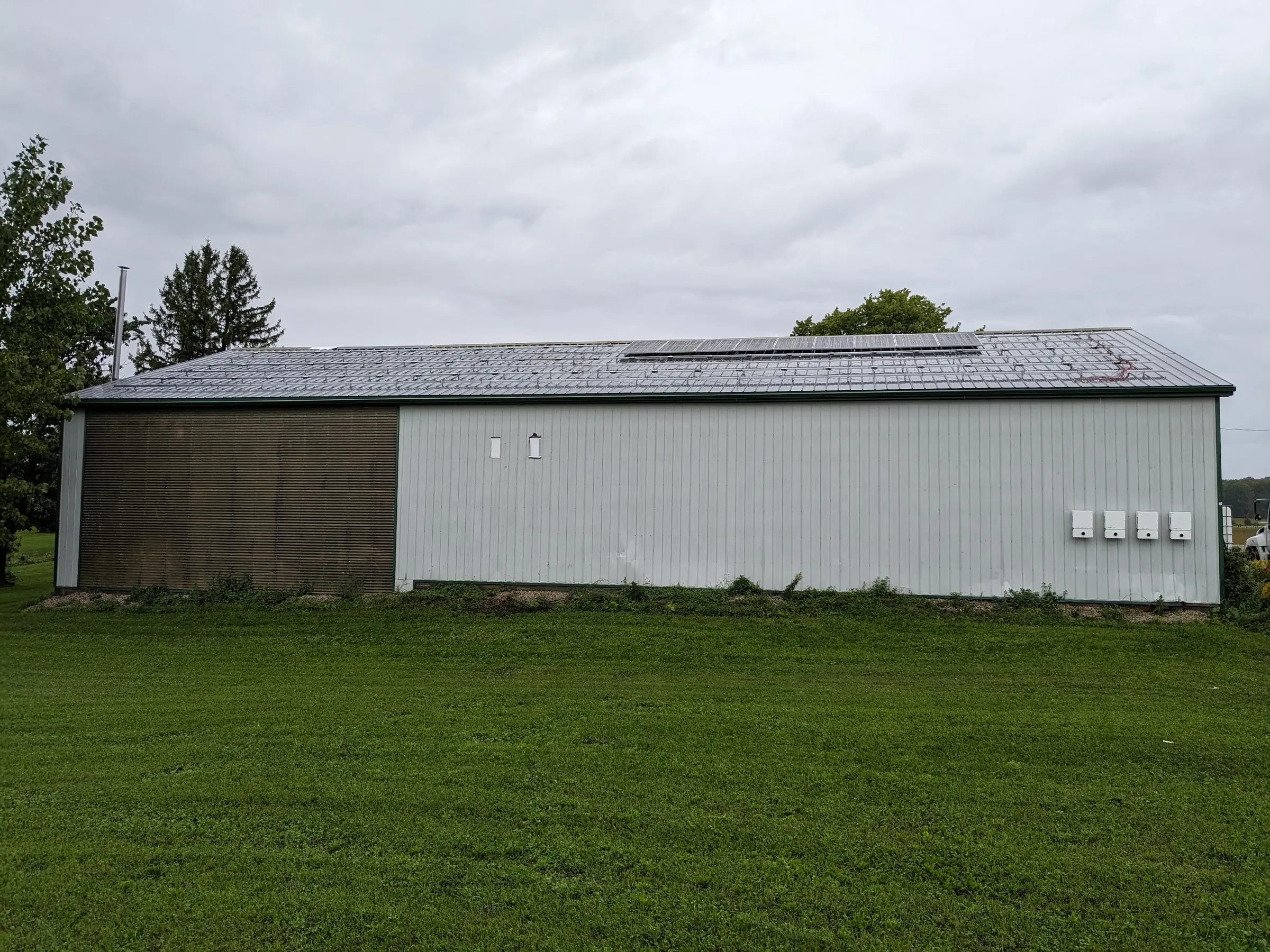
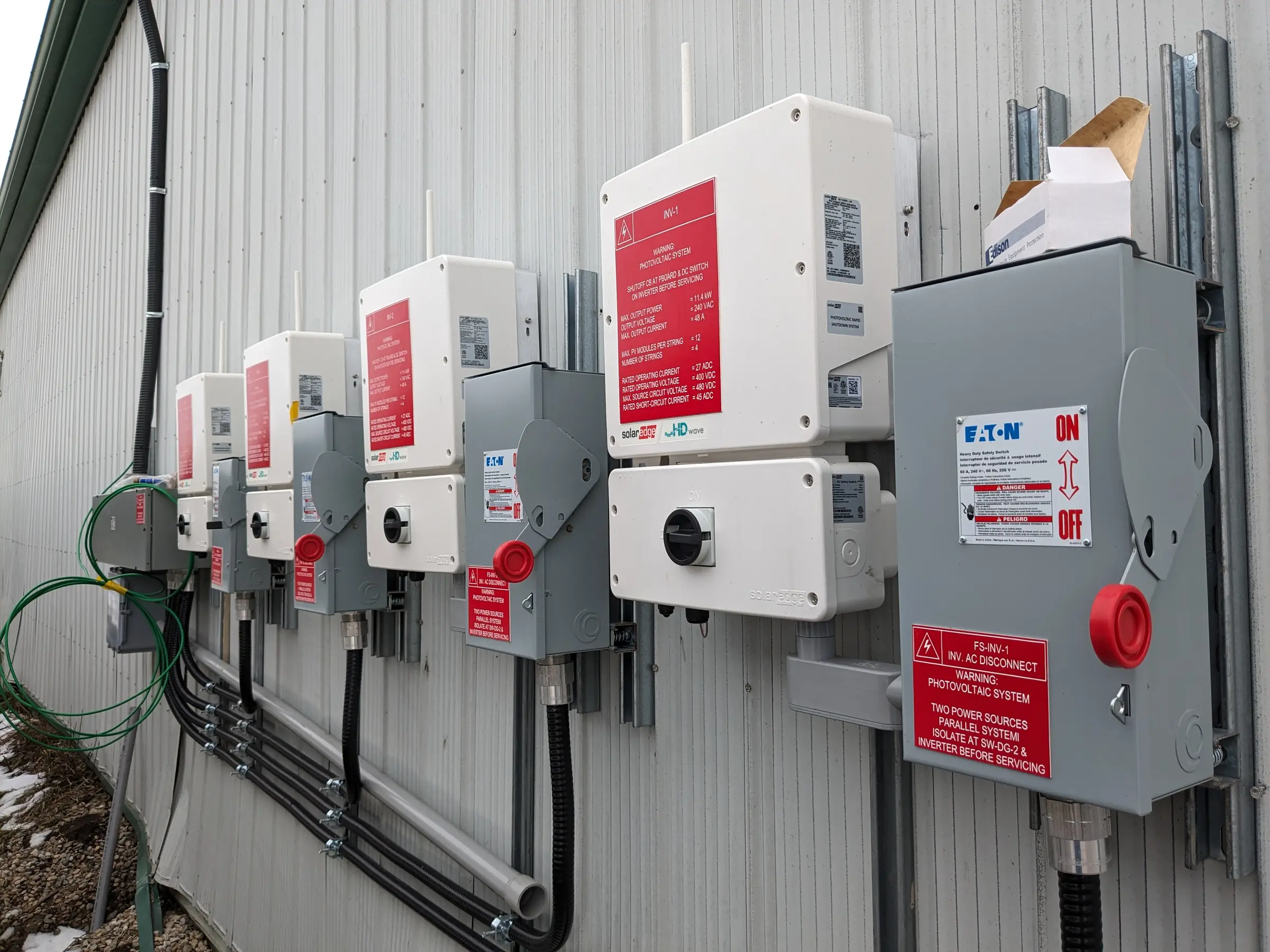
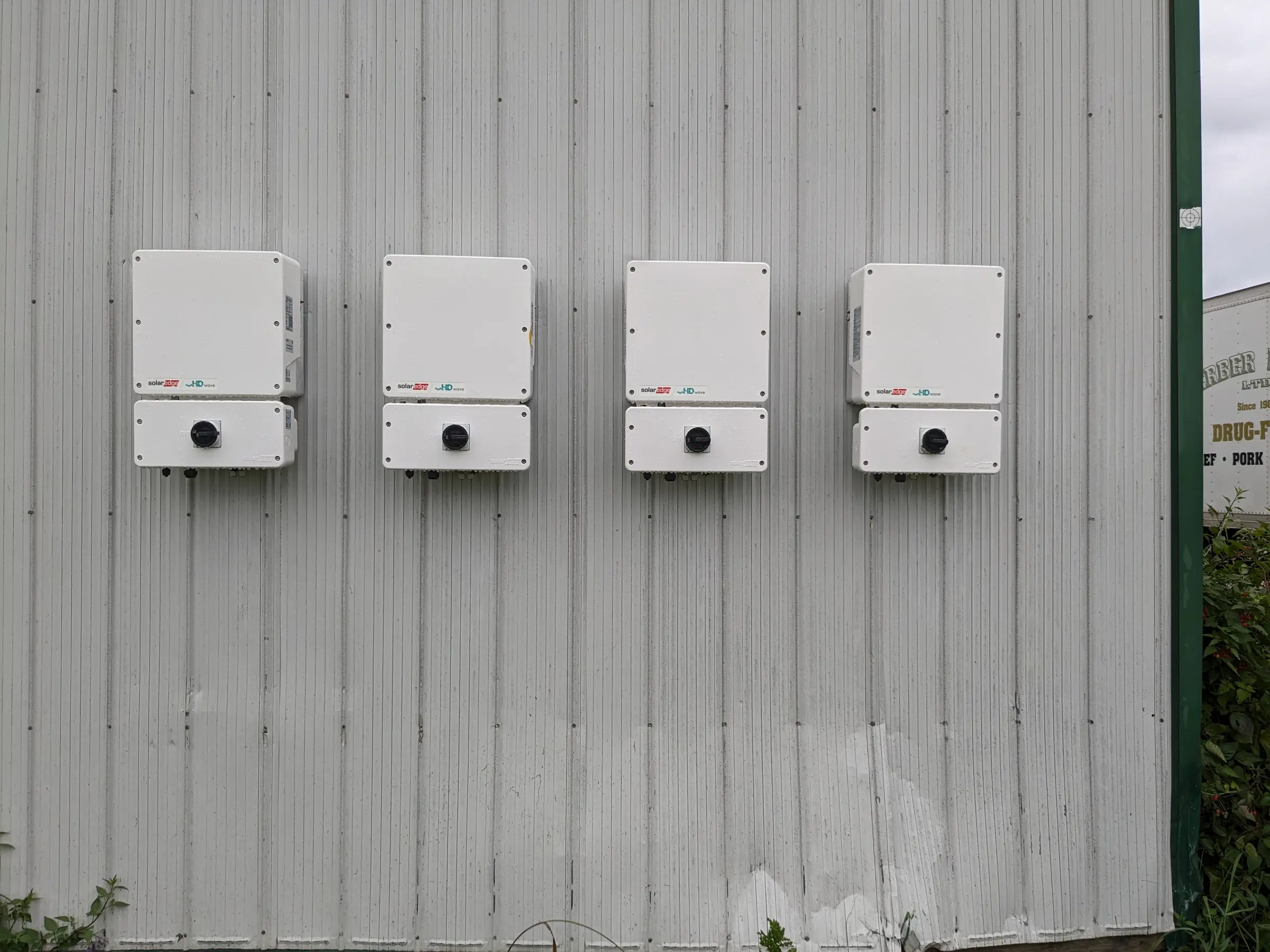
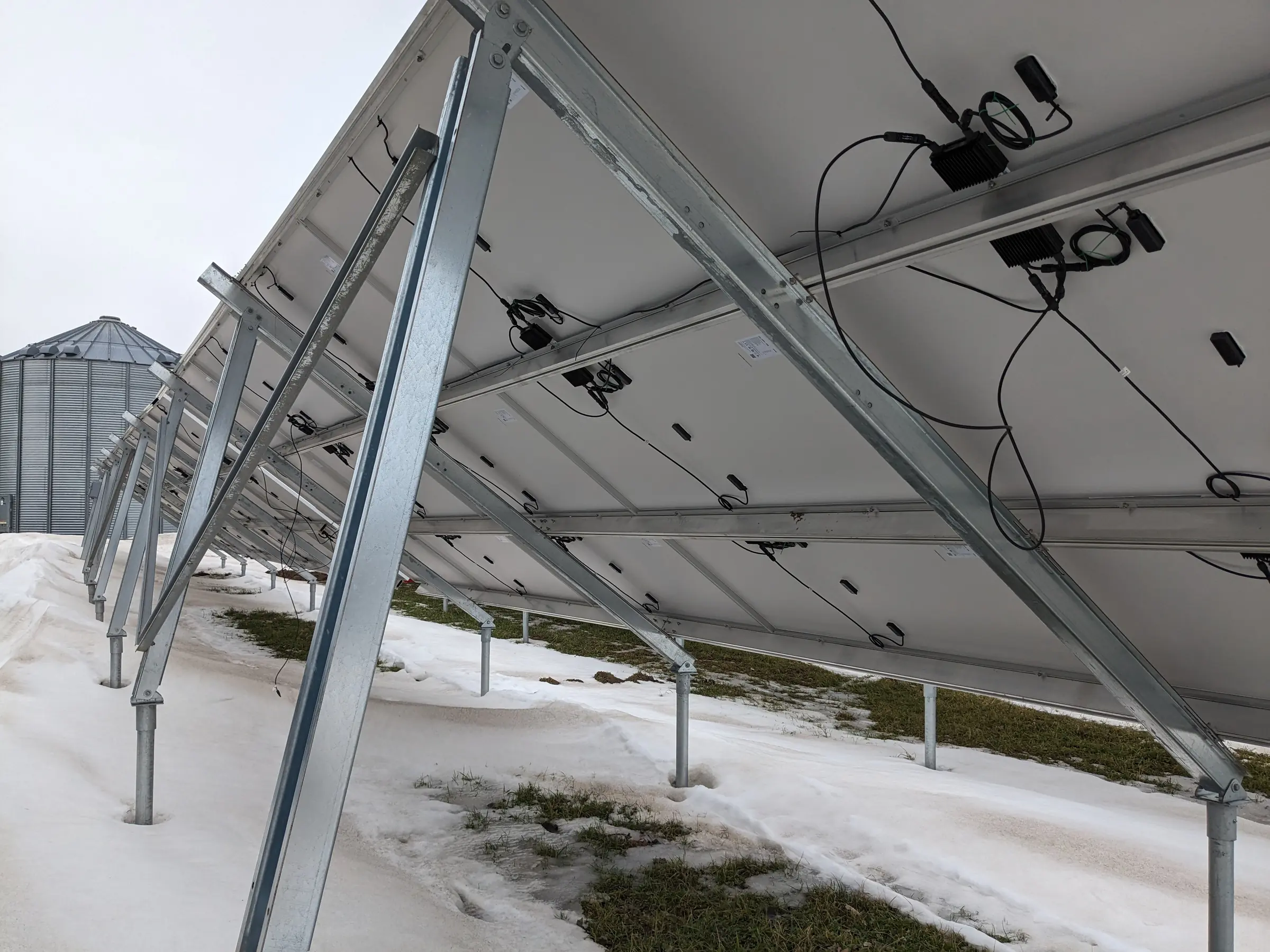
The system consists of 86 kW DC (189 LONGi Solar modules) paired with 45.6 kW AC via SolarEdge inverters. Designed for a food manufacturing environment, the system was engineered to maximize on-site electricity utilization while integrating with existing facility operations and food production requirements.
SolarEdge monitoring technology provides production visibility and long-term performance tracking. Food manufacturers evaluating energy strategies often combine commercial solar with a professional energy audit to identify additional opportunities for reducing operating costs and electricity consumption.
Facility characteristics that shaped the design.
- Regulated food processing facility requiring reliable electricity to support production, refrigeration, and food safety operations
- Electricity demand driven by refrigeration, processing, and sanitation systems
- Existing rooftop infrastructure supporting high-utilization commercial solar deployment
- Annual load profile enabling a high electricity offset without operational disruption
What was installed.
Questions This Project Helps Answer
Every facility has unique operational requirements, infrastructure constraints, and business objectives. These questions highlight some of the considerations, decisions, and lessons that emerged from this project and may help other organizations evaluating similar opportunities.
- Active meat processing facilities require careful coordination around production schedules, sanitation requirements, refrigeration areas, loading activity, and food safety procedures. Solar installation work is usually kept outside production zones, but access, timing, safety procedures, and communication with facility teams still matter. The project plan must support uninterrupted operations and avoid interference with regulated food processing activities.
- A high solar offset is more achievable when electricity use is steady and occurs during periods when solar production is available. Meat processing facilities often have recurring electrical loads from refrigeration, processing, ventilation, lighting, and sanitation systems. When those loads align with daytime generation, more solar electricity can be used on-site rather than exported.
- Meat processors should evaluate solar based on their actual operating profile, not only roof size. Refrigeration loads, production schedules, electrical capacity, and food safety requirements all affect project feasibility. A practical assessment should confirm how much electricity can be offset, how installation can be coordinated, and whether the facility's infrastructure can support the system.
Related Questions
Looking for more information? Explore related questions from our Knowledge Centre covering project planning, technology considerations, incentives, and operational best practices.
Evaluating rooftop solar for a commercial or industrial facility? Understanding how solar aligns with your consumption profile and long-term objectives is the first step.
- ·Roof structural and shading review
- ·Annual production model
- ·Net-Metering interconnection check
- ·Incentive & financing stack
- ·Two-scenario capital plan